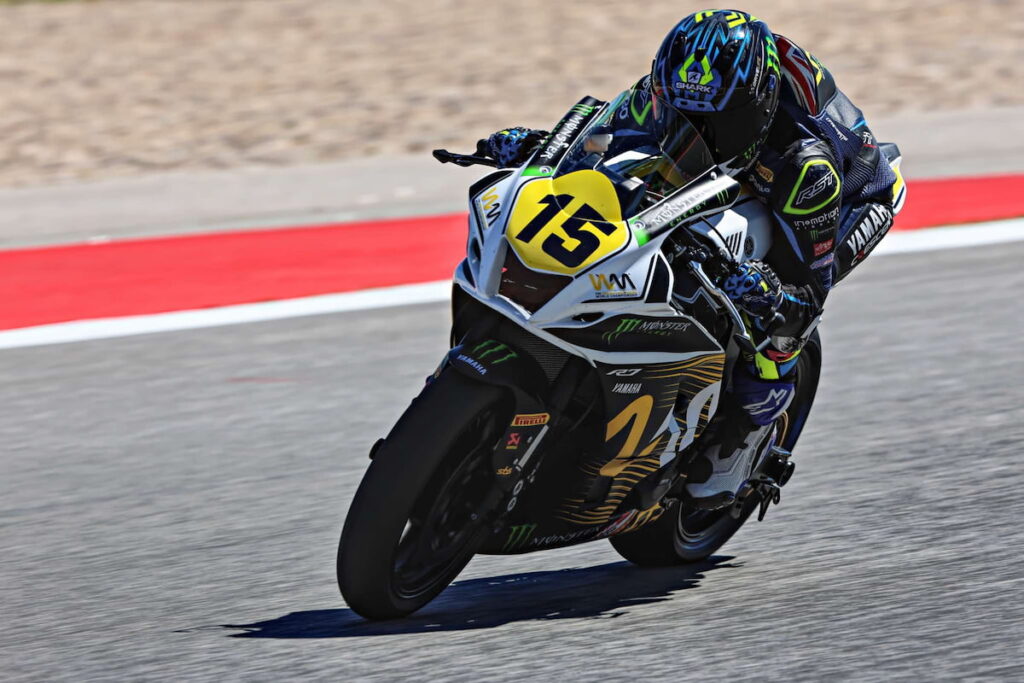
Photo credit:
Chloe Jones on pressure, coaching, quiet confidence, and protecting what still matters in racing.
Racing does not always become personal all at once. Sometimes it happens so gradually you barely notice it. What starts as something fun, maybe even casual, slowly settles deeper until one day it feels like part of who you are. That is how Chloe Jones described it, and it felt like the right way into this conversation.
There was nothing overstated in the way she put it. No big speech, no polished version of when it all became serious, just the sense that the sport slowly works its way into your identity and starts asking more from you over time.
From the outside, racing careers often get flattened into results, milestones, and momentum. Chloe’s answers pointed somewhere more useful than that – toward the pressure, judgment, preparation, and quieter decisions that shape a rider long before anyone sees the final result.
Photo credit:
Learning under pressure
Chloe told me she jumped straight into the deep end doing BSB, and that taught her a lot very quickly. Early on, one of the biggest lessons was learning how to perform while being judged. Not just ride, but ride well when expectations, nerves, and scrutiny all start crowding in at once.
She said that is when you begin to understand how nerves affect timing, decision-making, and execution. What feels manageable in practice can suddenly feel fragile once pressure gets involved. The lap itself may not change, but the weight around it does. That is a hard shift for any rider, because performance starts asking for more than raw ability.
She also said that once the basics are nearly there – and, in her words, “it will never be 100%” – natural ability stops being enough. That is when consistency becomes its own skill. Repeating good performances when conditions change, when fatigue shows up, or when expectations start building around you takes something more deliberate. Chloe put it simply: preparation shapes confidence far more than motivation does.
Photo credit:
What progress really looks like
Like any racer, Chloe said the first place she looks is the timesheets. “Of course, every racer first looks where they are on the time sheets,” she said. But that is not the only thing she pays attention to now, and maybe not even the most important one.
She told me quality of execution matters a lot when she is judging progress. Did the ride feel technically correct? Were the lines, timing, and positioning where they were supposed to be? Even when the result is not ideal, she said knowing you executed your plan still shows real progress, or shows you more clearly where you need to improve.
That way of measuring progress feels more durable than relying only on the number on paper. Chloe is not pretending results do not matter. They do. But she is also paying attention to what happened underneath them, and that says a lot about where her mindset is now.
Photo credit:
The kind of confidence that does not need noise
One of the strongest parts of the conversation was the way Chloe described confidence. She said real confidence on a race weekend “rarely feels loud or dramatic.” For her, it usually feels quiet. Not a lot of thought is needed. Nothing has to be forced.
She told me that confidence shows up when you do not need to convince yourself you are ready, because your preparation already has. There is still adrenaline, and there is still respect for the competition, but not that restless need to prove something. That difference matters. It shifts confidence away from performance and puts it back into the work.
That answer also tied neatly into what she said about coaching. Chloe told me the biggest thing she had to learn on her own was exactly that – coaching itself. Other riders often get taught through coaching from the start. She had to figure out balance, refine technique, and manage the mental and physical demands of racing the hard way. Now, with James Toseland helping her, she says the difference is huge. What once took trial, error, and sometimes costly mistakes can now be learned faster, smarter, and more safely.
Photo credit:
What speed does not cover
Chloe was just as clear when the conversation moved away from technique and toward what really holds a rider together at a professional level. She said one of the biggest parts of becoming a professional rider that has nothing to do with speed is emotional judgment.
At higher levels, pressure does not disappear. It multiplies. Expectations from teams, sponsors, owners, coaches, or even from yourself can create noise that interferes with performance. Professionals learn how to stay clear-headed, especially when things do not go to plan.
She made a similar point when talking about validation. When riders stop chasing validation, she said, it stops every thought being about proving something and starts being about building something bigger and better than what you already had. That is a strong shift in perspective, and it sounds like one she understands well.
Photo credit:
Protecting what matters
Even at a world level, Chloe said the most human part of racing is still vulnerability. No matter how experienced a rider becomes, there is always uncertainty. You can prepare as thoroughly as possible, but when the moment comes, you still have to commit without guarantees. You still have to trust your preparation, your instincts, and your partnership.
She also said one of the most important things to protect when the sport gets serious is passion. Pressure, results, and expectations can change the feel of racing quickly if you let them. For Chloe, protecting the love for the sport itself is what keeps everything else meaningful.
That same thinking shapes the way she sees long-term growth. In racing, one bad season can mean you are without a ride, so growth is not just about winning. It is about becoming more capable, more adaptive, and building more skill depth. At the end of it all, she said what still makes racing meaningful is the challenge and the journey itself – the pursuit of improvement, the lessons that come with setbacks, and the satisfaction of pushing yourself beyond what you thought was possible.
Read the full story in our upcoming Issue 02.
Subscribe to our newsletter for new stories, issue updates, and paddock news.
TrackDNA safety note
Riding on track is inherently risky. What works for one rider, bike, tire, or track may not work for another. This reflects personal experience, not individualized coaching. Ride within your limits, follow your track organization’s rules and control riders, and make changes gradually.
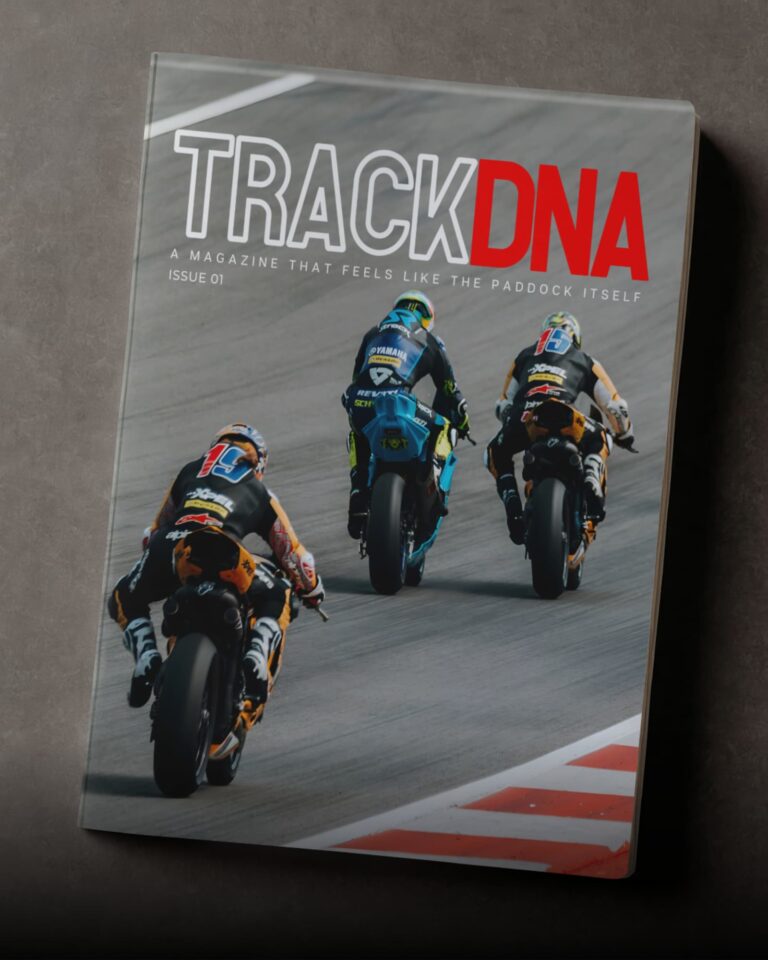
Issue 01 is
Out Now
TrackDNA Issue 01 is a 124-page premium, community-driven magazine for motorcycle track riders & enthusiasts.
Author
-
Sean Beenaam is the founder and Editor-in-Chief of TrackDNA, a media brand dedicated to the culture, craft, and community behind motorcycle track riding. Created to feel like the paddock itself - welcoming, unfiltered, and rooted in real experience - TrackDNA gives space to the stories and voices that often get overlooked.
A published author and active CMRA racer, Sean brings a rider-first lens to the work, building a magazine shaped by the people, lessons, and culture that keep riders coming back to the track.