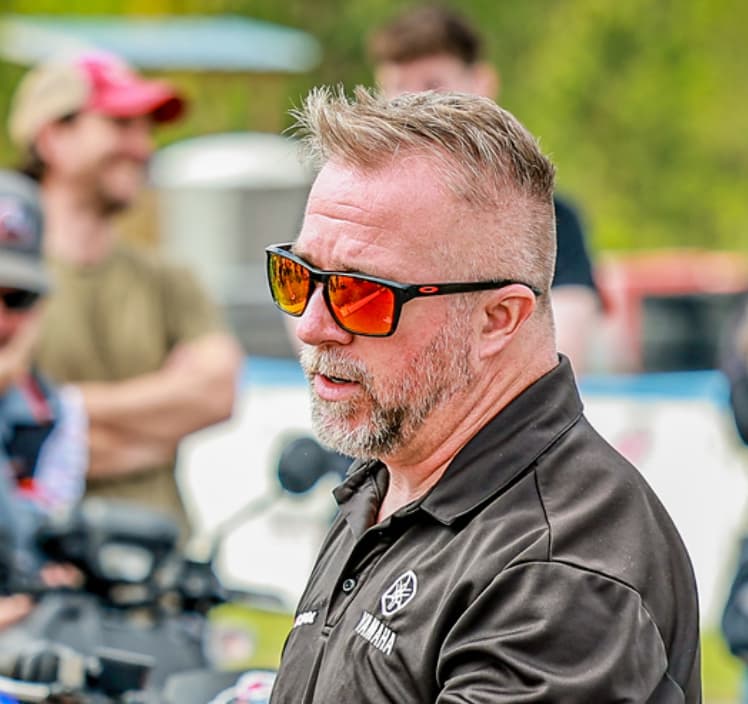
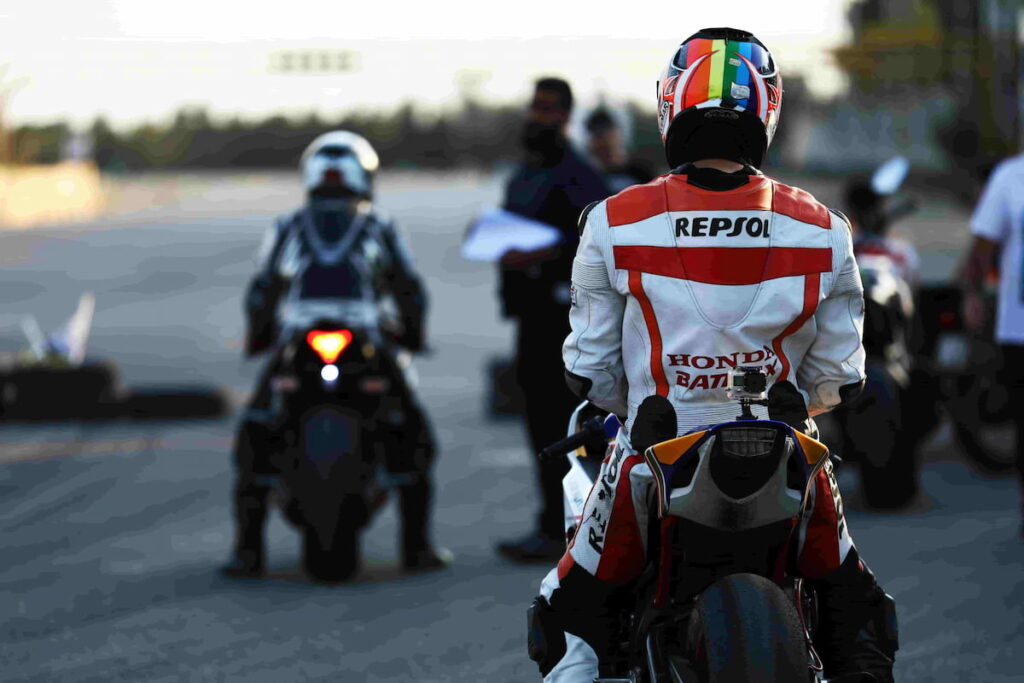
Chip Spalding works with a Yamaha Champions Riding School student at Las Vegas Motor Speedway. Photo credit: Michael Spain Smith.
Modern motorcycles let riders get away with a lot
There is a kind of speed that is easy to find on a modern motorcycle.
Modern bikes, modern tires, and modern electronics let riders go very quickly, even when the riding is based on a lot of risk. A rider can go deep on the brakes, carry a bunch of lean angle, pick the bike up late, and get to the throttle hard enough that the electronics help smooth some of it out. That can look fast. Sometimes it is fast. But it is usually not sustainable, and it is not what I would call repeatable speed.
That is the difference that matters.
When I talk about repeatable speed, I am not talking about one lap where everything held together. I am talking about speed a rider can get to again and again without needing luck, without falling down a bunch, and without taking a pile of risk every time. That kind of pace has to be built on technique. It has to be built around best practices. And when it is, consistency matters just as much as outright speed.
The problem is that modern motorcycles can hide bad habits for a while. They are so capable that riders can get away with things that would have shown up much sooner on older equipment or lower-grip tires. The bad part is that when you finally do cross the limit, the consequences are usually higher. You are carrying more speed, and the tires tend to grip right up until they do not. When they let go, it is quicker and more violent.
So if a rider wants speed that lasts, it has to be built on technique instead of risk.
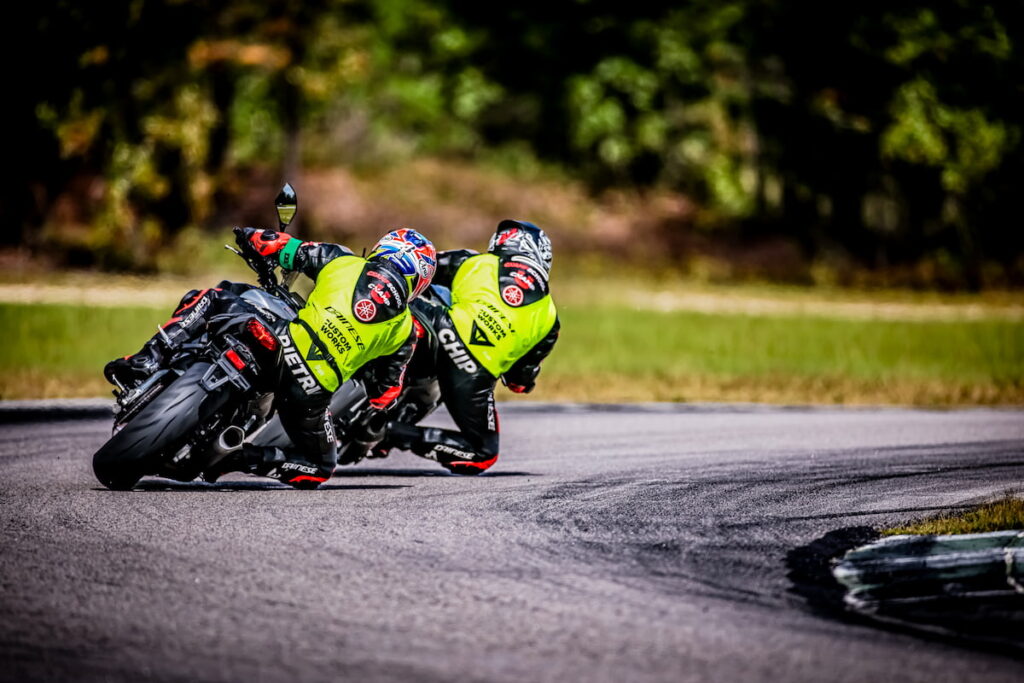
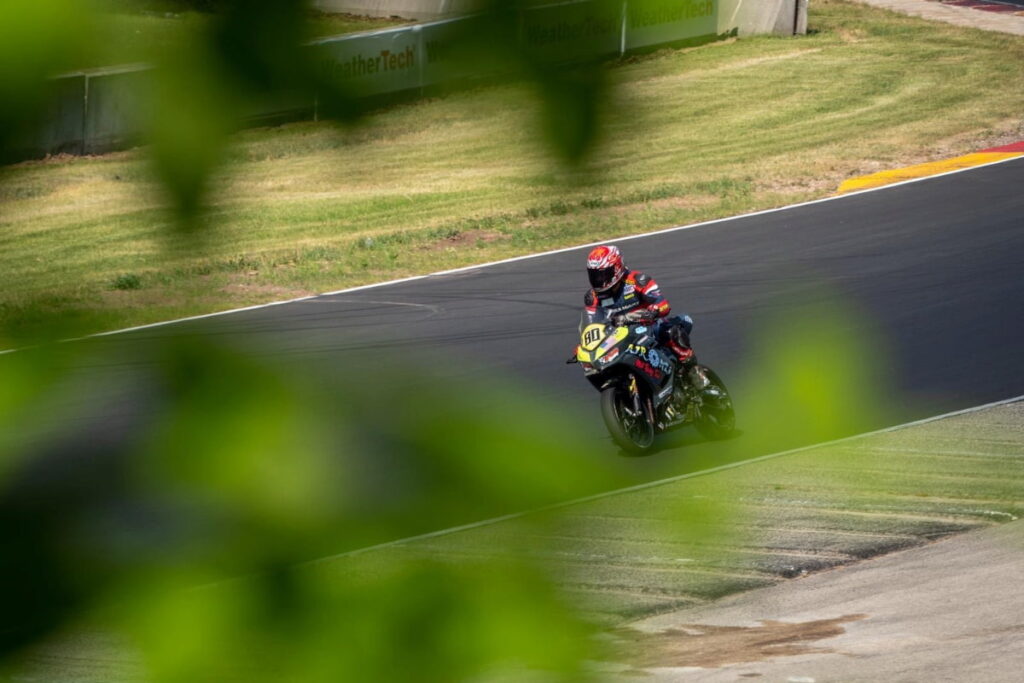
Chip Spalding with Robertino Pietri at Carolina Motorsports Park. Photo credit: Apex Pro Photography.
Speed should come out of the process
That is the part a lot of riders do not like, because it is more fun to chase speed directly. But speed should be the byproduct, not the goal.
If the riding is built around doing things correctly and doing them safely, then speed comes out of that. If the riding is built around risk, then you may still go fast, but it is going to have a limit, and it is usually not going to be consistent. That is what I mean when I talk about repeatable speed. It is not some magic thing. It is just speed that comes from doing the work the right way.
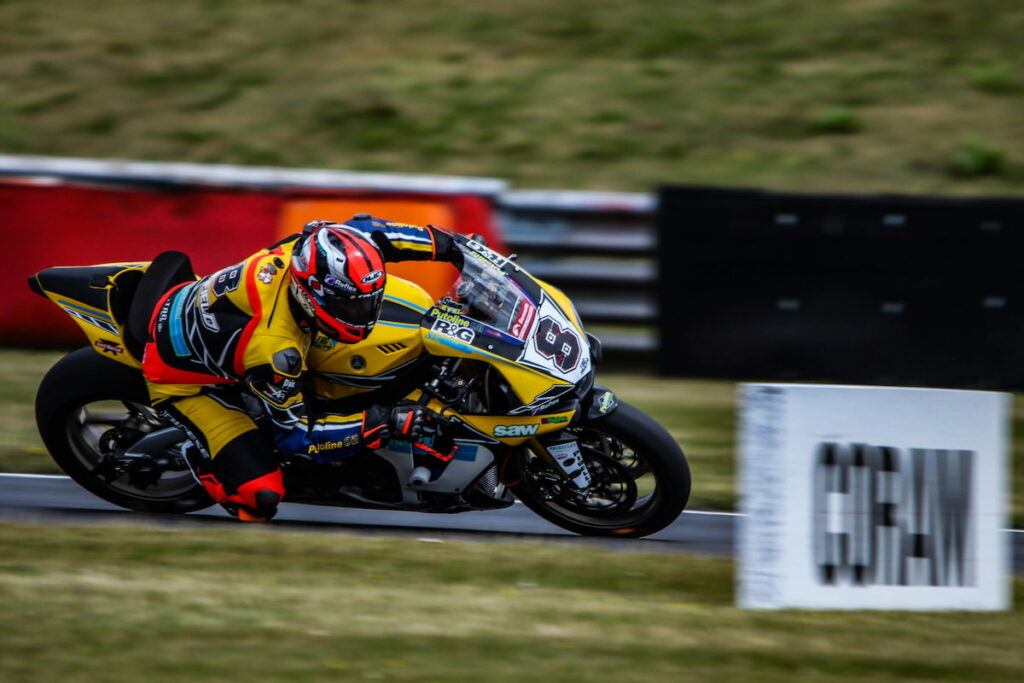
One of the biggest advanced-rider mistakes I see is too much speed in the middle of the corner. Riders look at lean angle as the metric for success. They are dragging a knee, dragging an elbow, the photos look good, and it feels fast. But what is usually happening is they are releasing the brake too early, they are too fast in the middle, and they are spending too much time on the side of the tire. The bike never really gets a chance to slow, turn, and point.
That is where riders get it backwards. It is not the first rider to go to the throttle who is quickest. It is the rider who can get to wide open throttle first. Very often, that rider is a little slower in the middle of the corner, but gets the bike finished earlier and gets a better exit because of it.
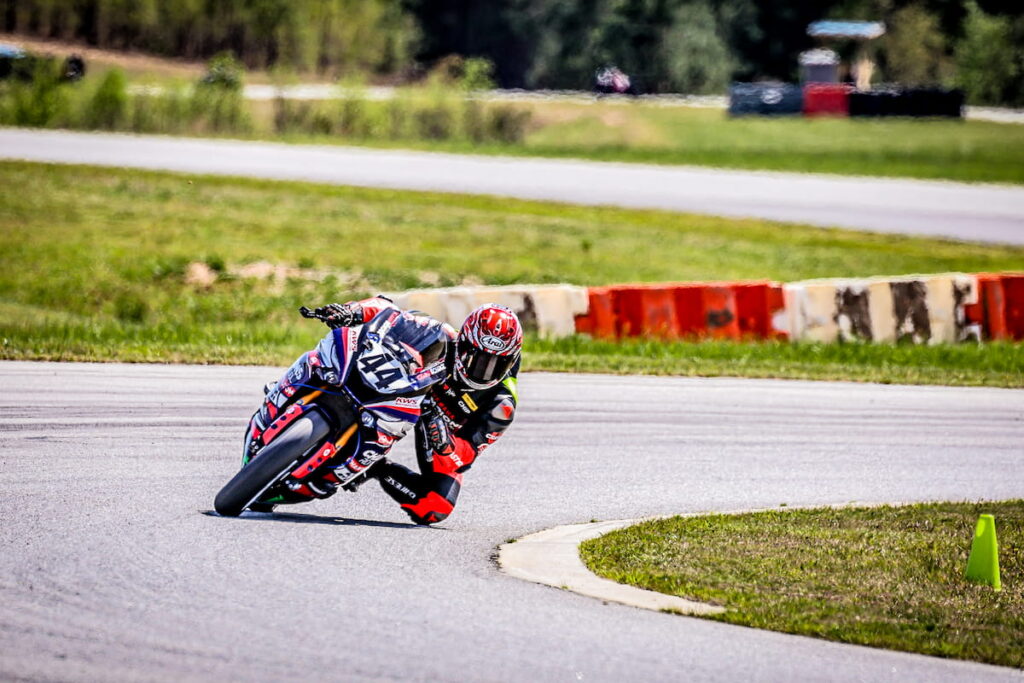
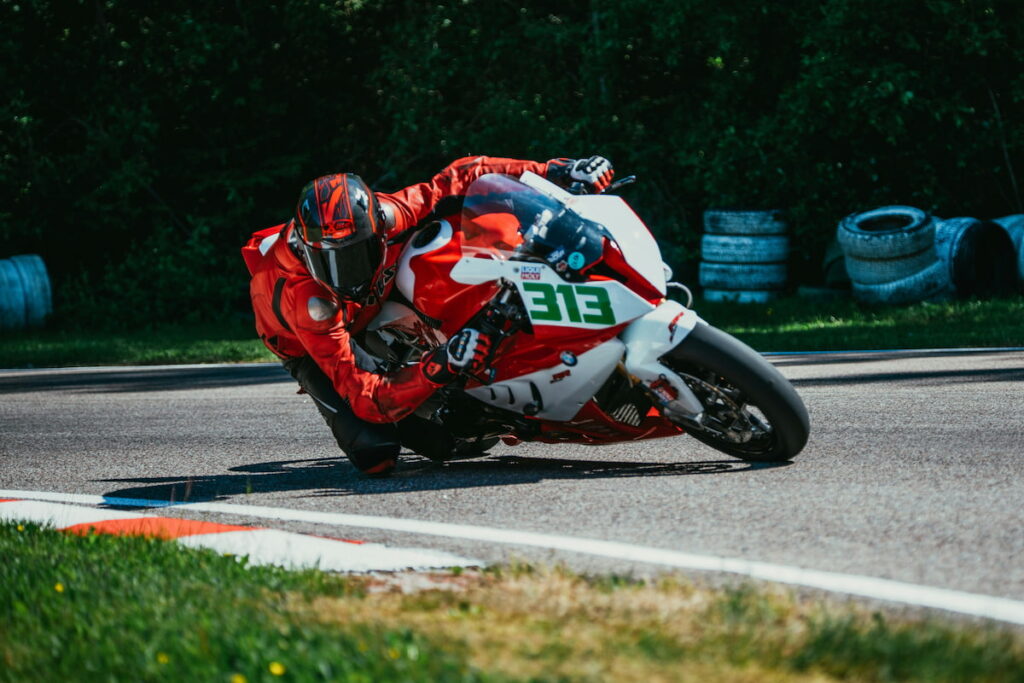
Chip Spalding at NCBike on his race bike. Photo credit: Apex Pro Photography.
If I had to pick one thing, it would be brakes
If I could only give a rider one thing to work on for a whole season, it would be brakes.
That is the most important control on the motorcycle. It controls speed, obviously, but it also controls chassis geometry and front tire contact patch. So when a rider gets better on the brake lever, every other part of the corner tends to get better too. Better brake work gives riders confidence, and once they have more confidence on the brake lever, they usually have more confidence everywhere else.
The reality is that most riders are not scared to accelerate. They are scared they will not get the motorcycle slowed down. So if I am going to put one thing at the top of the list every session, it is getting more proficient on the brakes. That unlocks a lot.
When a rider is tense or under pressure, I usually want to simplify things in a basic order: eyes, brakes, body. Eyes first, because the sooner you see things, the more time your brain has to process them. Brakes next, because that gives you confidence for the rest of the corner. Body third. Then for the rider who is really tight, I like to add one more thing: exhaling on corner entry.
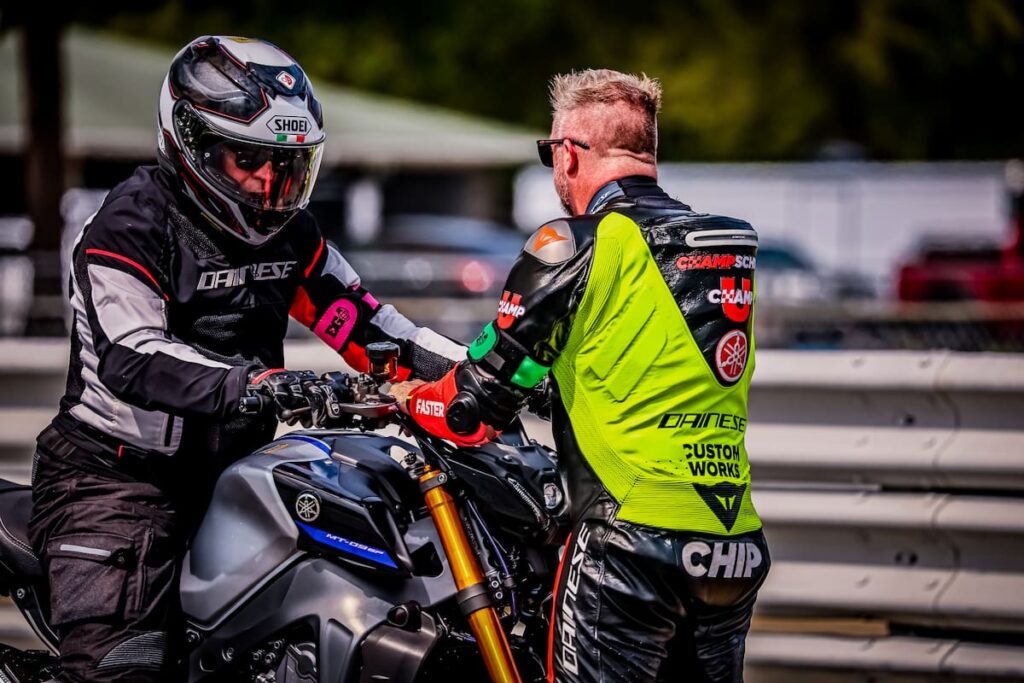
Chip Spalding works with a Yamaha Champions Riding School student at Carolina Motorsports Park. Photo credit: Apex Pro Photography.
The good habits are usually simple
When somebody is riding past their real margin, there are usually a couple tells. The first is lots of little abrupt movements all over the racetrack. That usually means the rider is behind the motorcycle. The second big tell is missed apexes. If a rider keeps missing apexes, that usually means they are too fast in the middle of the corner or they are rushing corner entry.
The same thing shows up in the paddock. A lot of riders feel obligated to ride every session because they paid to be there and the track time feels too valuable to waste. But one of the simplest habits that makes weekends safer and calmer is knowing when not to go out. If you are tired, dehydrated, distracted, or your head is not really there, take a session off. In a lot of cases, that is the smarter move.
Good riders usually bring that same mindset into the debrief. They are not emotional about what happened. They are objective. They can explain what the motorcycle is doing, where it is happening, and under what condition it shows up. That kind of feedback helps. So does something as simple as a track map. Sit down after the session, write all over it, and then do it again. Most riders can learn more there than they think.
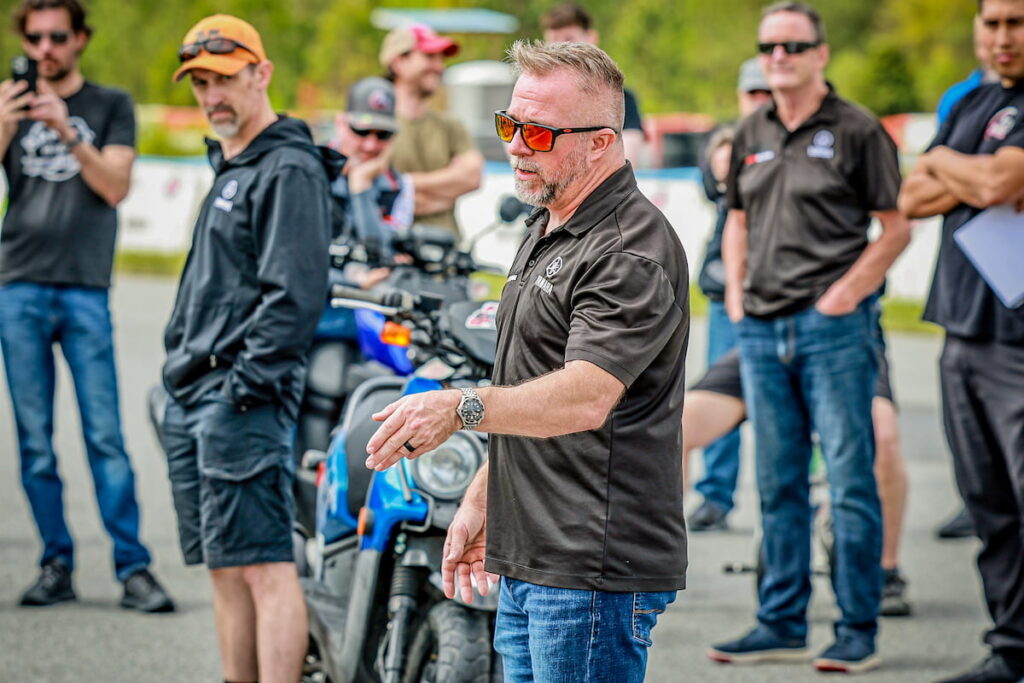
Chip Spalding speaks to a Yamaha Champions Riding School class. Photo credit: Apex Pro Photography.
The goal is still pretty simple
These days, a good day on the bike is pretty simple for me: go out, have fun, go quick, and do not make mistakes. That is still enough.
At the end of the day, I am not looking for speed that only shows up once. I want speed I can get to again and again without a lot of risk. That is the kind of speed you can build on.
Read the full story in our upcoming Issue 02.
Subscribe to our newsletter for new stories, issue updates, and paddock news.
TrackDNA safety note
Motorcycle riding involves inherent risk, even in controlled environments. This article is provided for general informational purposes only and should not be relied on as instruction, coaching, or a substitute for professional training. Ride within your limits, follow the rules of your track-day organization, and respect control riders, coaches, and everyone sharing the track.
Issue 01 is
Out Now
TrackDNA Issue 01 is a 124-page premium, community-driven magazine for motorcycle track riders & enthusiasts.
Author
-
Chip Spalding is a 25-plus-year motorcycle industry professional, former MotoAmerica Superbike team manager, expert-level road racer, and a partner, instructor, and CMO at Yamaha Champions Riding School. He has been part of the school’s ownership group since 2019 and lives in Charleston, South Carolina, with his wife and two young children.

Recent Posts