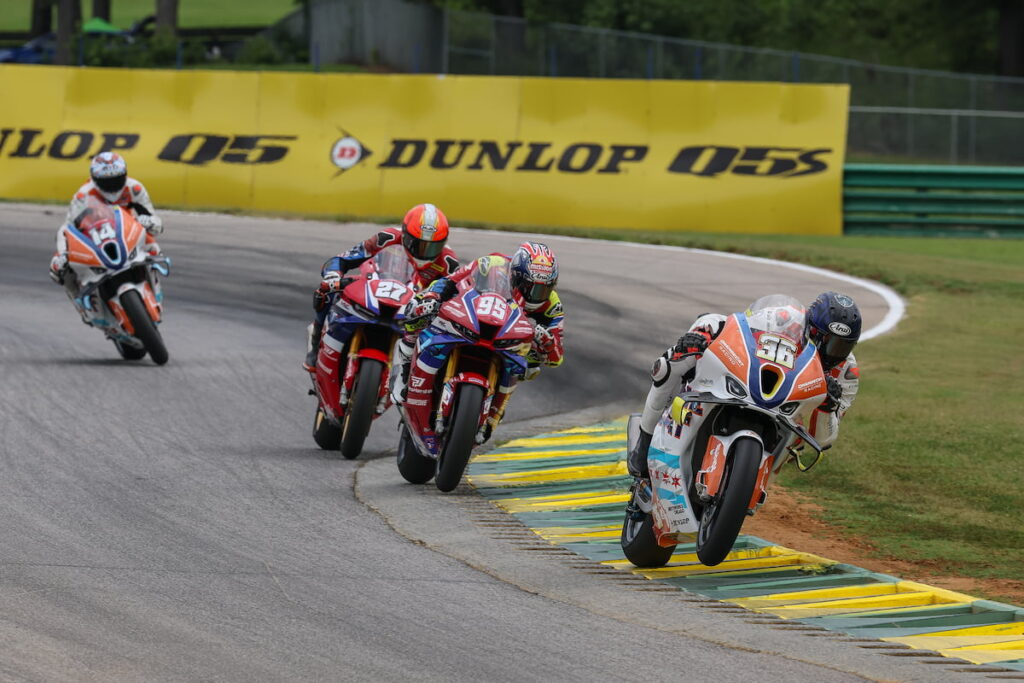
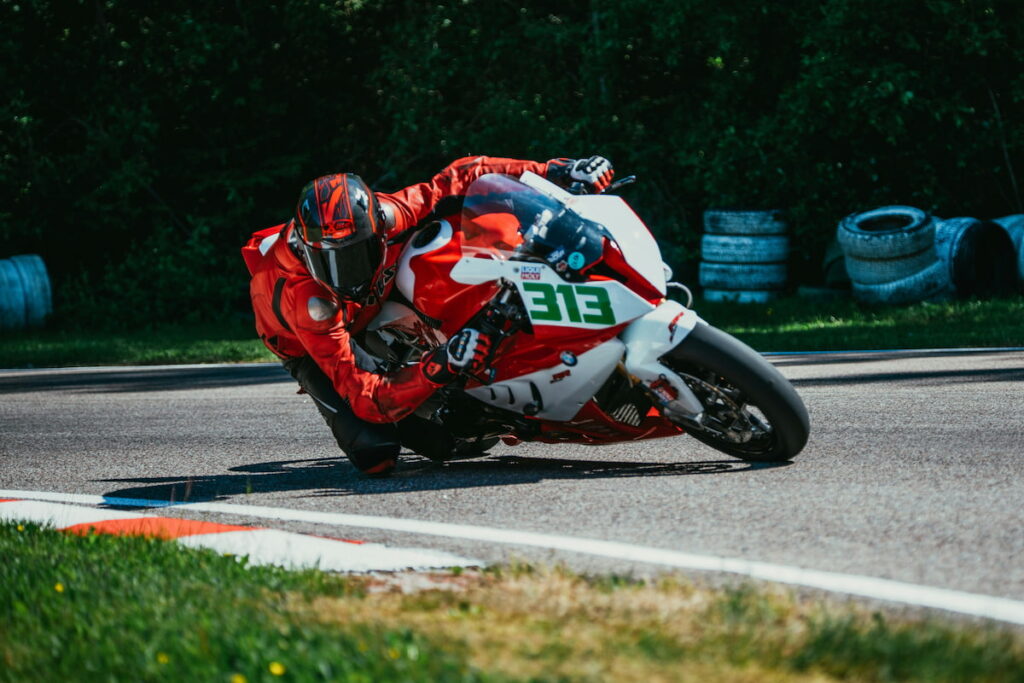
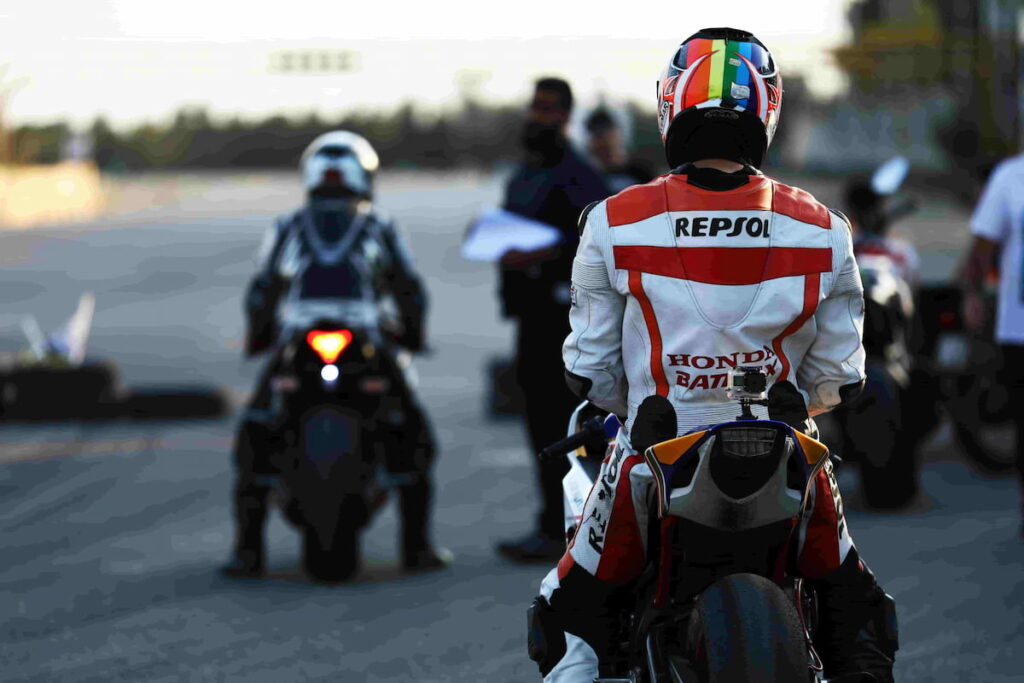
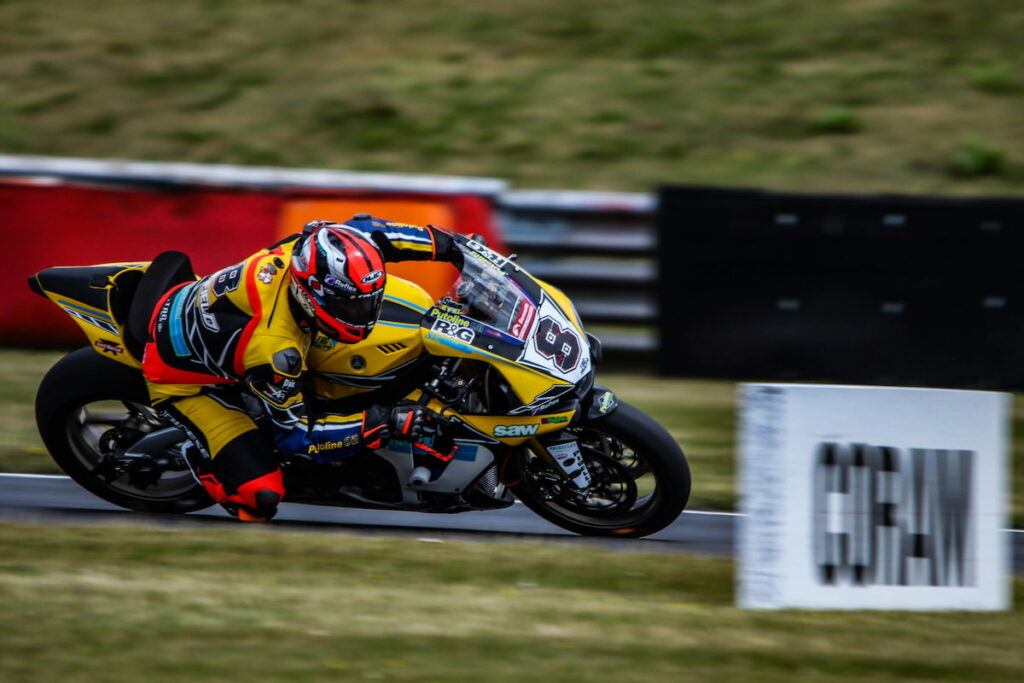
No. 36 leads the pack through VIR in 2025, with the curb, spacing, and pressure all stacked into one frame. Photography by Brian J. Nelson.
Jayson Uribe does not talk about speed like it lives somewhere mystical. He does not make it sound like a secret only a few riders are born with. He talks about references, habits, and the simple things that still have to work when the pace comes up and the session starts getting busy.
That tone showed up right away when he talked about how racing changed for him. “It went from just racing being a hobby, something I do on the weekends, to moving my entire life over to Europe and starting to race overseas,” he said. “This is my lifestyle.”
That shift still shows up in how he thinks now. His answers are not romantic. They are practical, direct, and shaped by years of trying to make speed hold up under pressure.
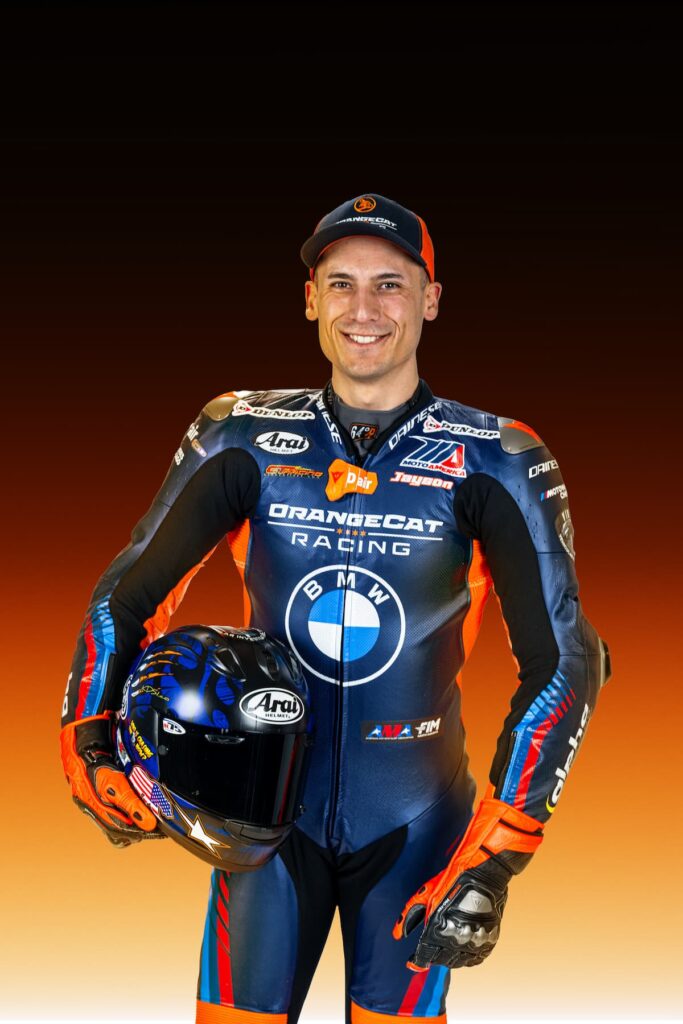
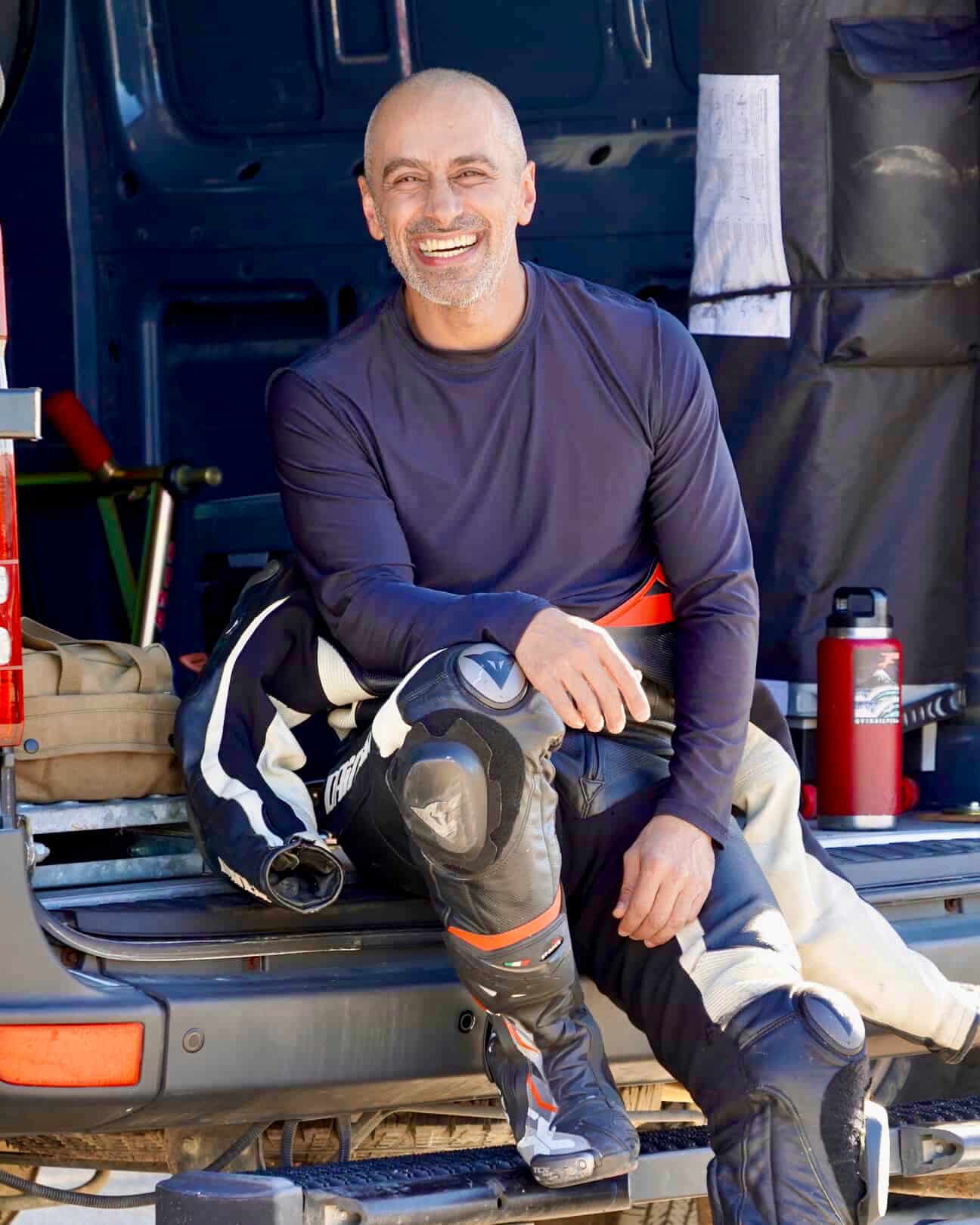
Official press launch, Jayson Uribe – Photo credit: BMW Motorrad
What Europe Taught Jayson Uribe About Racecraft
Europe was a big part of that. Jayson said the riders there were ruthless – friends off track, no love lost once the session started. That mentality sharpened him, but it also taught him that aggression by itself is not enough. It has to be timed, controlled, and useful.
You can hear that balance in the way he talks about racecraft now. There is edge there, but there is also discipline. That feels important, because a lot of riders mistake aggression for progress when really the two are not the same thing.
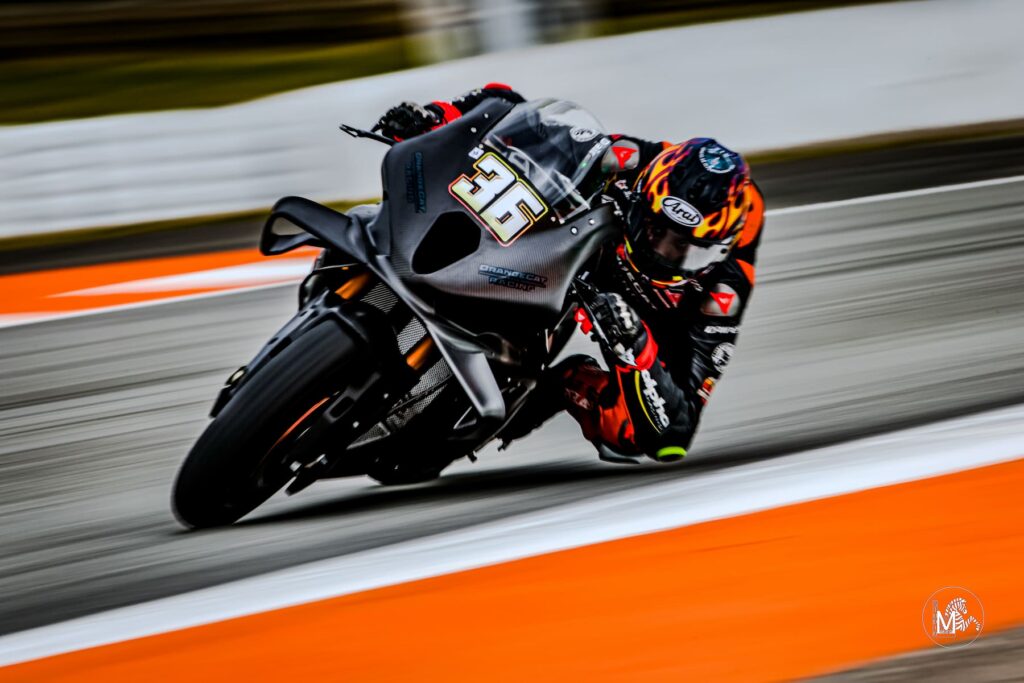
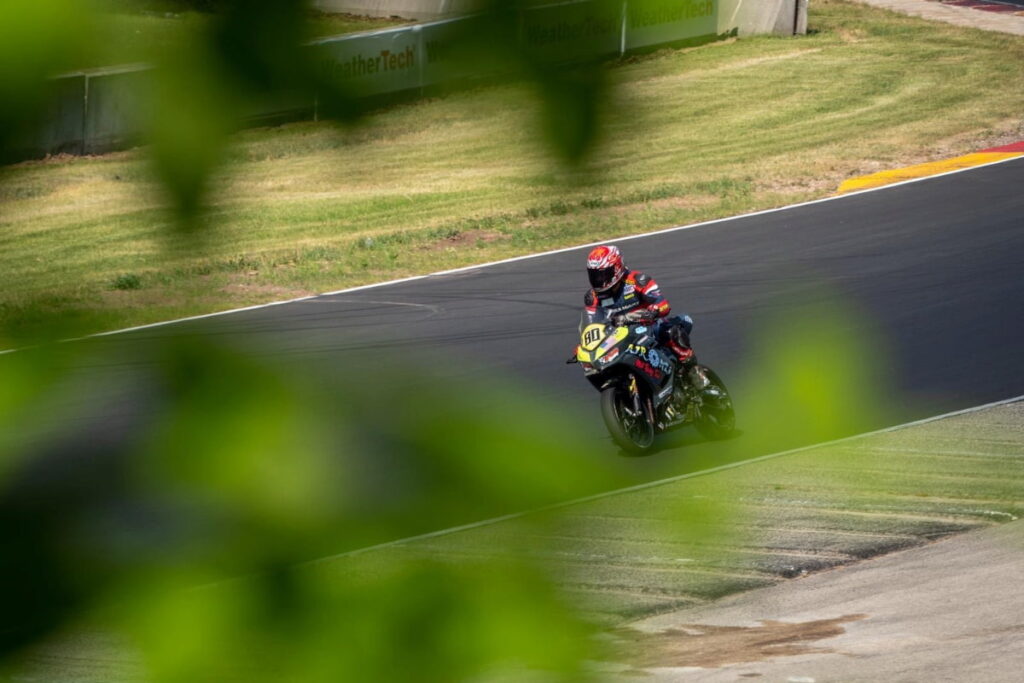
Jayson during 2026 winter testing at Valencia, Spain – Photography by Fabien – studio la makina – Photo courtesy of Alpha Racing.
Jayson Uribe on Why There Is No One Perfect Riding Style
One of the most useful parts of the conversation came when Jayson talked about what he had to unlearn. Like a lot of riders, he came through strong schools and structured coaching. That gave him a foundation, but eventually the version of riding he had learned stopped carrying him forward. He hit a point where the crashes kept coming and the old certainty was not solving the problem anymore.
“I kind of learned one way to ride a motorcycle, and that worked up to a point,” he said. “And when I got to that point, I kept crashing.”
What changed was not some dramatic breakthrough. He started watching other riders on the same bikes and the same tires and realized, “Maybe there isn’t one way to ride. Every situation kind of demands its own unique style.”
That is the kind of line that lands because it cuts against how a lot of riders want technique to work. Everybody wants a fixed answer. Riding usually asks for something more honest than that.
Jayson described that change in practical terms. On smaller bikes, one body-position style worked. Once the motorcycles got more powerful, he had to change how he used his body and how he worked with the machine underneath him. That is part of the craft too – not forcing one picture of what fast is supposed to look like, but understanding what the bike, the tire, and the corner are actually asking from you.
“There’s no magic bullet. There’s no secret sauce. All it is, is perfect execution of fundamentals under stress.”
Brake Markers, Corner Entry, and Riding with a Plan
When he broke down his order of operations in a corner, the answer was simple and useful.
“Step one is finding a good brake marker,” he said. Not a rough area. Not a feeling. A place. From there, he thinks through the apex and what the exit needs based on what comes next. “At the end of the day, the order of operations will be brake marker, apex, and how fast I can get the bike off of the edge of the tire.”
It is a clean answer, but it says a lot. The priorities may shift a little corner to corner, but the process still matters.
He also made a useful point about turn-in. Earlier in his career, he worked more from fixed points. On superbikes, that became more fluid. The exact cue could move. What mattered more was being where he needed to be at the right time.
That is a good reminder for track-day riders too. Good riding is not always forcing the same exact shape every lap. Sometimes it is understanding the framework well enough that you can adapt without losing the thread.
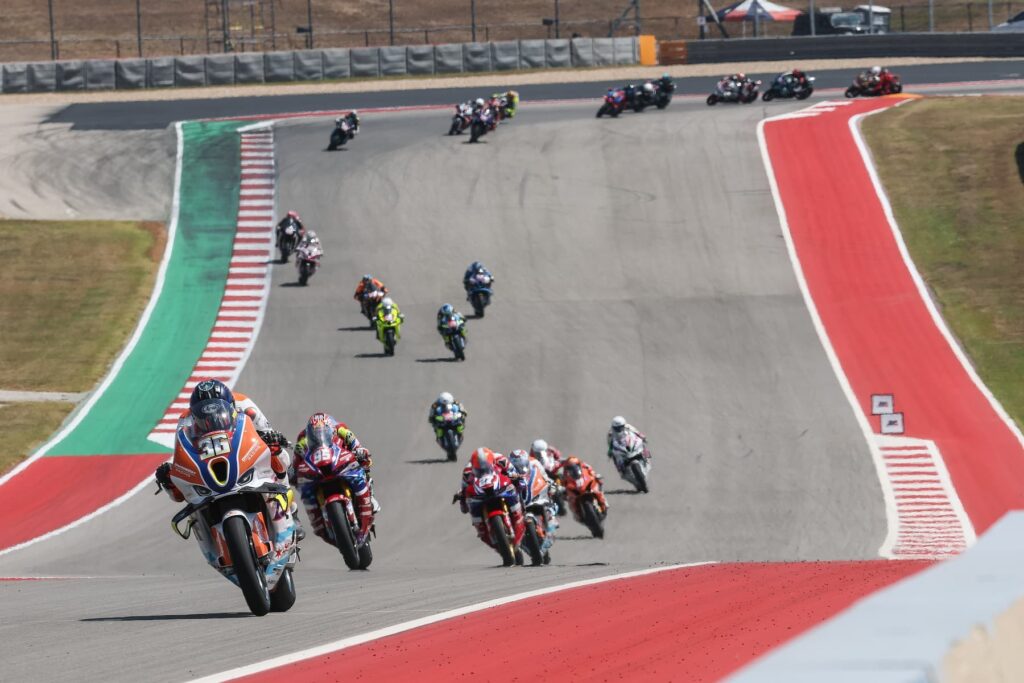
No. 36 leads the field at COTA in 2025, with the pack stretched behind him and the track doing half the storytelling. Photography by Brian J. Nelson.
Jayson Uribe on Fixing Mistakes and Building Repeatable Speed
Asked what mistake he still catches himself making, Jayson did not hesitate: rushing the entry.
“One hundred percent,” he said. Too excited on the brake, too aggressive with the initial input, too much energy getting ahead of the job. It is the kind of answer that lands because almost every rider has done it.
What matters more is how he resets it.
“The way to fix that is literally take a breath,” he said. “Take a breath, remind myself, what is my job, what’s my priority.”
That line is worth keeping in his voice because it is not motivational fluff. It is a practical reset tool. A lot of riding mistakes are not caused by lack of knowledge. They happen because the mind speeds up first, and the controls follow. Here, the breath is part of the technique. It is how he gets back to sequence instead of reaction.
Jayson had a similarly clean answer for what makes a session go bad. Not necessarily a crash. Not necessarily a slow lap. For him, a bad session is when the problem is not changing and the learning is not moving.
“I’m a huge fan of quality over quantity,” he said. “I don’t like to just go out there and rip 500 laps if I’m not learning anything. So, you know, two, three laps, evaluate, come back.”
For riders with regular jobs, limited budgets, and limited track time, that mindset probably matters more than people think. Progress is not always about doing more. Sometimes it is about doing less, but doing it with more clarity.

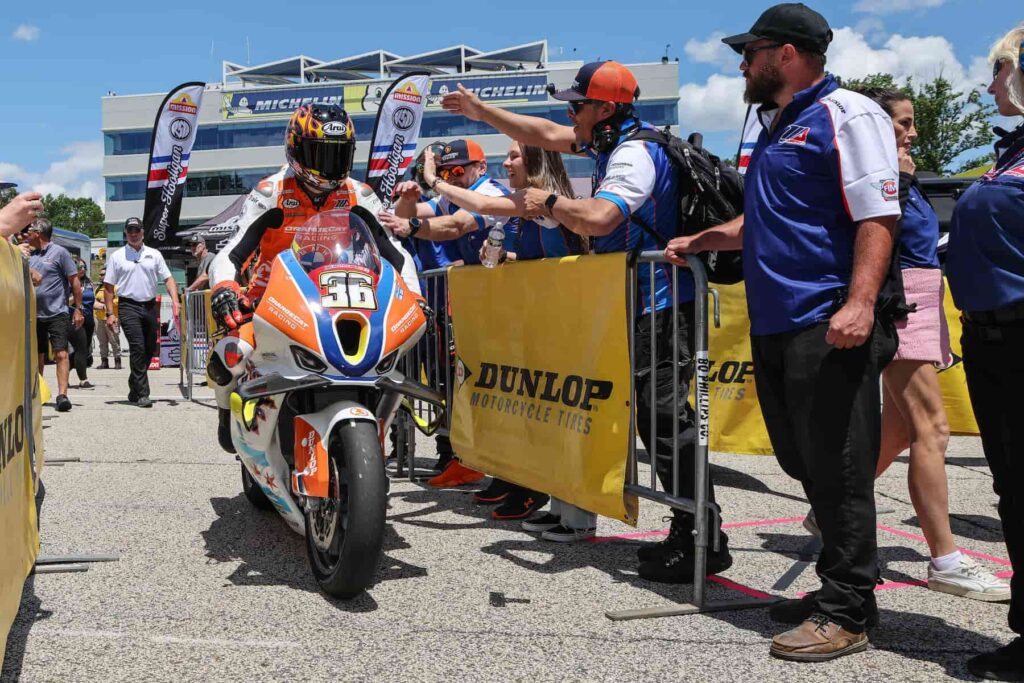
No. 36 pulls into the podium after a race win at Road Atlanta in 2025, surrounded by the small handshakes, crew moments, and post-race noise that make a win feel real. Photography by Brian J. Nelson.
No Magic Bullet, Just Fundamentals Under Stress
By the end of the conversation, Jayson put it pretty plainly: “There’s no magic bullet. There’s no secret sauce. There’s no crazy gene that makes a good rider a good rider. All it is, is perfect execution of fundamentals under stress.”
That is probably the clearest thread running through all of his answers. No hidden layer. No shortcut around the work. Just the basics, done well enough to hold up when the pressure comes in.
Read the full story in our upcoming Issue 02.
Subscribe to our newsletter for new stories, issue updates, and paddock news.
TrackDNA safety note
Riding on track is inherently risky. What works for one rider, bike, tire, or track may not work for another. This reflects personal experience, not individualized coaching. Ride within your limits, follow your track organization’s rules and control riders, and make changes gradually.
Issue 01 is
Out Now
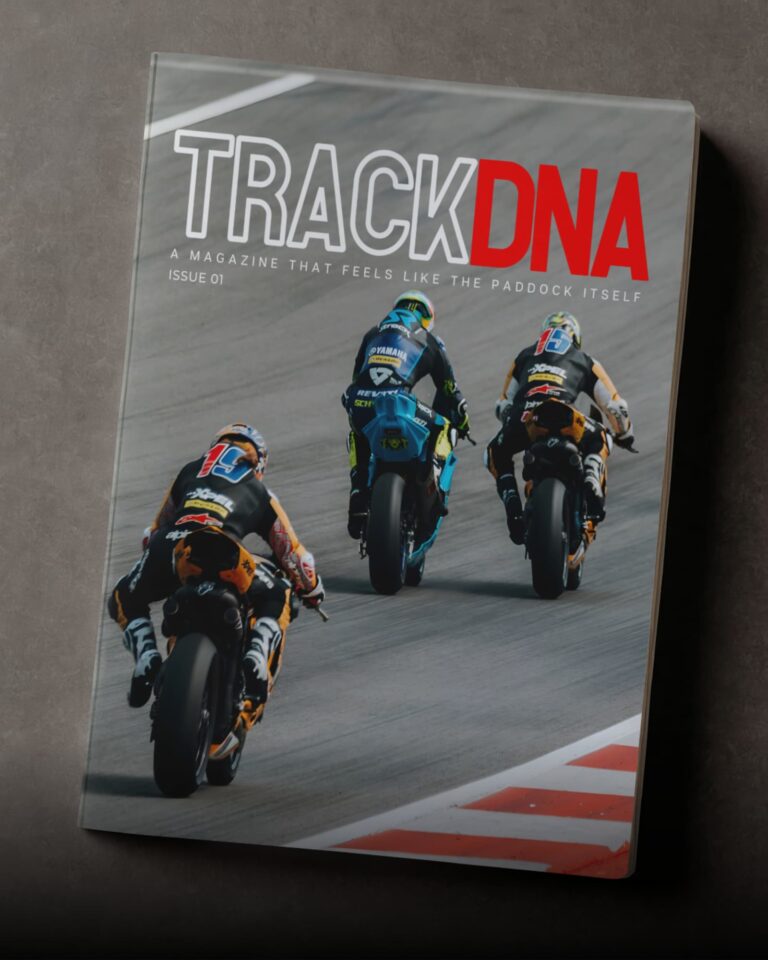
TrackDNA Issue 01 is a 124-page premium, community-driven magazine for motorcycle track riders & enthusiasts.
Author
-
Sean Beenaam is the founder and Editor-in-Chief of TrackDNA, a media brand dedicated to the culture, craft, and community behind motorcycle track riding. Created to feel like the paddock itself - welcoming, unfiltered, and rooted in real experience - TrackDNA gives space to the stories and voices that often get overlooked.
A published author and active CMRA racer, Sean brings a rider-first lens to the work, building a magazine shaped by the people, lessons, and culture that keep riders coming back to the track.