A Messy Recording, a Clear Message from Keith Hertell

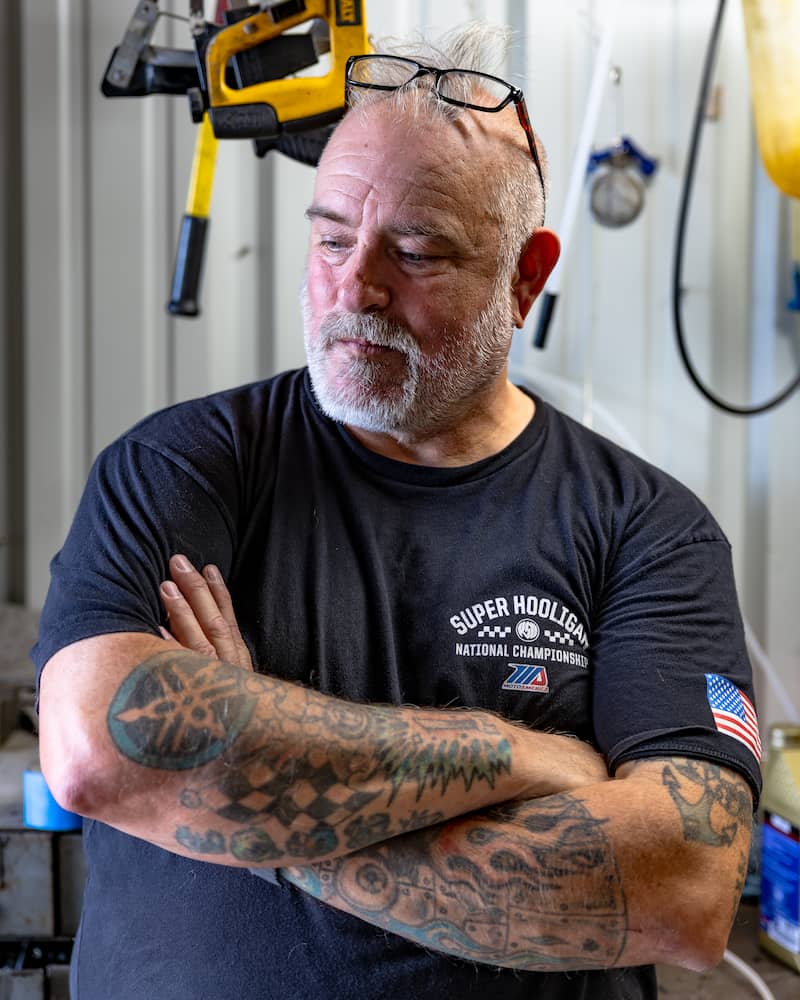
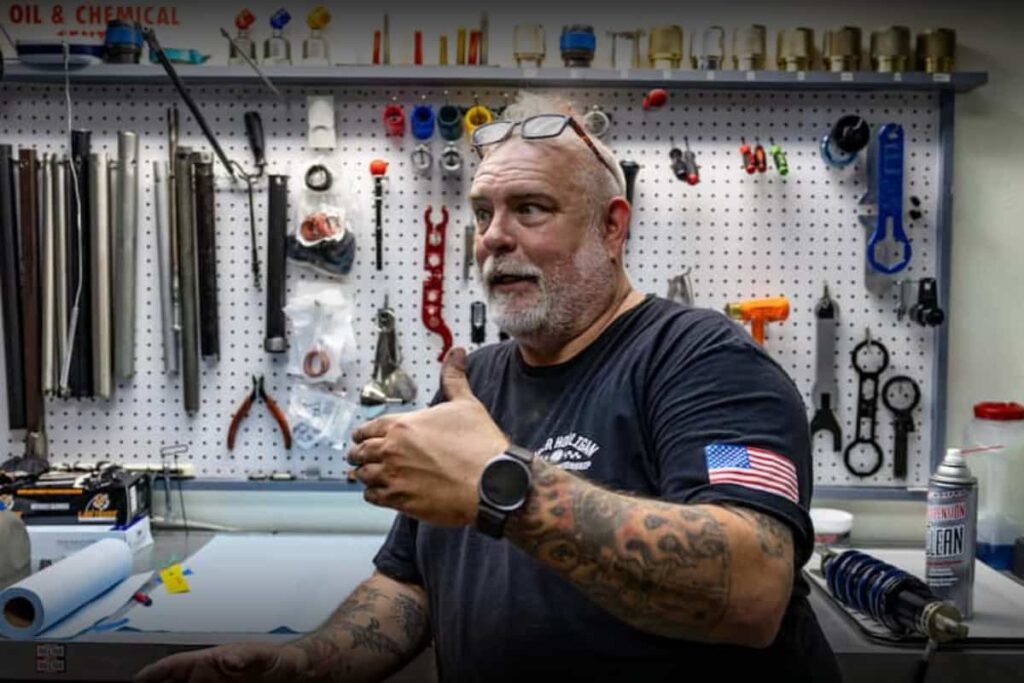
a man standing in from of a suspension station and talking

30 minutes into my “partnership” chat with Keith | Photo by Jason Farias

Author’s note:

I showed up for a partnership conversation. I left with an interview—Keith Hertell on why “sweet numbers” aren’t the point, and why the front tire is the whole conversation.

I wasn’t ready for this interview.

I’ve known Keith for about a year. He’s also the guy who helped me get my CMRA license, so our relationship has never been “random paddock small talk.” A couple weeks earlier we crossed paths at the local track, and I told him about TrackDNA—how it started, where it’s headed, what I’m trying to build. He didn’t hesitate. He offered to back the magazine with a one-page sponsor ad, and we set a time to sit down and talk details.

That’s what I showed up for. Partnership. A page ad. The boring-but-necessary stuff.

But about half an hour in, the business talk fell away and the conversation turned into something else. Keith started telling stories the way paddock people do—straight, specific, and full of hard-earned lessons—and I realized I had a choice: steer it back to rates and deliverables, or hit record and let it happen.

So I hit record.

TrackDNA Safety Note

Riding motorcycles is inherently risky and can result in serious injury or death. The ideas in this article are shared for general information only. Nothing here is formal coaching, individualized instruction, or a guarantee of safety or performance.

Always ride within your limits, use proper safety gear, and practice only on a controlled, purpose-built track with trained staff and medical support. Before trying any new technique, consult a qualified coach and consider your own readiness, fitness, and motorcycle setup.

TrackDNA encourages riders to learn progressively, prioritize safety, and treat professional coaching and track schools as essential tools for improvement.

How Keith Became “The Setup Guy”

Keith’s story isn’t polished. It’s the kind of start most riders recognize.

He started racing an RD350, then moved to a GSX-R750. The first time he raced the 750 at Oak Hill, the bike was sliding around so much he took it as a compliment.

“Man, I must be badass, sliding everywhere.”

Then he highsided and crashed. Hard lesson. Classic.

Afterward, Joe Prussiano walked over and gave him a simple fix: raise the back of the bike. The GSX-R had been lowered—too much weight on the rear, front end light, bike acting like a chopper. Keith raised it and went back out.

Next ride, the sliding was gone. And so was the illusion.

“I’m not sliding at all anymore. I’m not awesome anymore. But I was definitely going faster.”

That was the moment he described where suspension stopped being “a thing on the bike” and became the thing.

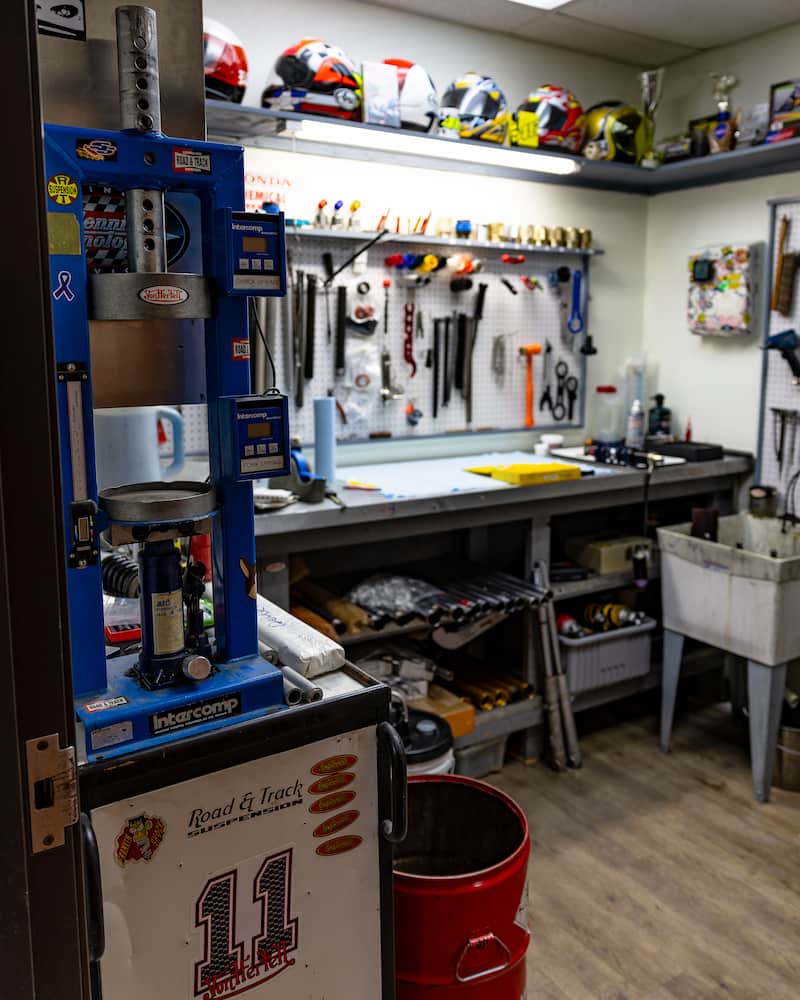
a suspension room

Vonhertell’s suspension room – trophies and helmets from three different eras, all in one place | Photo by Jason Farias

The Myth Keith Sees Everywhere

If you hang around racers long enough, you hear the same request on repeat:

“Just give me the numbers.”

Trail. Swingarm angle. Ride height. The secret setup from the fast guy’s bike. The magic recipe that’s supposed to shortcut the whole process.

Keith’s take was blunt: that mindset is a trap.

“There is a sweet—there’s sweet numbers… It’s not that simple.”

What matters most, in his world, is riding the bike, changing something, riding it again, and letting reality argue back. He told me he used to start with measurements and work from a baseline. These days he’s more direct about it: go ride, observe what it’s doing, fix that.

“It’s doing this, I’ll fix that… and all of a sudden you’re like, God, this thing is awesome.”

He kept coming back to the same idea: a setup isn’t “correct” because it matches a spec sheet. It’s correct because it solves your problem at your pace on your track.

Get the Inside Line

Real stories, track insights, and paddock moments — straight from riders who live it. No noise, no fluff, just the DNA of the track delivered to your inbox.

Why a Fast Setup Can Feel Weird at Track-Day Pace

A bike that’s set up to go fast can feel strange when you’re riding it easy. Not because something is “wrong,” but because you’re not loading the chassis the same way. At a calmer pace you may not be using the same part of the suspension stroke, and the bike can feel busy, firm, or a little uncooperative.

This is where track days and race weekends can differ. On a track day, a lot of us build speed gradually, sometimes with a wide range of pace from session to session. On a race weekend, the bike is usually being ridden closer to the load and intensity it was set up around—harder braking, more corner speed, more consistent inputs—so the setup “makes sense” sooner.

The key is how you judge it. Don’t evaluate a speed-focused setup while you’re still tiptoeing, but don’t force pace to prove a point either. Give it a few sessions, build progressively, and use simple baselines (tires, sag, consistent reference points) so you’re not chasing feelings that change every lap.

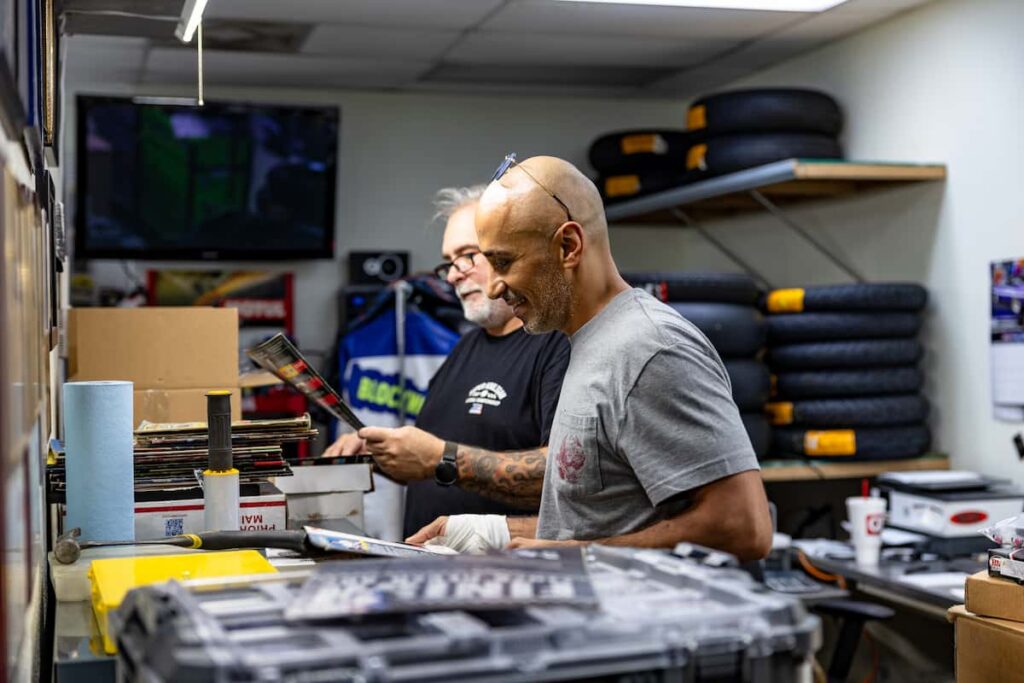
two man standing next to each other and looking at magazines

Keith mentioned he had a box of old mags — some dating back to 1995 — and he was kind enough to give me a few for our collection | Photo by Jason Farias

Everything’s About the Front

Keith kept circling back to one theme: the front tire.

Get weight on it. Feel it. Trust it. Make it work.

He compared it to dirt-track riders who charge corners without flinching—guys who are comfortable being up over the bars because they can feel what’s happening at the front contact patch (the small area of tire actually touching the pavement).

“The front doesn’t matter what the back’s doing. But you want the front to work.”

I’ve heard good coaches say the same thing in different language. When the front feels vague, everything feels like a problem. When the front feels planted and readable, your confidence goes up and half your “mystery handling issues” disappear.

The Rebound “Traction” Myth

Keith also dropped a line that’ll irritate some people, which usually means it’s worth sitting with.

“When everybody says less rebound damping is more traction… that’s not true.”

He wasn’t saying rebound damping doesn’t affect grip. He was calling out the way people repeat that phrase like it’s always true, in every situation, on every bike, for every rider.

His point was about control. If the suspension returns too fast, it can top out hard and get unstable. He tied it to his background around race cars—when a car pops up too quickly it can get “squirty.” Same idea on a bike, especially when the chassis is trying to settle during transitions or on corner exit.

Like most suspension truths, it’s situational. Keith’s warning was the part I cared about: bumper-sticker rules don’t tune motorcycles.

Racing, Crashes, and the Price of Learning

Keith didn’t romanticize any of it. He talked about learning through trial and error—and yes, crashing.

“I’ve crashed probably more than anybody, but that’s how you learn.”

There’s truth in that, but it comes with a price. The best “feel” usually comes from getting close enough to the limit to understand what wrong feels like, and what right feels like. That kind of learning can get expensive fast, and not always in money.

If you’re reading this and thinking, “Cool, I’ll just go test everything,” don’t miss the obvious: do it progressively, do it with coaching if you can, and don’t confuse bravery with growth.

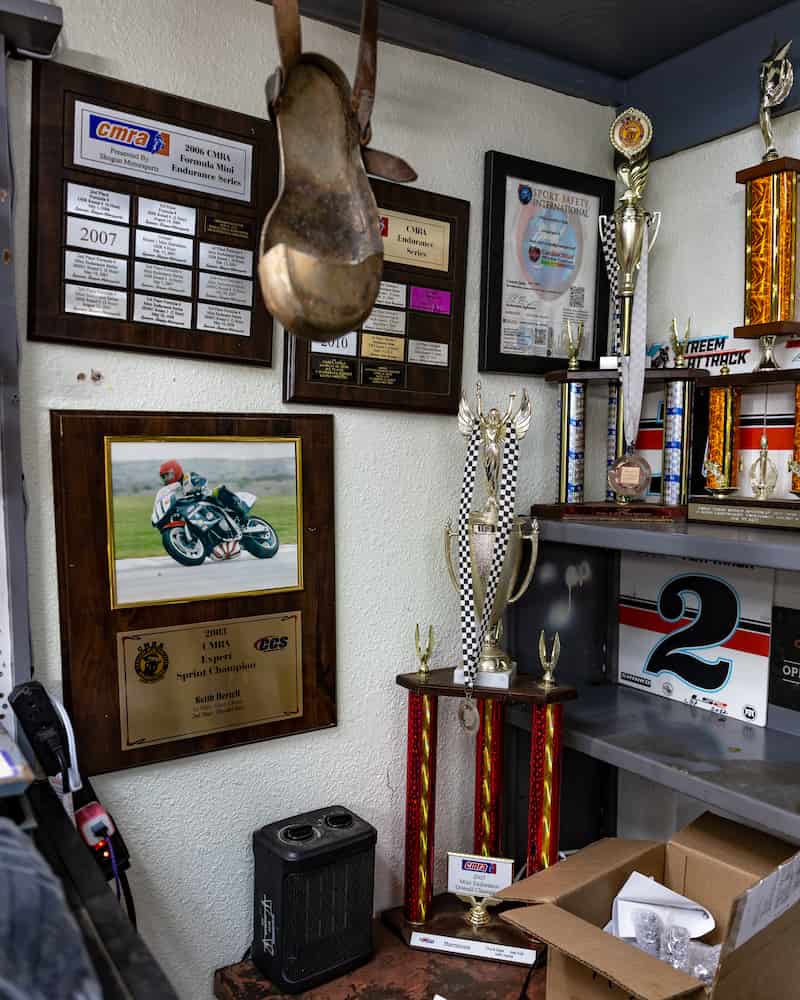
R52A7496 2

One corner of the shop is packed with trophies, titles, and everything in between | Photo by Jason Farias

When the Proving Part Was Over

Near the end, the conversation shifted.

Keith told me he had a heart attack—and two weeks later he was back riding on track. He said the medication was what hit him hardest. Then he said something that landed heavy, mostly because it wasn’t dramatic. It was calm.

“I could die right now, and I’m happy.”

The way I heard it wasn’t reckless. It was resolved. Like the proving stage was over.

He spent years feeling like he had to validate himself—especially starting out in San Antonio, away from the usual Texas racing hubs and the “default” suspension names riders follow. Now he doesn’t feel that pressure.

“I’ve proved it over and over again.”

And in classic Keith fashion, he didn’t list trophies. He talked about the work: the weird solutions, the stuff nobody sees unless you’re standing right there with him. Building “Franken-shocks.” Tearing things down and revalving instead of guessing with clickers and hoping for the best.

Keith Code

What I Took From This (Even With a Messy Recording)

If you want a clean, polished masterclass, this wasn’t that.

This was a real paddock talk with a guy who learned by riding, breaking, fixing, and repeating. A guy who doesn’t worship numbers, and doesn’t hand out magic recipes. He trusts feel—but only the kind you earn when you’re actually pushing, paying attention, and changing one thing at a time.

The clearest thread I walked away with was also the least glamorous: stop hunting someone else’s “sweet numbers.” Start building your own process.

Ride it. Change one thing. Ride it again. Let the bike tell you the truth.

And if you’re doing it right, you’ll still make time to sit under the canopy with your friends afterward—because none of this is guaranteed, and that part is the whole reason we keep coming back.

Session Notes (for your next track day)

Session Note 1: “Front Tire Day”
Pick one corner that usually makes you tense. For two sessions, don’t chase speed there. Chase front feel: consistent eyes, smooth brake release, and a calm tip-in. After each session, write one sentence: Did the front feel more planted, or more vague—and what did I change to get that result?

Session Note 2: “Downshift Safety Net”
Choose one section of the track and count your downshifts into that corner every lap. Don’t force a change. Just log the number and how the corner felt. If the count naturally drops as the day goes on, note what made it happen (brake marker, entry speed, calmer release, better vision).

TrackDNA Takeaways

  • A setup isn’t “right” because it matches someone else’s numbers. It’s right if it solves your problem where you actually ride.
  • A bike set up for speed can feel awkward at low pace. Don’t panic and undo good work before you’ve learned how it wants to be ridden.
  • If the front tire doesn’t feel readable, everything feels like a problem. Start your troubleshooting there.

Get in touch

By now, if you’re asking, ‘How do I get a hold of Keith?’ you’re not alone. The easiest way is to search ‘VonHertell Racing’ and use the contact page. Or stop by the shop in San Marcos (appointments only).

Reflective Question

Where did I blame “setup” today when the real issue might’ve been pace, timing, or how I was loading the front?

Get the Inside Line

Real stories, track insights, and paddock moments — straight from riders who live it. No noise, no fluff, just the DNA of the track delivered to your inbox.

Author

Scroll to Top