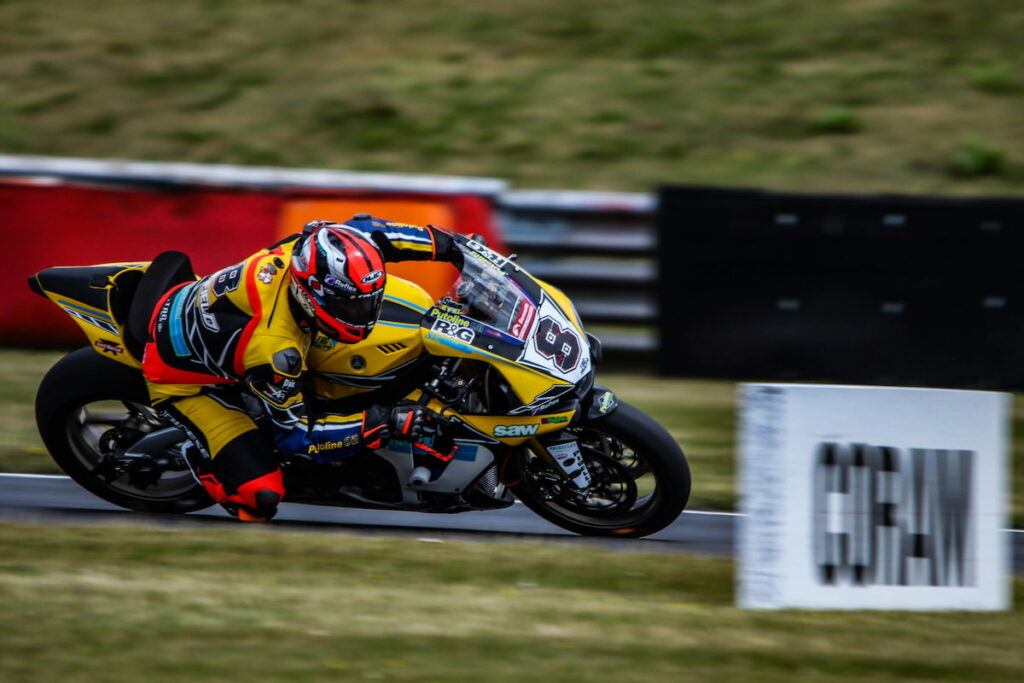
Corner Entry Confidence: The Moment Everything Comes Together

superbike, racing, superbike racing, race track, motorcycle, motogp, ducati, race, competition, motorcycle racing, superbike, superbike, superbike, superbike, superbike

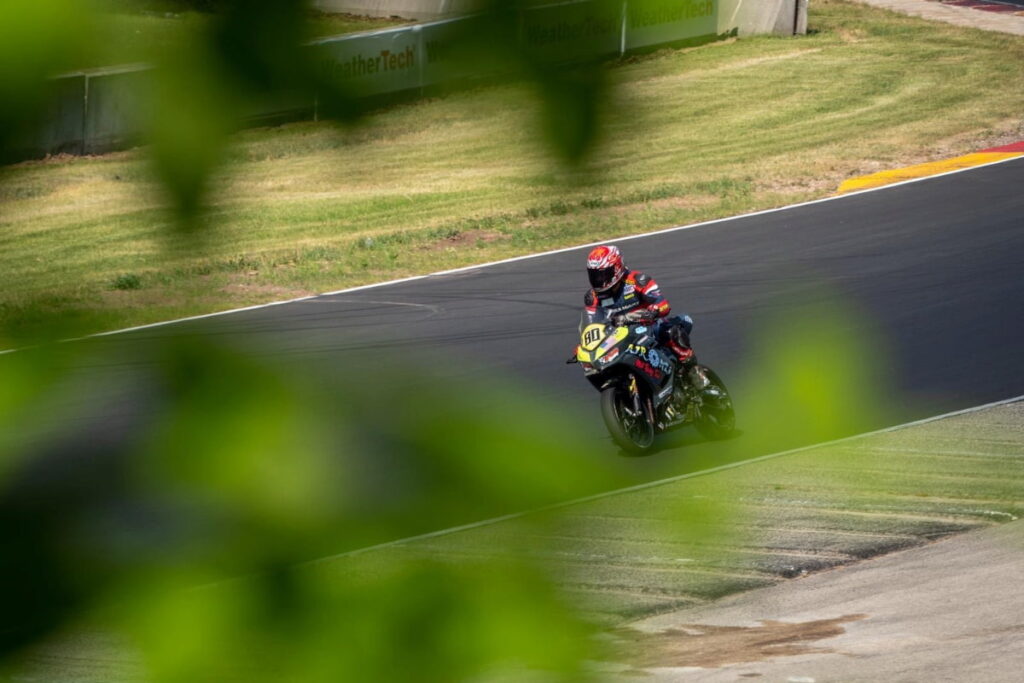
Photo By Karl Pusch

Corner entry is where a lot of early track-day confidence goes to die.

Not because you’re slow. It’s because corner entry is the first place the bike demands timing instead of effort. You can muscle your way through a messy exit. You can survive mid-corner by being conservative. But entry makes you decide – when to brake, when to release, when to turn in, and where to put your eyes – while the front end is loading and your brain is trying to keep up.

Picture your second or third track day. You’ve got a straight that finally feels fast. You sit up, the wind hits your chest, and there’s that half-second where you’re asking yourself if you’re early – or already late. If you’ve ever grabbed the brake a little too hard, clicked down one extra gear, then turned in with your shoulders tight, you’re not alone. That’s most of us in the beginning.

Then the confusion starts. You ask coaches about corner entry and the answers don’t match word-for-word. One wants braking done before turn-in. Another talks about carrying a little brake as tip-in begins. Someone won’t stop talking about vision. Another coach tells you to “feel the bike settle,” then walks away like that was the whole lesson.

Most of the time, they’re not disagreeing. They’re choosing different ways to teach the same fundamentals, based on what they see you struggling with first.

Let’s call our fictional rider Casey. Casey is doing the work, listening, trying to be consistent, and still wondering why one lap feels calm and the next feels like the corner moved six feet.

The language changes, but the goal doesn’t.

TrackDNA Safety Note

Riding motorcycles on track is inherently risky and can result in serious injury or death. The ideas in this article are shared for general information only — they’re not formal coaching, professional instruction, or a guarantee of safety or performance.

Always ride within your limits, use proper safety gear, and practice only in a controlled, closed-course environment that follows all rules and regulations. Before trying any new technique, talk with a qualified coach or instructor and use your own judgment about what’s right for your skill level, your bike, and your body.

The best place to explore and apply these ideas is with a qualified coach or at a dedicated motorcycle or racing school. Treat what you read here as background context and conversation fuel for your own training — not as a step-by-step guide or a substitute for in-person instruction.

By choosing to ride, you accept the risks that come with it.

The Universal Fundamentals of Corner Entry

No matter the school, the org, or the coach, corner entry usually comes down to a handful of fundamentals. Coaches just start with a different priority depending on what they’re seeing.

One big lever is getting the bike settled before you ask it to turn. That starts with brake pressure you can repeat – not “hard,” not “soft,” just consistent. If your brake pressure surprises you, it’s also a surprise to the front tire.

Another lever is vision. When riders get rushed, vision is usually the first thing to go. You stop looking through the corner and start staring at whatever feels urgent: the brake marker, the dash, the pavement right in front of the tire. That’s how timing gets late without you realizing it.

Then there’s the steering decision. One committed steering input – a firm press – feels different than sneaking up on lean angle with little corrections. Those corrections can feel “safe” in the moment, but they often make the bike feel vague because you never fully let it settle into the lean.

Body tension shows up here, too. If your weight is living in your arms at corner entry, everything gets noisy. The bars feel busy. The front end feels unpredictable. A stable lower body with relaxed arms is boring in the best way, and boring is what you want while the front tire is doing serious work.

Once your speed is set and the steering work is done, the throttle’s job is stability – not “winning” the corner. A smooth roll-on, or a light maintenance throttle depending on the bike and the corner, helps settle the chassis and support grip. The timing changes with pace, setup, and track layout, but the principle stays pretty steady: don’t rush the gas while the front tire is still doing the heavy lifting.

None of this is mystical. It’s just hard to execute when you’re mentally maxed out and trying to do every part of it at once.

Why coaches sound different in the paddock

Here’s what’s usually happening: a coach is choosing the tool that fits the rider in front of them. Same destination, different entry point.

If Casey is braking late, downshifting in a panic, and turning in while the bike still feels unsettled, a coach will often separate the jobs on purpose. The cue turns into something like: do most of your braking upright, release smoothly, then turn in. That “spacing” gives Casey room to feel what changed. When it works, you feel the bike calm down. When it doesn’t, you can usually tell which job fell apart instead of guessing.

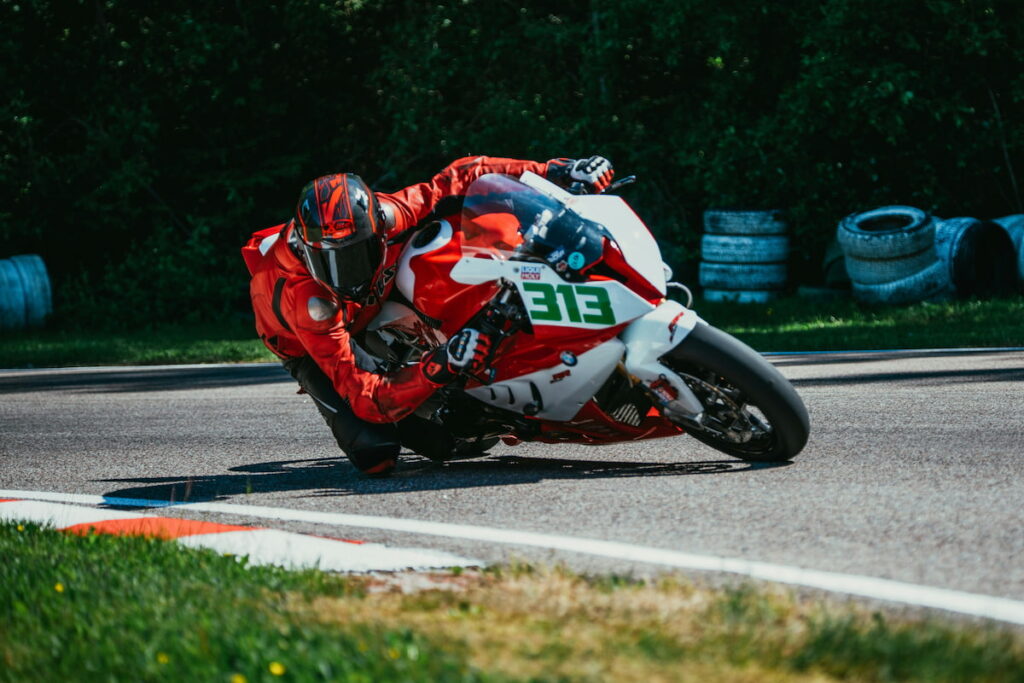
As Casey gets more consistent – especially once braking stops being a surprise – coaching starts to sound more like flow. That’s where riders bump into trail braking: carrying a decreasing amount of brake as tip-in begins. It’s not a party trick. It’s one way to manage speed while keeping a controlled load on the front tire as the bike starts to turn.

The key is the taper. If brake pressure doesn’t fade smoothly, the front end won’t feel trustworthy. That’s also why good coaches don’t push trail braking early for everyone. The technique isn’t the point. The control is.

Sometimes the fix isn’t the brake at all – it’s the eyes. Casey might be doing a lot of “right things” with the controls and still feel behind the bike. In that case, a coach goes after vision because vision is the command center. Turn your head earlier. Find the next reference sooner. Look where you want the bike to go, not where you’re afraid it’ll go.

When vision clicks, timing often cleans itself up. Shoulders loosen. Brake release gets calmer without you “trying harder.” A lot of riders think vision coaching is basic. It isn’t. It’s foundational, and most people underdo it until someone forces the issue.

And then there’s the stage where “feel” starts replacing guessing. Early on, that can sound vague. Later, it’s the difference between “I hope this works” and “I know what the bike is doing.” Coaches start talking about where the weight is, what the front tire feels like when it’s loaded correctly, and what “settled” actually looks like for you: calmer bars, a smoother brake release, fewer last-second saves.

None of these approaches compete. They’re just different ways to get you to the same place: arrive at turn-in with a calm bike and a clear plan.

Get the Inside Line

Real stories, track insights, and paddock moments — straight from riders who live it. No noise, no fluff, just the DNA of the track delivered to your inbox.

A metered corner entry you can practice in the same corner

By “metered,” I mean a repeatable rhythm you can do on purpose, lap after lap, without needing a perfect day or a perfect mood.

If you want something practical for your next track day, don’t chase ten fixes. Pick one corner you see every lap and work that same corner all session. Medium-speed corners are great for this – fast enough to feel real, slow enough to think.

Here’s a clean rhythm to test in that same corner:

  • Get your eyes up early, find your turn-in reference sooner than you think, then move your vision to apex and exit
  • Build brake pressure smoothly, avoiding the grab, aiming for brake pressure you can repeat
  • Downshift without donating your whole brain to it – if the dash is pulling your attention, simplify and slow the process down
  • Release the brake like a dimmer switch, tapering smoothly instead of going on-off
  • Make one steering decision, turning in with a committed press instead of a string of mid-corner corrections
  • Support yourself with your legs so your hands stay quiet and the front end feels honest
  • Begin throttle to stabilize the chassis once the big steering work is done, feeding it in smoothly or holding light maintenance throttle if that’s what the bike and corner want

As your pace increases, you’ll naturally move from “separate the jobs” toward “blend the jobs.” That’s progression, not contradiction.

How you know it’s working

Corner entry confidence shows up as boring consistency. The bike feels settled as you lean in. Brake pressure doesn’t surprise you. Your eyes stay ahead without feeling forced. Mid-corner stops feeling like a coin flip.

When your best laps feel calm, you’re on the right track.

Session Notes

Session Note 1 – One Corner, One Job
Pick one medium-speed corner. For one session, ignore lap time and focus only on making brake release smooth and consistent. If you can’t repeat it, move your braking marker earlier until you can.

Session Note 2 – Vision Reset Drill
In that same corner, make your only goal this: turn your head earlier and find your next reference (apex or exit) before you initiate lean. If your steering gets cleaner without you “trying harder,” you probably just found the bottleneck.

TrackDNA Takeaways

  • Coaches sound different because they’re choosing different entry points into the same fundamentals
  • If the front end feels sketchy at entry, start by making brake pressure and brake release more repeatable
  • Vision isn’t “basic” – it’s your timing system, and when it collapses everything turns into survival

Reflective question

Where did you still feel rushed at corner entry today – and was it because your eyes arrived late, your speed decision arrived late, or both?

TrackDNA Note

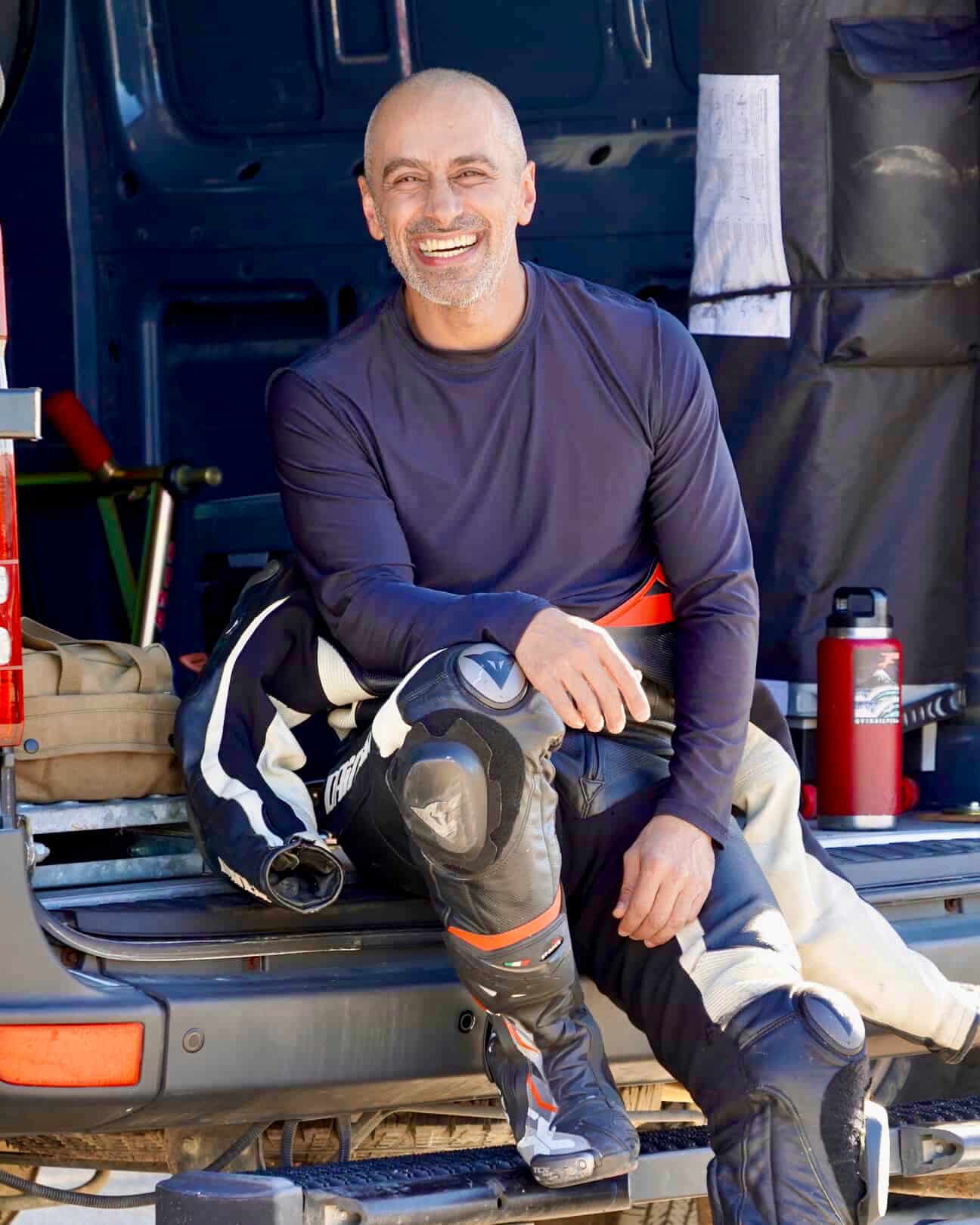
Everything mentioned here is what I’ve picked up from books, schools, and coaches along my own riding path—plus the stuff you only learn by doing it wrong a few times and having to go back and clean it up.

I’m not writing this as “the guy who has it all figured out.” I’m still progressing, still stacking reps, still chasing consistency on the days when the bike feels like a scalpel and the days when it feels like a shopping cart. I ask questions, I take notes, I test one change at a time, and I try to keep the lesson honest instead of making it sound smarter than it was.

I’ve also set a personal goal to race MotoAmerica in 2027. That’s the north star for why I care about corner entry this much—because at that level, “mostly right” isn’t a plan. You need a process you can repeat, lap after lap, even when you’re tired, distracted, or a little rattled. This piece is one snapshot of what I’m learning on the way there.

Get the Inside Line

Real stories, track insights, and paddock moments — straight from riders who live it. No noise, no fluff, just the DNA of the track delivered to your inbox.

Author

Scroll to Top