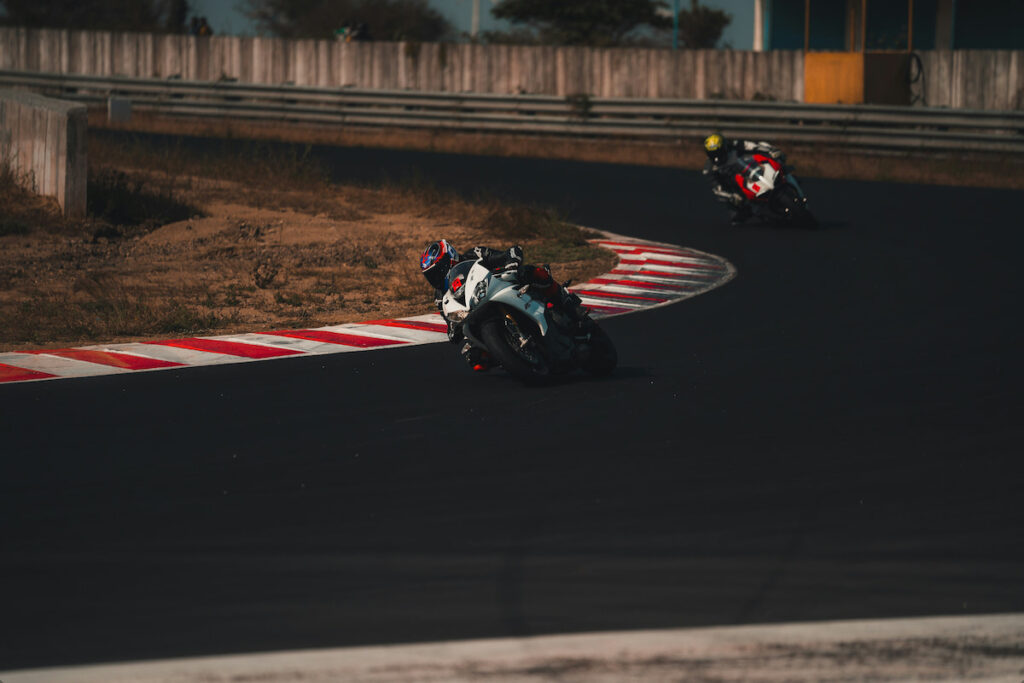
“I attended my first track day during the last century.”
I had to let that sit for a second.
A year into owning my first sportbike – a 1997 Kawasaki EX500 (work with me here) – I saw a poster at a Ducati dealer in Winnipeg advertising motorcycle racing at Gimli Motorsports Park. The club had the foresight to offer track sessions for street riders during Saturday practice. The idea was simple: get people through the gate, get them hooked, and sooner or later a few of them would turn into racers.
I felt the urge to give it a go.
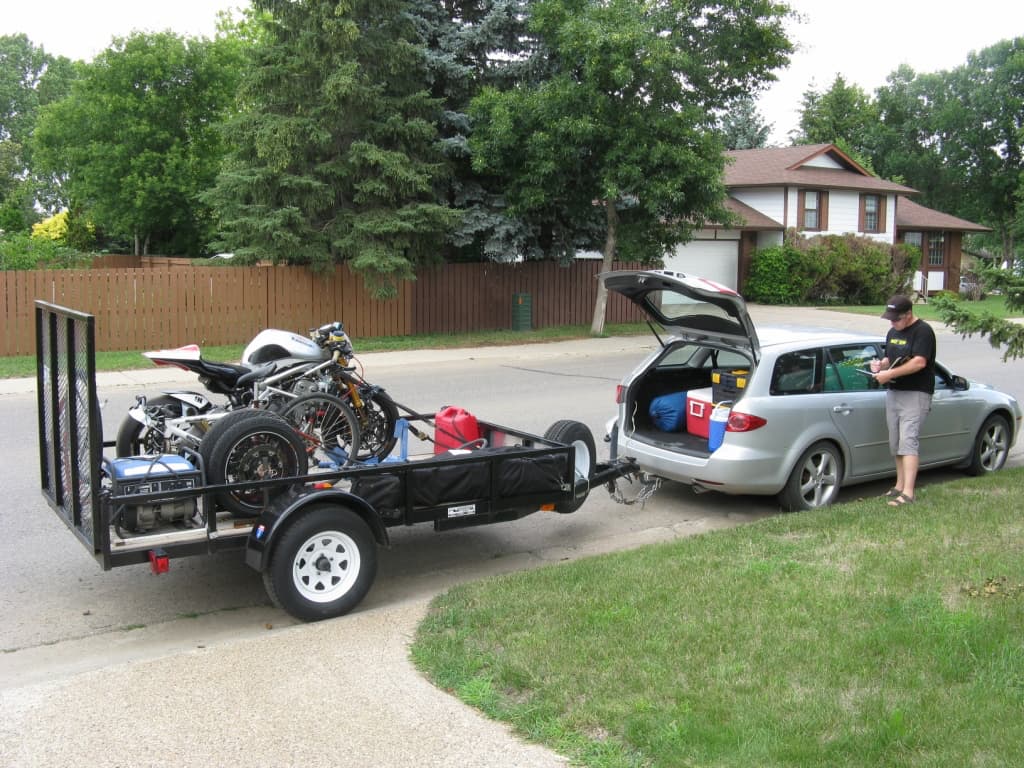
I also had a plan. Looking back, it reads like the outline of a Wes Anderson movie. I would ride the EX500 201 miles (one way) to the track, with my girlfriend following in her vehicle because I didn’t own a trailer. My gear was a set of two-piece zip-together AGV leathers, gloves, and street boots bought on sale from Dennis Kirk. I wore a Bieffe Pole Position helmet. She carried masking tape for the lights and mirrors, my limited tool kit, a change of clothes, and some serious reservations – mostly about my insistence on taking my pristine teal-and-purple motorcycle to the track, and the accuracy of the 2.5-star review of the Viking Motor Inn in Gimli, Manitoba, where I’d booked us a Friday night in July.
That was 1999.
And somehow, it stuck.
“That first track day lit a fire that’s burned with varying intensity ever since.”
Fast Forward - Getting Ready
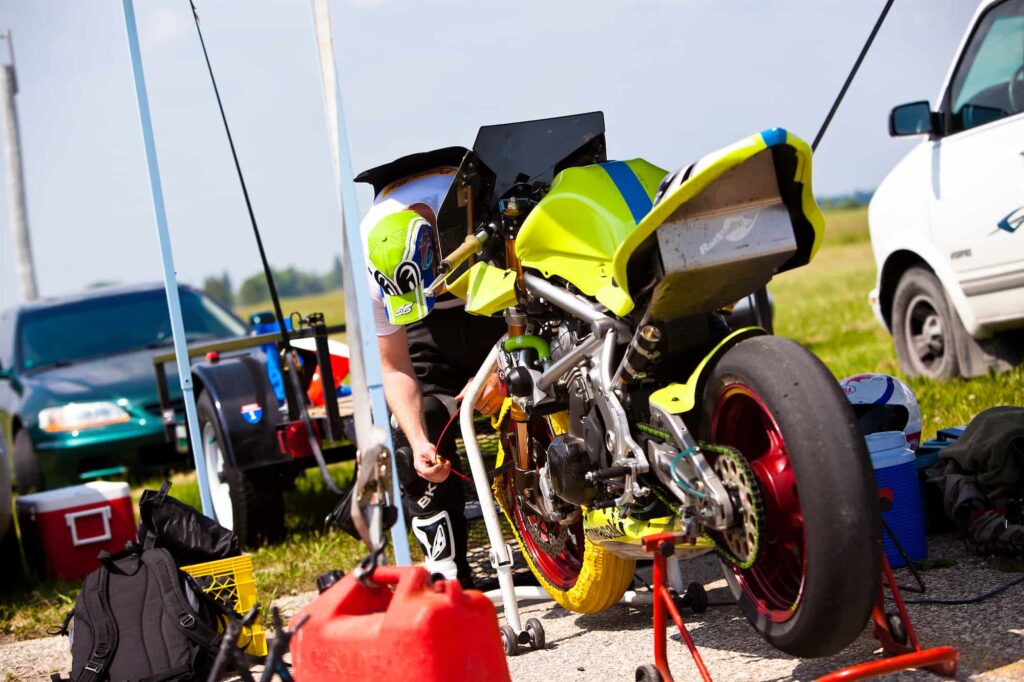
In my head, track days start a few days before you roll out. Not in a dramatic way. More like this slow, deliberate process where you gather your gear, check your list, and make sure you’re not the person wandering the pits at 8:10 a.m. asking if anyone has spare boots.
I blame hockey for this.
As a kid, forgetting one piece of equipment almost always meant missing the game. An elbow pad, a shoulder pad, or worse – your athletic supporter – and you weren’t playing. The “forget your skates” dream (or nightmare) is such a part of Canadian culture that musicians sing about it. You forget something once and sit in the stands, you usually don’t do it again.
And yet, a few times a year at the track, you’ll see it. A sheepish adult rider asking to borrow gloves, boots, or – incredibly – a helmet. I’ve even seen first-time track-day riders trailer the bike to the circuit, unload it, and realize the ignition key is sitting on their kitchen table at home.
Back in 1999, you could hotwire a lot of bikes and get away with it. On a modern bike, you’re not safely bypassing anything with sidecutters, wire strippers, and electrical tape.
So make a list.
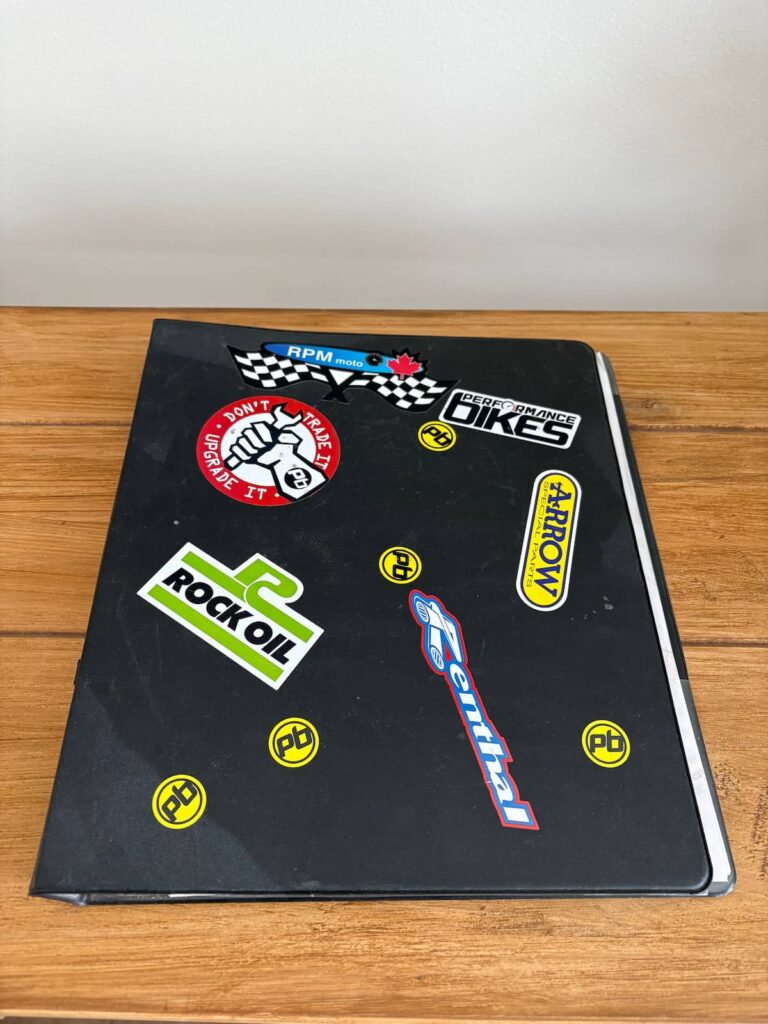
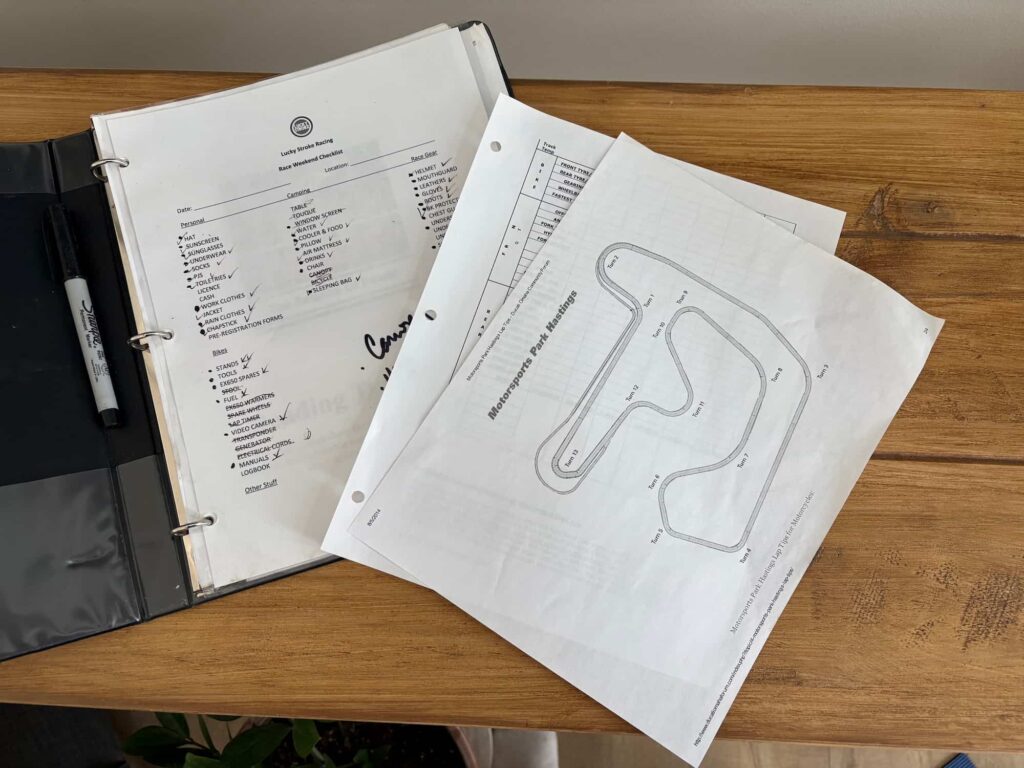
I’m from the analog era. I have “the binder.”
There are plenty of digital options now, and I’m sure they work. I just like the old-school approach. Airline pilots still use hardcopy checklists for pre-flight routines and emergencies, and I’m not above stealing a good idea when the stakes are real. Plus, a binder is a great place to stash extra stickers.
Inside, I’ve got a laminated list of everything I might need for a track day. I check items off with a non-permanent marker, erase it afterward, and do it again next time. I’ve also added sheets for suspension setup notes and track maps. It’s worked for track days and racing at my local track, and it’s worked for bigger trips too – including a 2,000-mile return run to Hallett, Oklahoma.
There’s another side benefit: a checklist puts your head in the right place. Track riding is fun, but it’s still serious business. Approaching the loading process with intention helps set the tone before you ever hit pit lane.
Physical and Mental Prep
There’s a lot of talk lately about mindset. Visualization. Focus. Flow. Call it whatever you want.
What I think gets missed sometimes is the physical relationship with mindset.
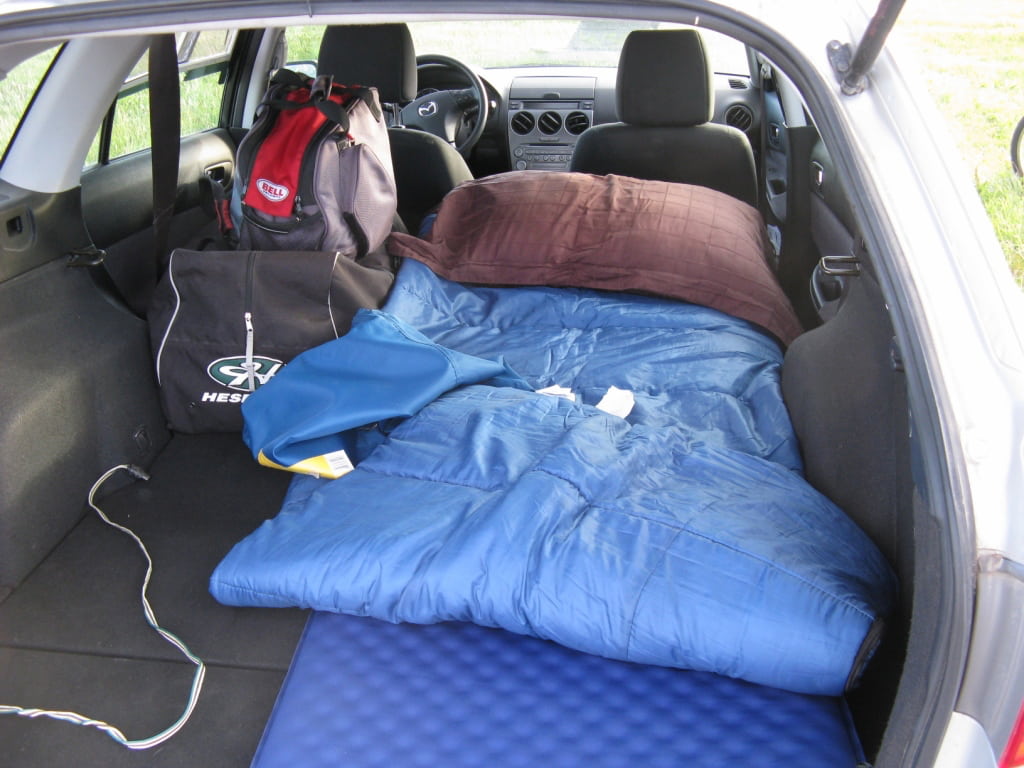
Even after all these years, I still don’t sleep particularly well the night before a track day or race weekend. A lot of Fridays, I bolt from work and drive straight to the circuit. To save money over the decades, I started camping at the track because two nights in a hotel costs about the same as a set of tires.
One of the few advantages of a 29-inch inseam is that I can wedge myself into the back of a station wagon or SUV and skip the tent. Why I still sleep like garbage the first night in those luxurious accommodations is beyond me.
At this point, I plan for it. Adrenaline, a little caffeine, lots of water, and proper food carry me through Day 1. The good news is that after a full day at the track, I sleep like the dead the second night.
If your club offers a track walk or a tour, take it. Local hotshoes can point out turn-in markers, apexes, and sections of pavement that matter before you go out in anger. I’m approaching three decades at the same local circuit, and I still walk it Friday night or early Saturday. The track hasn’t changed much, but the walk orients my brain and reminds me where I’m going. MotoGP riders do this too, and there’s a reason.
And then there’s stretching.
Track riding is mental and physical, and stretching is a simple thing that often gets overlooked. You can be sharp and fit, but if you do go down, being loose and limber may help reduce soft-tissue injuries. Being on the wrong side of 50, I use the riders’ meeting as a good time to stretch. I’ve got the notes memorized by now anyway, and it’s a moment where nerves rise – stretching helps settle me and focus up.
It’s not a guarantee, obviously.
I spent part of my 48th birthday in the Gimli Hospital because I thought it was a great idea to race a Suzuki Bandit 1200 in an endurance race, on cut slicks, in the rain. The pavement-body interface dislocated my shoulder so badly I needed fentanyl so they could reset it.
“No trophy and no track-day bragging rights are worth putting your health, career, or family at undue risk.”
Getting Out There
Whether it’s your first session or your 50th, when your group gets called to the hot chute, the butterflies show up. It’s a stress moment, and I’ve seen riders forget basic stuff in the excitement.
Bike tipped over coming off the stands? Check. Heading out with the rear tire warmer still on? Check. Run out of fuel mid-session? Check. Bodywork falling off the bike? Check.
Tech inspection varies by organization. Some are thorough. Some are basically self-tech with a waiver. Either way, I treat my first session like a “pre-flight,” and I do a quick check between every session too. Nothing fancy. Just a calm, repeatable routine.
Quick pre-session check
Check throttle play.
Turn bars lock-to-lock for free steering movement.
Look for fluid leaks (oil and coolant).
Check tire pressure and condition.
Check chain tension and condition (especially if you run a clip master link).
Check fairing bolts and fasteners.
Check shift linkage.
Check brake lever feel and brake pad life at a glance.
Check fuel level.
Once the bike checks out, I grab some water, get a bite, or start bench-racing with friends. I’ll also look at the track map and remind myself what I’m working on.
There are plenty of videos and articles about using track maps for lap time improvement – braking markers, gear selection, lines, and so on. That’s useful… but I wouldn’t push that on someone’s first track day. Early on, the goal is to learn the environment and learn the bike.
I used to run a transponder constantly and obsess over the numbers. These days, I’ll go without it and judge progress more simply – by how the day feels, how consistent I am, and where I sit within my group.
During the Day - Keep Monday in Mind
Every session has a chance to teach you something, but that doesn’t mean you need to chase a later brake marker or earlier roll-on every time. That comes.
The question I like better is: what are you trying to learn today?
New bike? New track? New suspension? Slicks for the first time? First time in the wet? First day in Intermediate or Advanced? Those are real mental loads. Add them up, and you still need to remember one more thing:
What’s on Monday?
Unless you’re retired or independently wealthy, I’d argue you should keep something in reserve, no matter how good you get. No trophy and no track-day bragging rights are worth putting your health, career, or family at undue risk.
Over time, I’ve seen riders come and go – usually because money gets tight or family life grows. More painfully, I’ve seen a few leave because an injury changed their life forever. None of us are professional racers. This is a big part of our lives, but it isn’t our whole life.
I’ve experienced the “red mist.” Sometimes it’s led to a breakthrough lap or a good race result. Sometimes it’s led to a crash – including that trip to the ER. My wonky wrist and limited shoulder range of motion are still around to prove it.
“Chicks dig scars,” sure. But calling in favors to get help unloading your damaged bike because you’ve got one usable arm after the long drive home is a humbling experience.
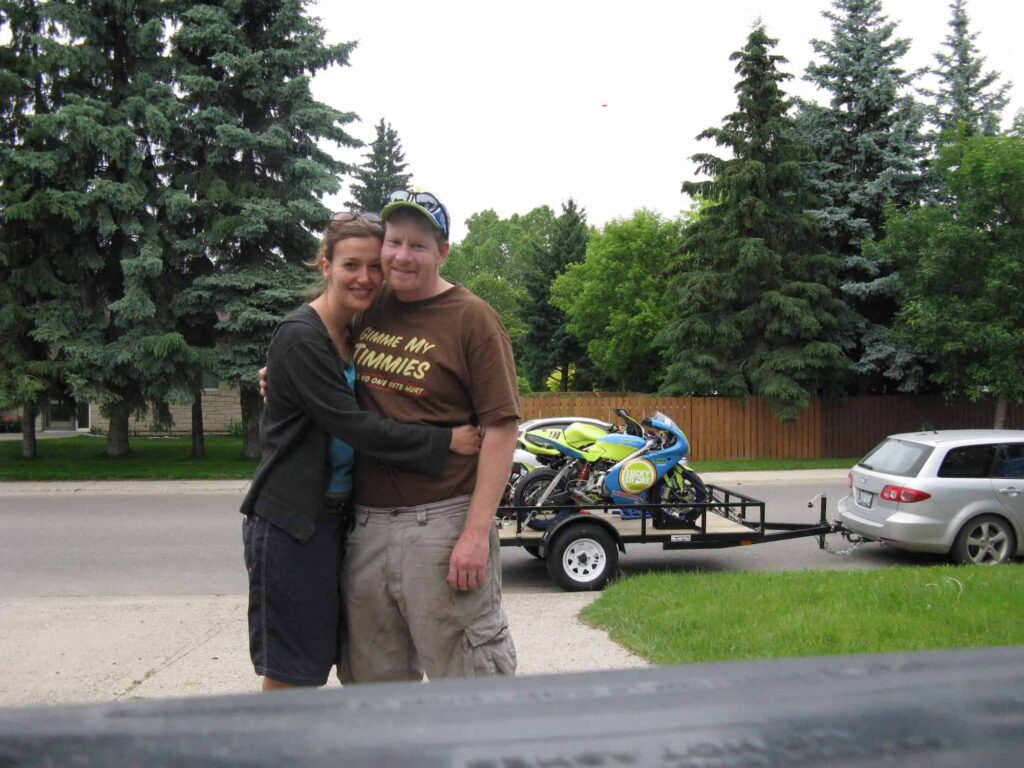
“And the best part is, the girlfriend who came with me in 1999 is still with me, 27 years later.”
Après-Track
Bench racing and BS-ing is usually improved with alcohol. I have had a light beer or two immediately following the Saturday sessions, but if I am sticking around for Sunday, I follow the “12 hours, bottle to throttle” mantra of, you guessed it, aviation. I can get drunk any weekend; I only do 4-6 trackdays in the short Canadian season. Why would I miss a morning session or have a crap day because I am hungover or not my best? Further, it’s irresponsible to yourself and your fellow riders going out on track suffering from the residual effects of booze or drugs. Maybe I’m being a bit preachy but seeing guys get absolutely shattered in the pits the night before a Sunday session does not inspire confidence. You know your own limits, so please stay well within them.
From the Paddock to Your Inbox
Subscribe to our newsletter for new stories, issue updates, and paddock news.
This is one person’s experience, collected over years.
That first track day lit a fire that’s burned with varying intensity ever since. I’ve retired from racing more times than I can count, and I keep coming back after time away. This hobby gave me riding skills far beyond what I could learn on the street. It made me a more-than-competent mechanic. I’m not fast by any means, but I’m quick enough not to embarrass myself – and I’ve won a few races.
The memories stick: good days, bad days, friendships, and the big trips – Mid-America Motoplex, Hastings Raceway (who knew Nebraska was so cool?), and Hallett.
And the best part is, the girlfriend who came with me in 1999 is still with me, 27 years later. I’m not sure she knew all that was included in the marriage contract.
The Next Step
As you get ready for your next track day – your first or your 50th – you might eventually wonder if you should take the next step.
Track days are fun… but maybe you’re tired of paying insurance premiums on a streetbike. Maybe the local roads are too boring, local drivers too clueless, and you’ve had one close call too many with a Dodge Caravan.
Maybe you have too much money and need to spend it like a drunken sailor on shore leave.
Maybe you should just start racing.
TrackDNA safety note
This piece reflects one rider’s experience and personal routine. Motorcycle riding is risky, and what’s appropriate varies by rider, bike, track conditions, and your track organization’s rules. Ride within your limits, follow your org’s protocols, and when in doubt, choose the safer option.
Issue 01 is Out Now
TrackDNA Issue 01 is a 124-page premium, community-driven magazine for motorcycle track riders & enthusiasts.
James grew up around an aircraft mechanic’s shop, where safety wiring wasn’t a “nice to have” - it was how you kept critical parts from coming loose when it mattered most. He carried that mindset into his first race prep in 1999, learning the hard way (and by hand) how to drill and wire fittings properly. After nearly 30 years at the track, he’s seen exactly how small hardware mistakes end weekends early - and why doing the work yourself makes you a better mechanic and a safer rider.