As the son of an aircraft mechanic, long before I started riding and racing motorcycles, I’d heard about safety wiring. Dad ran a small shop on the Canadian prairies in the early 1980s. When I spent time with him (likely due to a lack of available babysitters), he’d point out things on small sport aircraft or cropdusters. One day he explained why all the nuts on the end of the propeller fitted to the little yellow Piper Cub had wire connecting them together. My imagination filled in the negative outcomes of a propeller falling off in flight.
Fast forward to 1999 and I was preparing my Kawasaki EX500 for my first race weekend. Dad was still around to help, and while I suggested I pay for a nice set of safety wire pliers, he scoffed and proceeded to show me how to wire fittings by hand. It did lead to some wasted wire and some bleeding, but the end result was the same.
However, we need to back up and figure out the “why” of safety wiring, what fittings (bolts and/or nuts) need to be safety-wired for track days or riding – and then how to drill holes in those fittings.
TrackDNA Note: Brand examples mentioned in this article are for identification only, not paid endorsements.
I’ll be using the term “fittings” interchangeably to describe the variety of bolts, nuts, and other things you may want to safety wire to your motorcycle.
Why?
On any machine that is subject to vibration, movement, and temperature change, bolts may loosen over time. The idea with safety wiring is simple: you use thin, strong wire in such a way that a bolt or nut simply cannot loosen off – or at least cannot loosen enough to cause a failure.
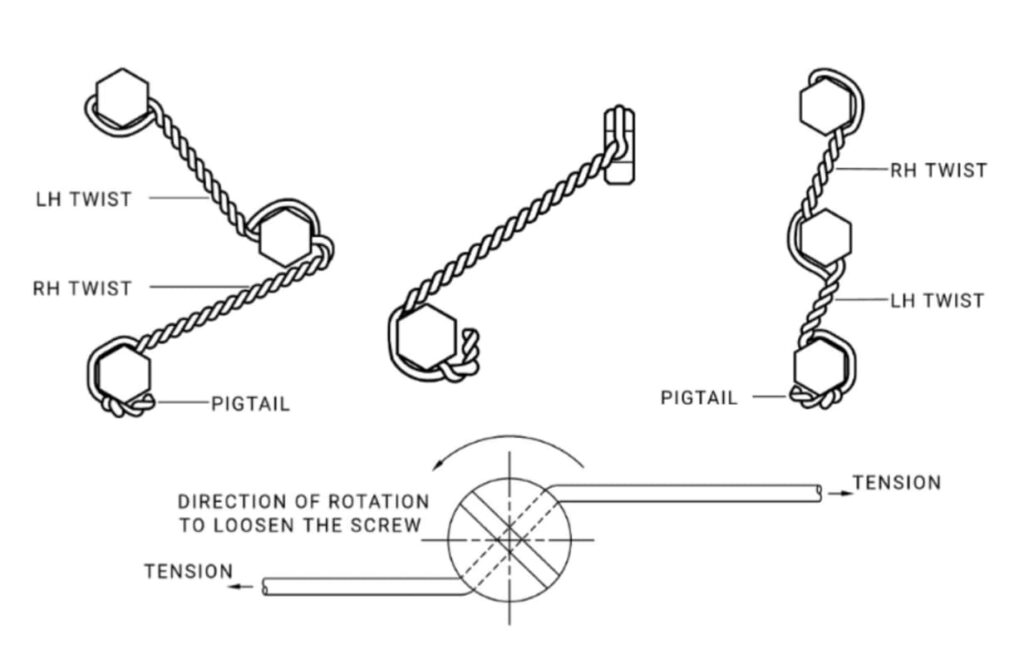
Using the theory of “righty tighty, lefty loosey” (unless the bolt is a left-handed thread), the key is to orient the wire so the bolt or nut is always under tension in the tightening direction. An online search will find plenty of diagrams (often courtesy of aviation sites) showing good safety wire routing.
Note that aircraft mechanics need to keep airplanes from falling out of the sky, so they even specify the direction of the twist in many diagrams. I humbly assert that part is overkill on a motorcycle. The important part for us is that the wire must pull the fastener toward tight, not toward loose.
What?
Depending on your local sanctioning body or track-day provider, they will specify in their rulebook or guidelines what bolts, if any, need to be wired. After going to the track for nearly 30 years, I think the “bare minimum” is a good place to start.
I can’t keep track of how many riders I’ve seen go home early because a critical bolt wasn’t safety-wired, and it came loose and fell off somewhere between pit lane and who knows where. Sometimes someone has a spare, but often that’s not the case, and the rider’s weekend is done.
Further, I’ve seen what happens when fluid-retaining bolts come loose and foul the track. There is no less-popular person in the world than the one who causes a needless delay to a race or track day weekend because the corner workers have to spread oil dry on the track.
My personal top bolts/nuts to safety wire, in order of importance:
Oil drain bolt and oil filter
Oil fill cap
Radiator drain bolt
Radiator cap
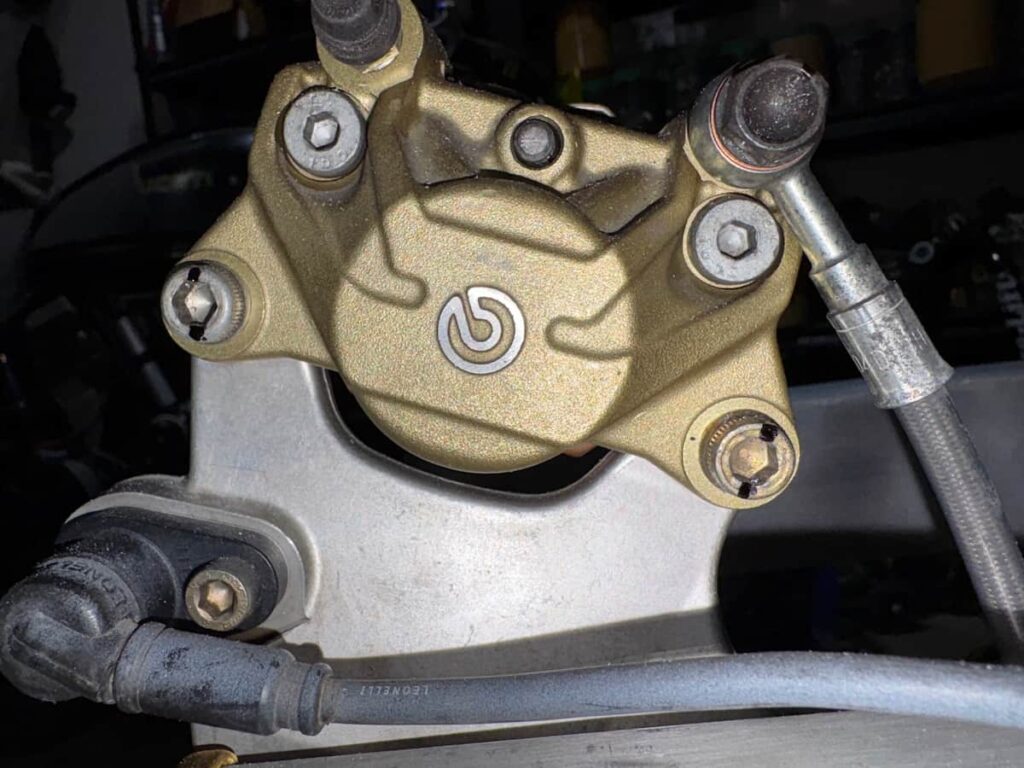
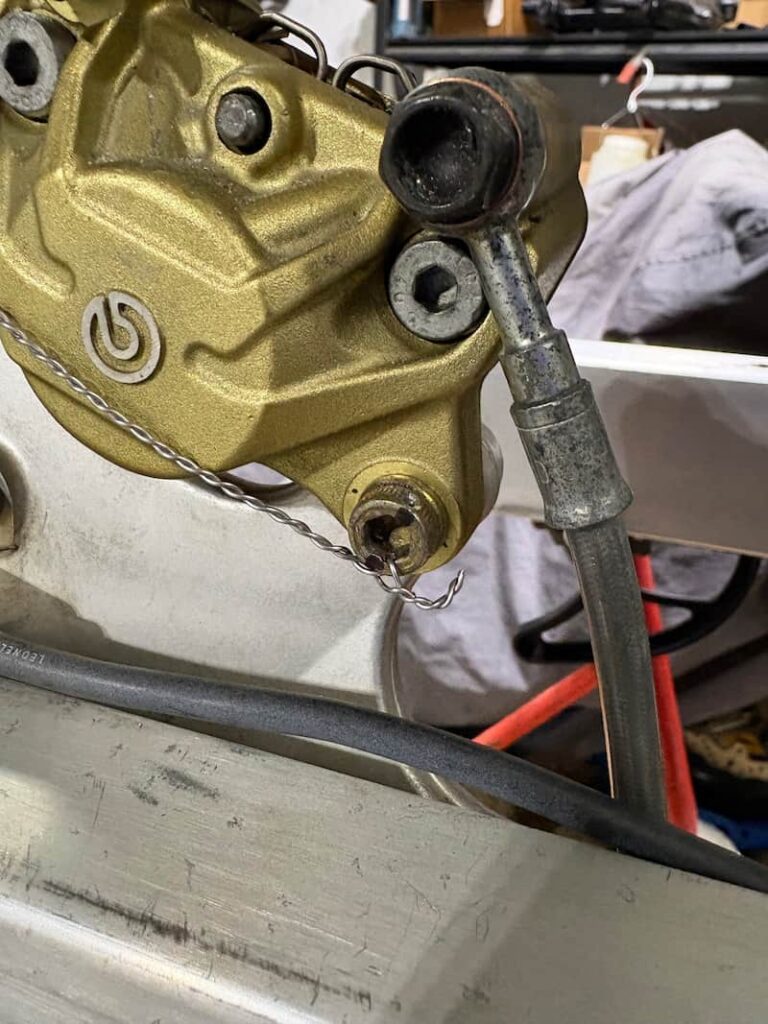
Brake caliper bolts
Brake banjo fittings
Rear axle nut
Front axle pinch bolts
Front axle nut
Shift rod assembly (depending on design)
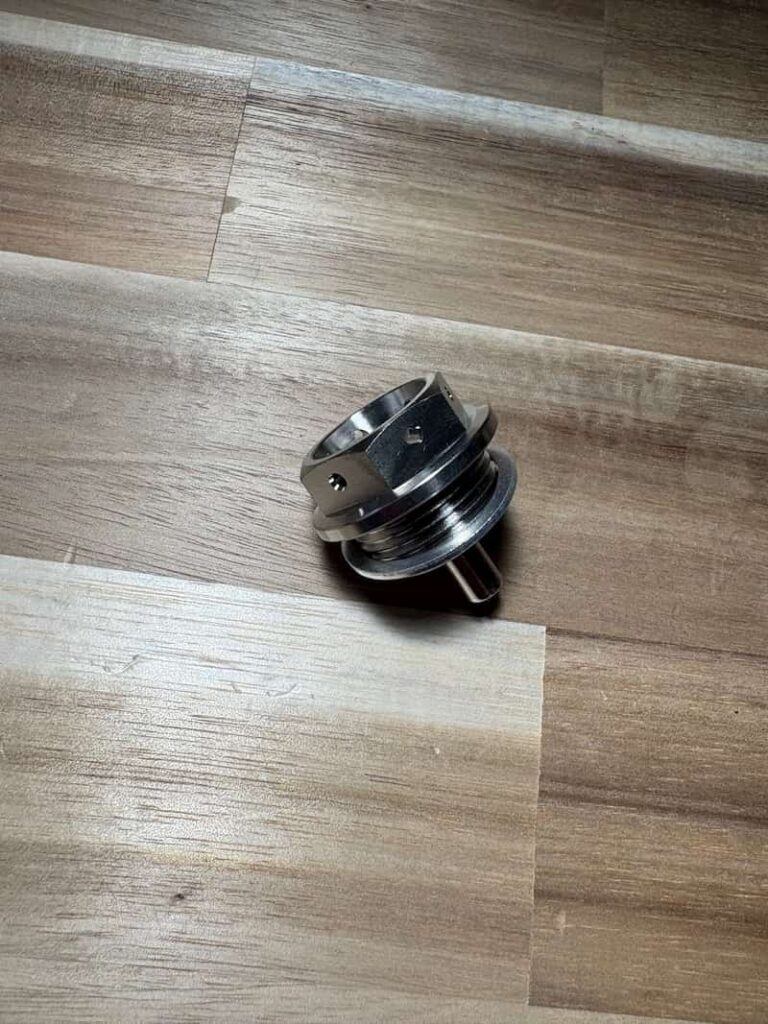
I’ll end this section with a confession: a while ago I started treating myself to pre-drilled oil drain bolts, mainly due to the flush design Ducati uses on older air-cooled bikes. These can be found in titanium, with a proper magnet to catch impurities in the oil, and pre-drilled for safety wire, for around $30. I did recently do a few for Kawasakis and Hondas for fellow racers, and the principle is the same.
Photos by James Sheppard
TrackDNA safety note
This is general information based on personal experience, not individualized coaching or mechanical advice. Riding and racing involve real risk. Always follow your track org’s rules, torque to spec, and if you’re unsure about drilling or wiring any specific fastener, ask a qualified mechanic or race prep shop.
How?
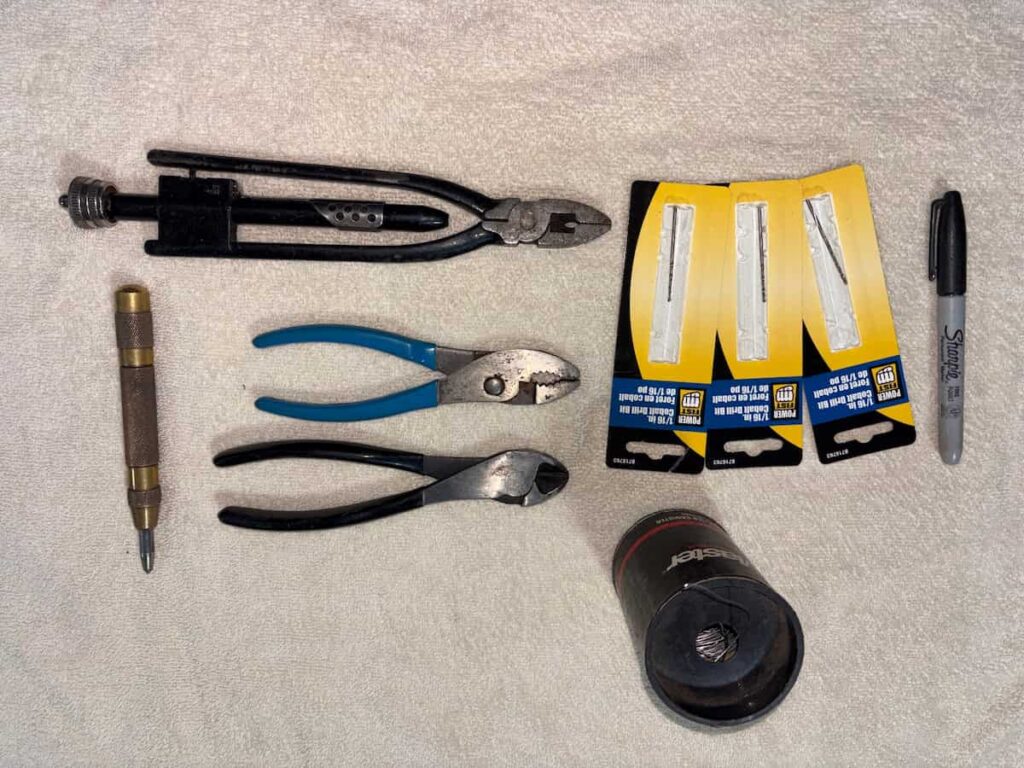
The first step is to get the correct tools.
Sharpie marker
Drill or drill press (preferred)
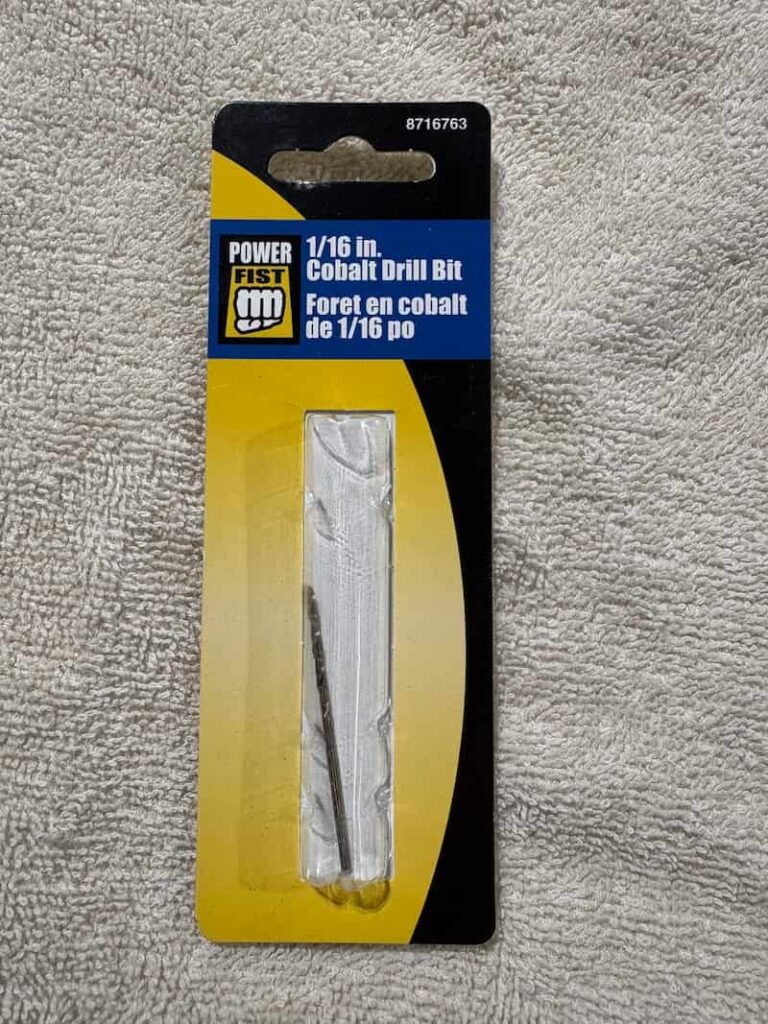
1/16″ cobalt drill bits (I’ll explain later – buy more than one)
Spring punch (optional, but makes life easier)
Safety wire (available through a race shop or online)
Safety wire pliers (optional)
Wire cutters
Pliers (optional)
Step 1
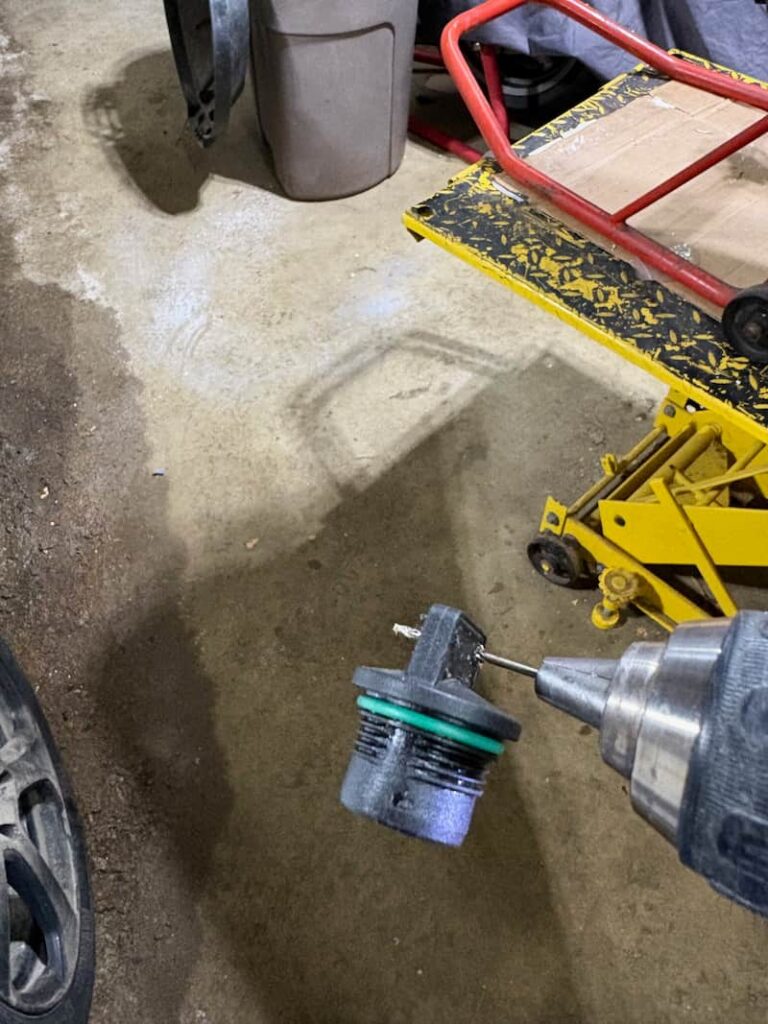
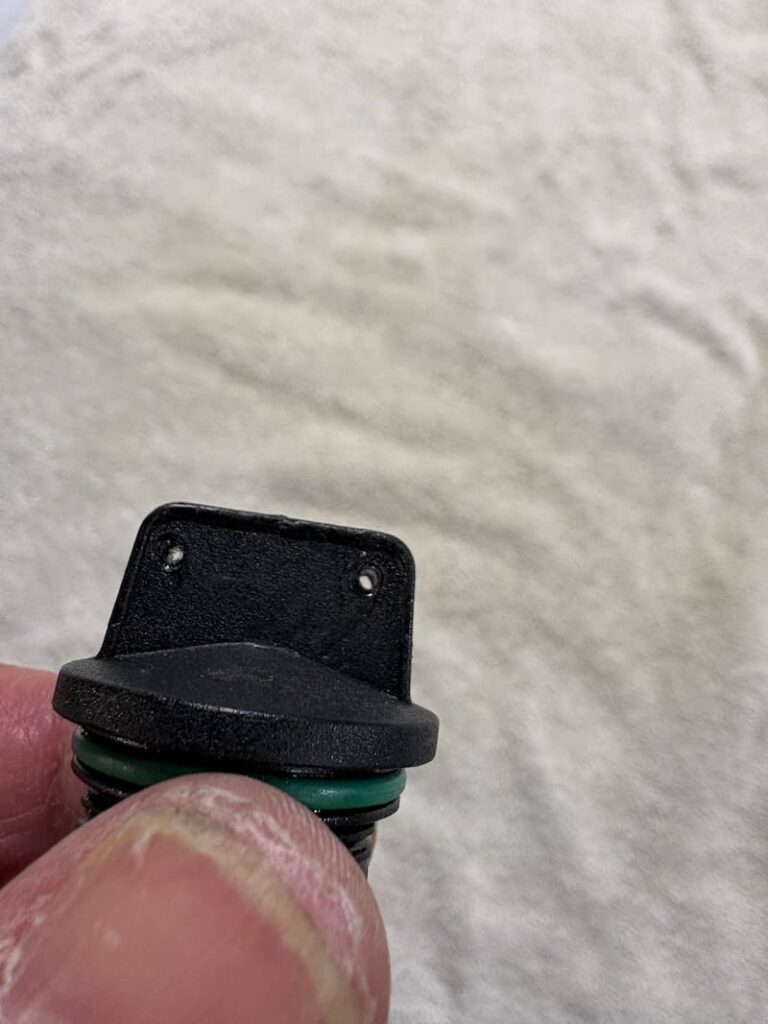
A good practice fitting is drilling the oil fill cap on the engine. It’s usually plastic, so the drill bit will sail through the material. As I’ll explain below, drilling 2 holes ensures that you will always have things oriented properly to keep the wire under tension.
Once you have decided which fitting to start with, ensure it is mounted in place and tightened to spec. Mark the fitting where you are going to drill the hole with the Sharpie. At this point you need to figure out what you are going to wire this bolt to – another bolt, a frame tab, or something else nearby.
Mark a second hole on the fitting 180 degrees from the first spot. A second hole might be overkill, but I’ve found that when you’re at the track scrambling to put the machine together for the next session – and you have multiple safety-wired bolts (for example, on a brake caliper) – you don’t have to worry about which bolt goes in which position. You are more likely to be able to install the bolts in a hurry, set the torque, and at least one of the two holes will be oriented properly for safety wire.
Remove (if necessary) the marked fitting for the next step.
Step 2
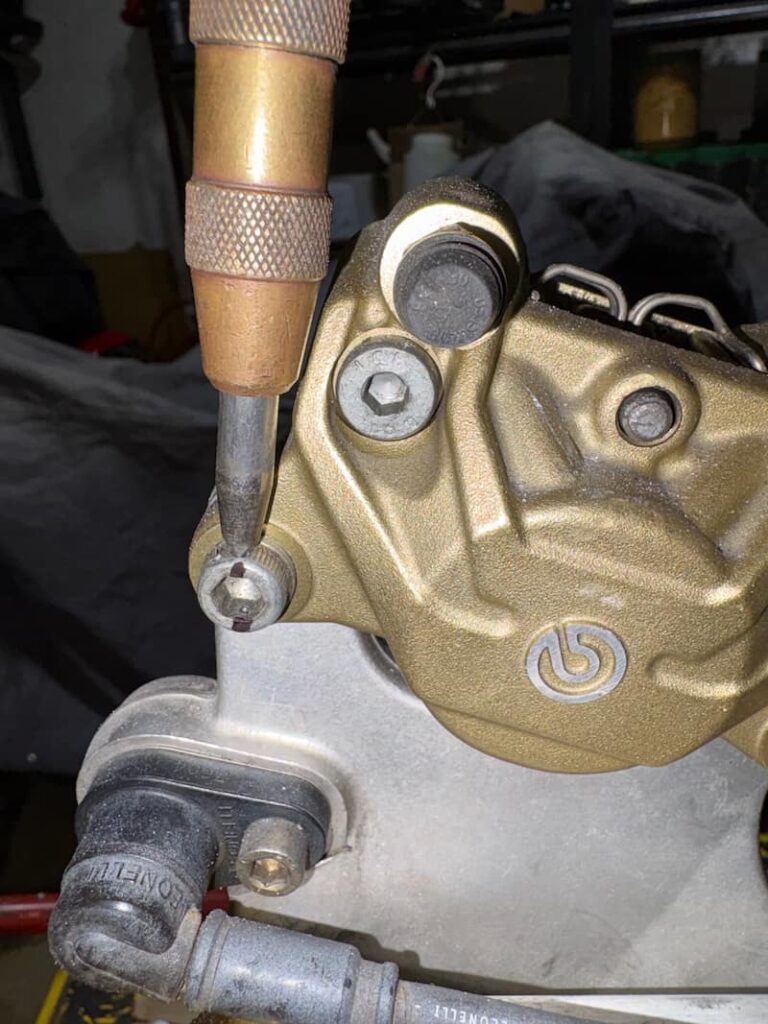
A spring-loaded punch is one of those inexpensive tools that makes your life much easier. Align the punch with your mark, press down, and the resulting small divot allows you to center the drill bit and prevent it from walking across the fitting when you start to drill.
I’ve had my punch for decades, and it is one of my favorite tools. You’ll find you use it constantly, even on non-motorcycle jobs around the house.
Step 3 (PPE note - protect your eyes)
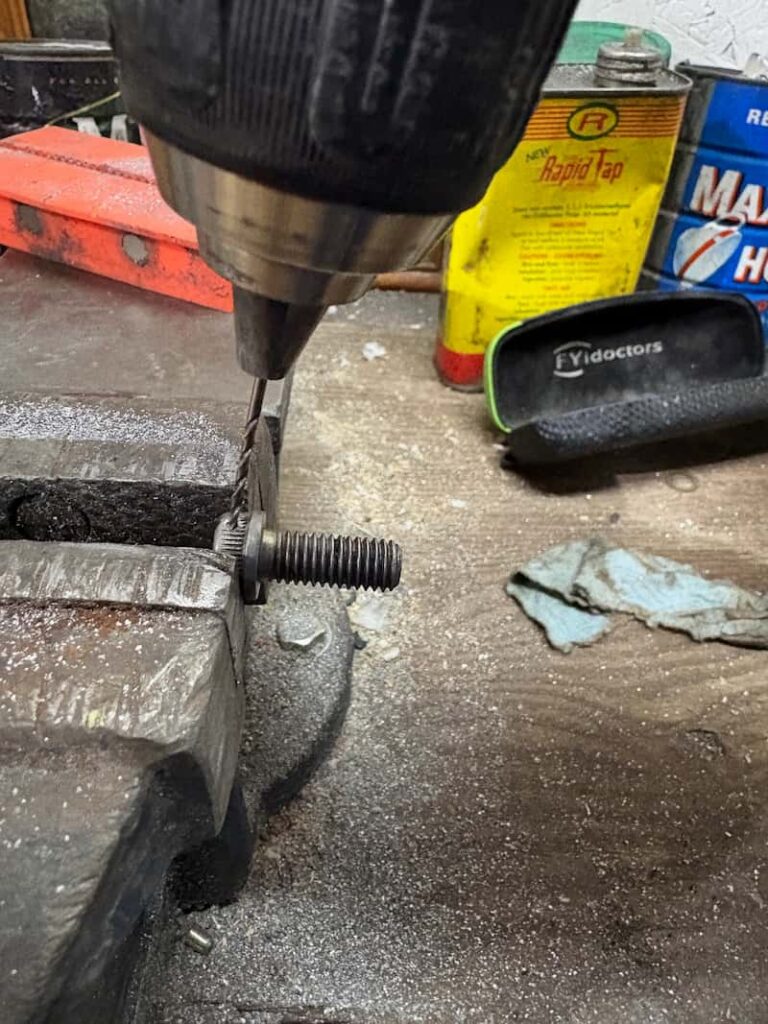
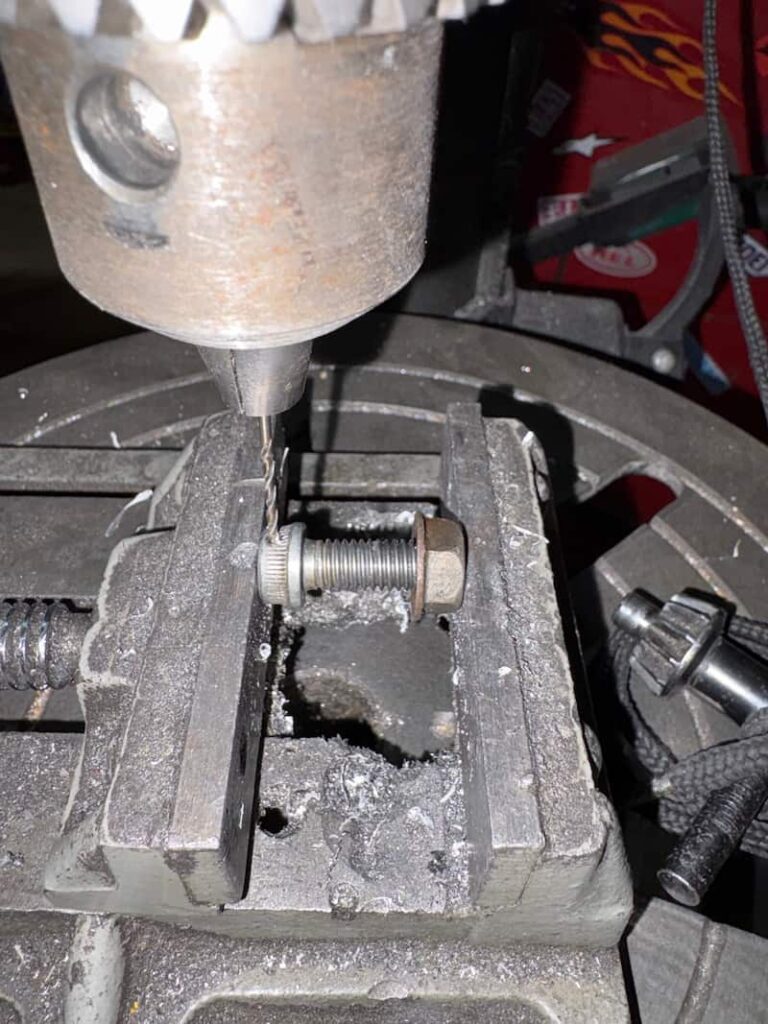
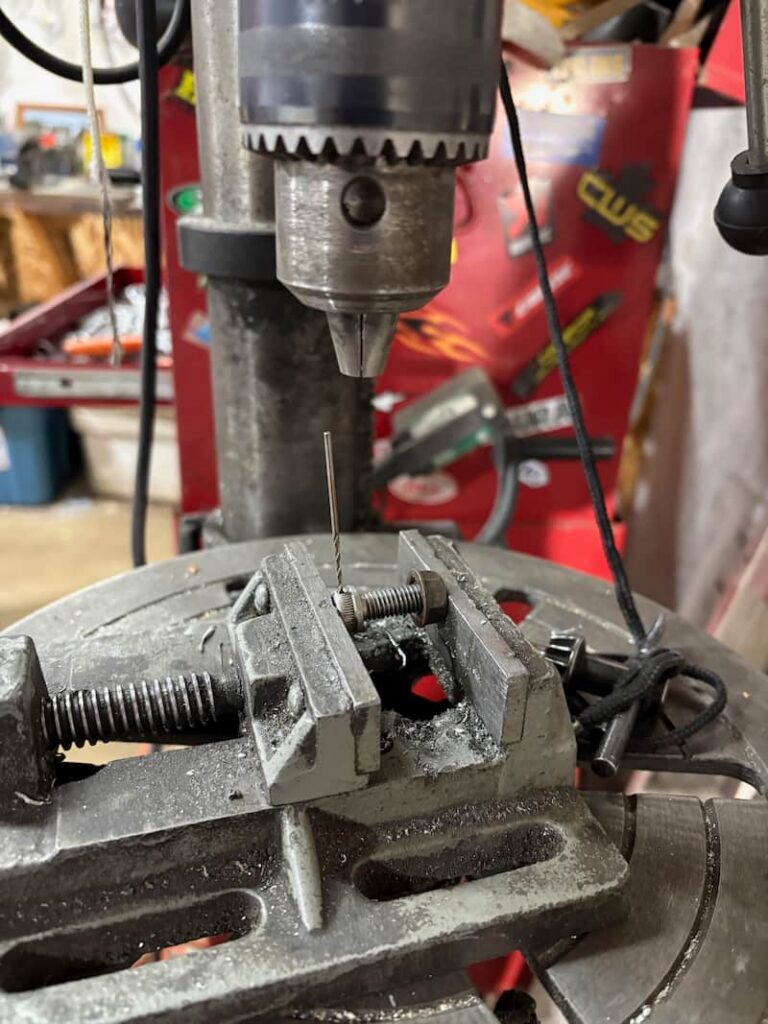
If you don’t have a drill press, you will need to find some way to secure the fitting you are about to drill. You can drill the bolt while it is still on the bike, but usually there is something that gets in the way. A hand drill and a small vise will work (if you have a steady hand), but the best option is a drill press with a small drill press vise to hold the fitting steady.
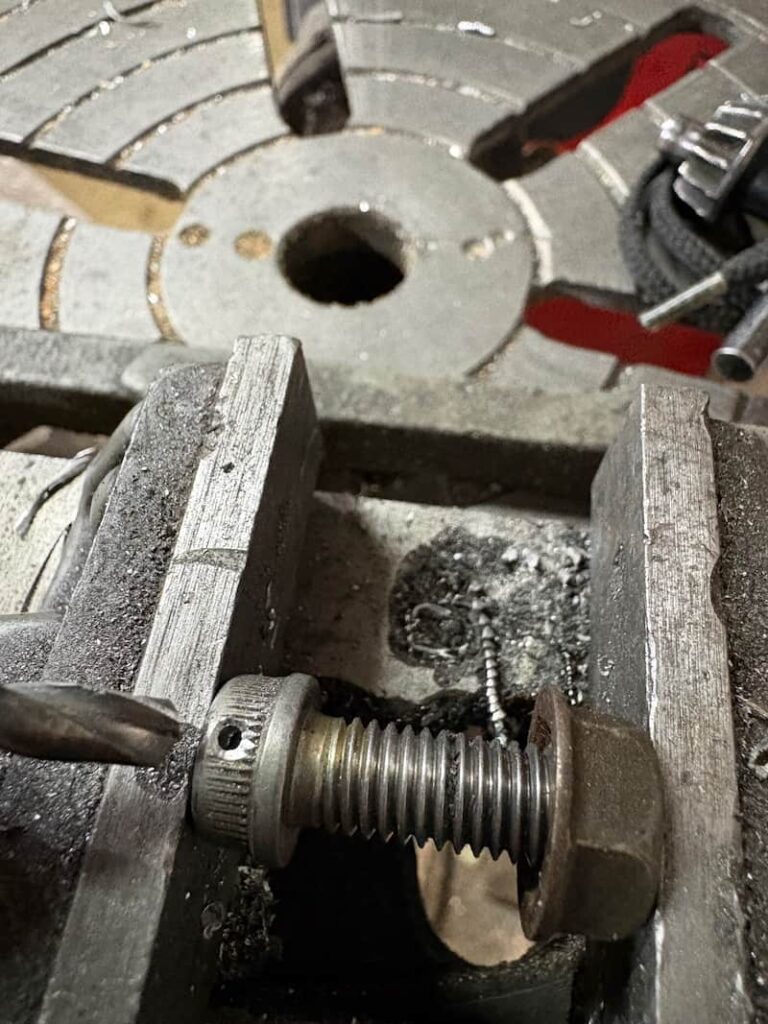
Depending on the length of the fitting (for example, a bolt), you have a few options to secure it prior to drilling. Clamping it around the head is one option, but on a round Allen bolt head this isn’t ideal – the clamping force isn’t great. In the photos below, that setup often results in broken drill bits, skinned knuckles, and swearing in the language of your preference.
A better option is to orient the bolt in the vise so the entire length is supported. You can also thread a nut onto the end for extra security and to protect the threads.
Secure the drill bit into the drill chuck.
A note about what type of drill bit to get: you are going to drill a number of holes, so it’s worth tracking down cobalt drill bits. They are more expensive, but much better at drilling into harder materials (they will even drill into titanium) and they stay sharp longer. The drill bits advertised as “titanium” often only have a titanium-colored coating – they are typically still high-strength steel bits with a gold finish. They’re fine for regular work, but this is precision work, so spend a few extra dollars and get 3-5 cobalt 1/16″ drill bits.
Set the drill speed to its slowest setting, make sure the bit is aligned straight, and start to drill. Like everything in life, take it slow and don’t force it. If you see the bit start to bow, back off – you aren’t far from it breaking and firing a small hard piece of metal across the shop or into your eye.
Over time you’ll get a feel for how quickly the hole is being drilled. You’ll also notice the swarf coming out of the hole. If it’s a hard material, it will come out like metal grains. If it’s softer, you might see the material curl around the bit as it comes out. Both are a good sign.
Note: as you get close to the bit finishing the hole and coming through, you are approaching the point where the bit is most likely to break off into the hole. If it breaks, sometimes you can extract the broken bit and start again. Most often the bit breaks off flush and there is no way to extract it or drill it out. Very frustrating.
Two tips to avoid breaking the bit:
Ease pressure as the bit begins to come through and let the bit slowly finish the hole.
Don’t overtighten the drill bit in the chuck. That way the bit can get stuck at the exit of the hole but not snap. Stop the drill, carefully remove the bit, re-chuck it, and finish.
Success.
You’re not done yet. Check the exit of the hole you drilled for swarf or burrs. For the entrance of the hole, you can quickly chamfer the edges with a larger drill bit, often by hand. It’s a bit excessive perhaps, but sharp edges are never good – they can weaken things, become a source of cracks, and they are a great way to cut yourself. A chamfer takes seconds and looks professional.
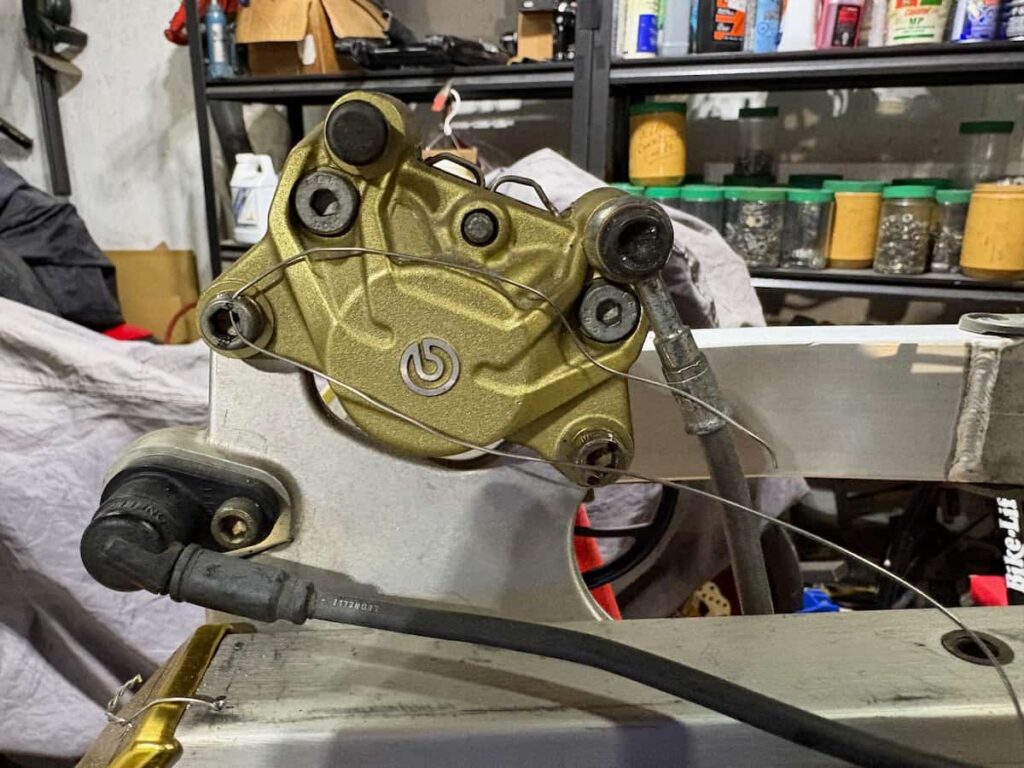
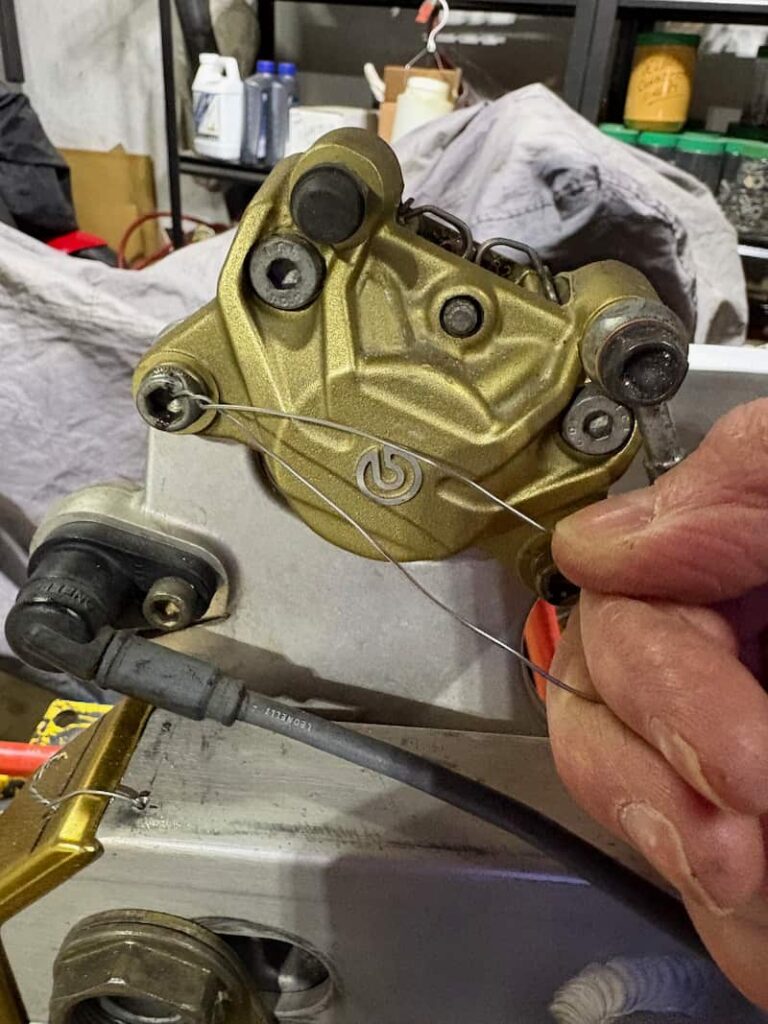
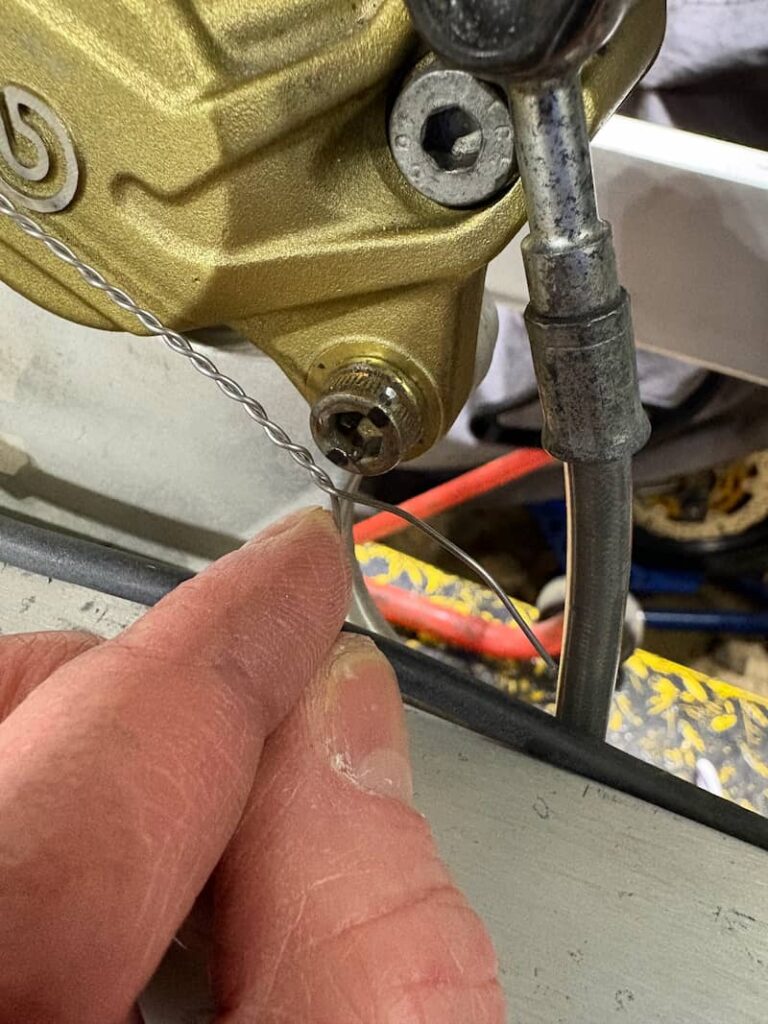
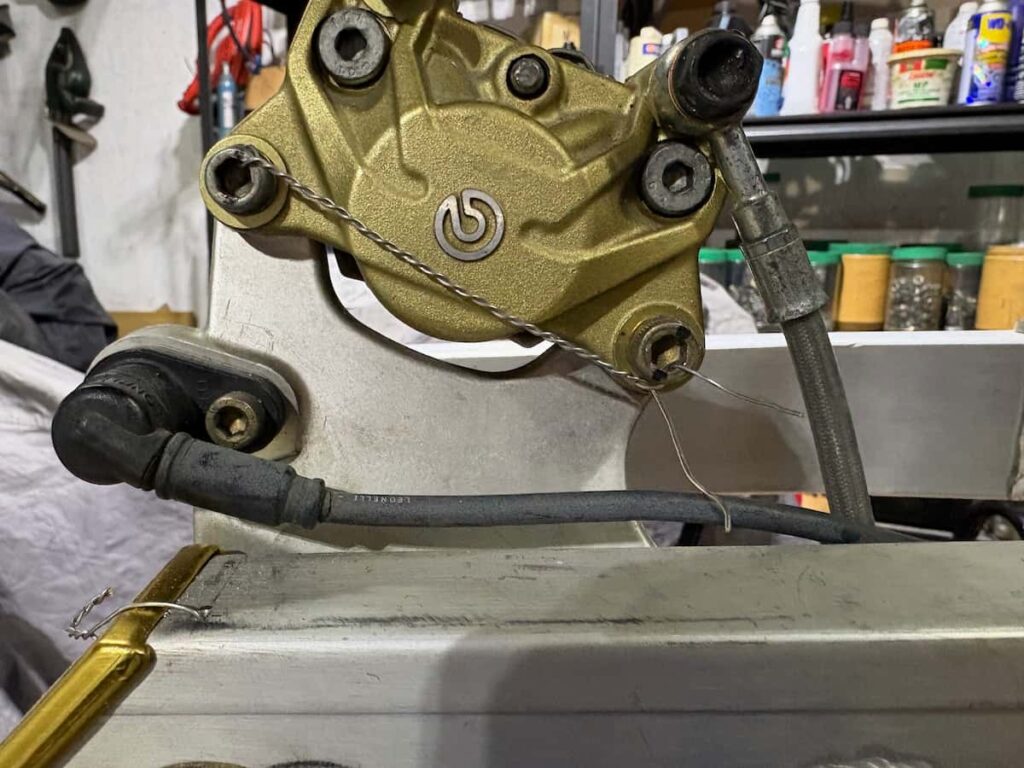
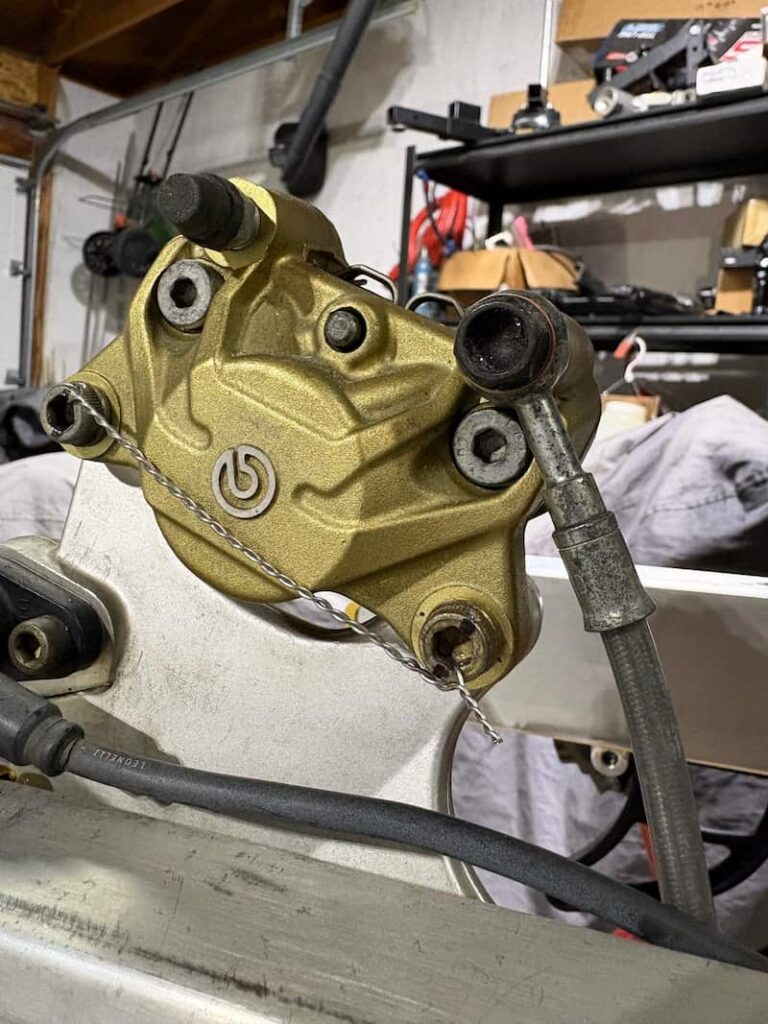
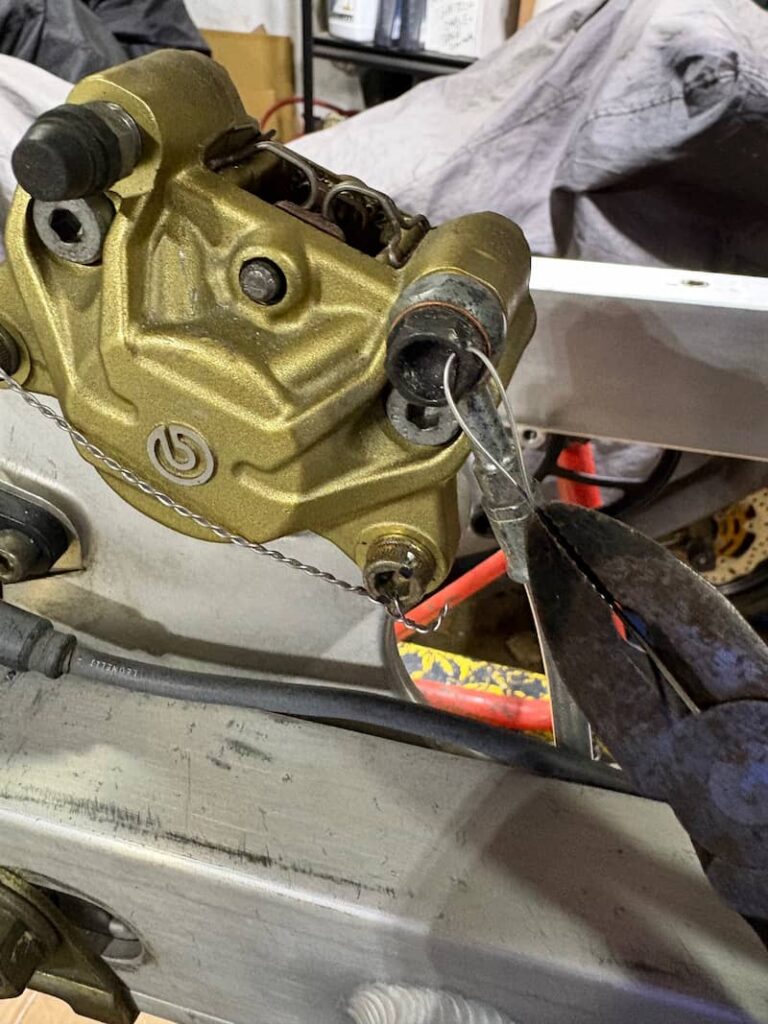
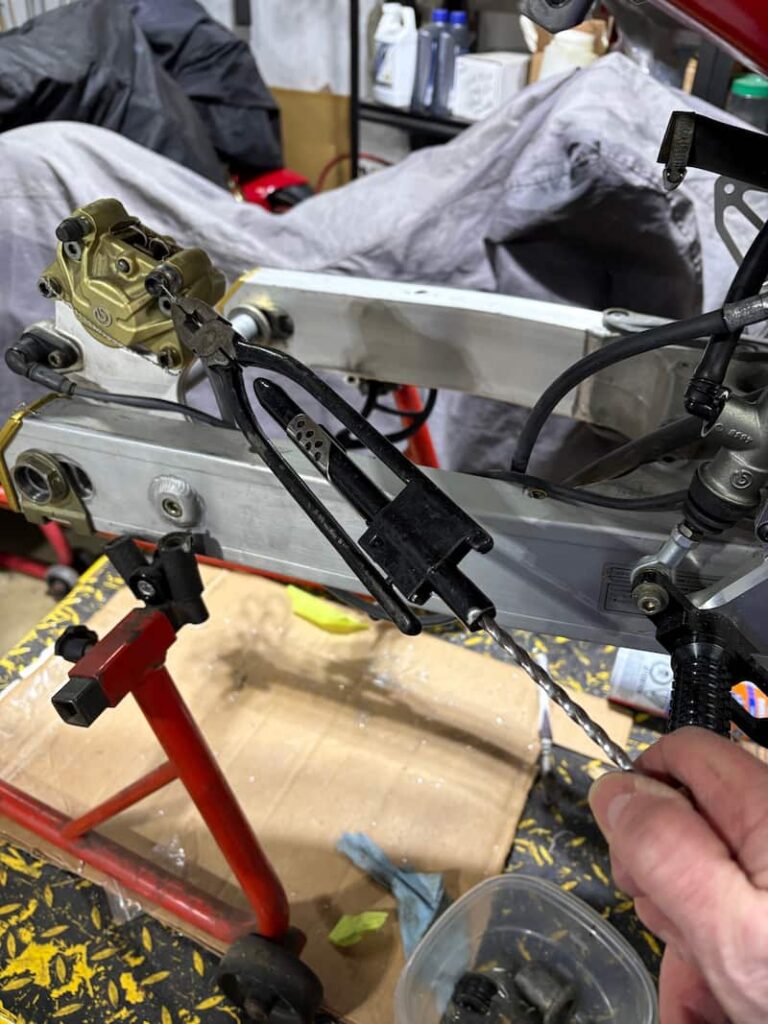
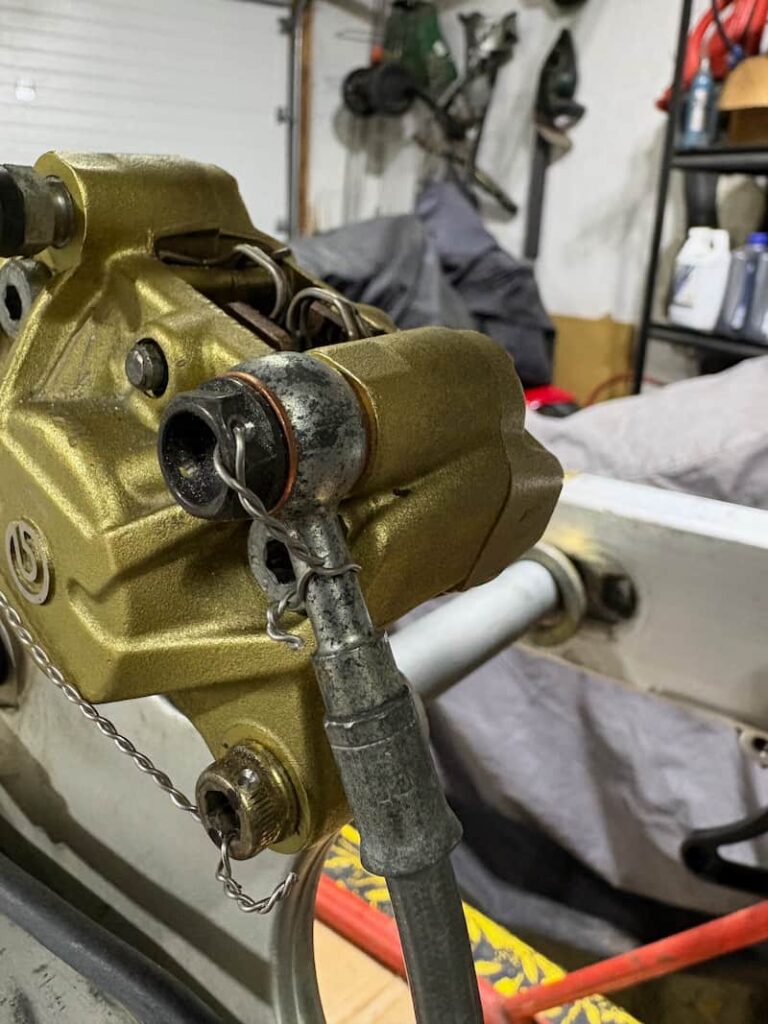
At this point, with the drill equipment set up, you can drill the rest of your fittings. For the sake of this article, we’ll move on to wiring. I’ll use the rear caliper on one of my bikes as an example to show wiring bolts by hand (the mounting bolts) and with safety wire pliers (the banjo bolt).
Step 4
Refit the bolt or nut you have drilled. If you marked it correctly, your new hole will orient itself so the wire can hold the fastener under tension once it has been set to the correct torque. This is also where the second hole might come in handy if you screwed up.
Thread the safety wire through the hole in the bolt head. To determine length, align it with the fixing point, give yourself some extra length for the twists, and snip it off with your wire cutters.
Next, start to twist the wires while pulling on both ends to maintain tension.
Continue this process until the twisted section meets the fixing point (either another bolt or a suitable adjacent part on the bike).
Thread one end of the untwisted wire through the hole or around the fixing point.
Twist these ends of the wire together approximately another 3/4″ to 1″. Snip off the ends inside the twisted section. How much you have left over (“wasted”) depends on your estimation skills. As you get better at this, you’ll waste less wire.
The last step is critical: with a set of pliers or the cutters (gently), bend and tuck the pigtail (the end of the wire) back onto itself, out of the way of errant fingers, pant legs, gloves, etc. No matter how you cut the wires, the ends are sharp, and this last step is more of a safety measure than anything else.
If you have the luxury of safety wire pliers, the steps are similar. When you have your wire inserted into the primary fitting, lock the pliers onto the wire ends where they meet the fixing point.
Twist the wires by pulling on the knurled rod. The advantage of safety wire pliers is they create uniform braids. Don’t overdo this – you can over-twist the wire, making the assembly brittle and ultimately weak. There is a formula somewhere that calculates the number of twists per length for aviation and aerospace purposes, but we’re not going into space here.
Affix the open end of the wire to your fixing point, twist the ends, cut off the excess, and then bend the pigtail back on itself to minimize potential blood loss now and in the future.
Oil sump and oil filter notes
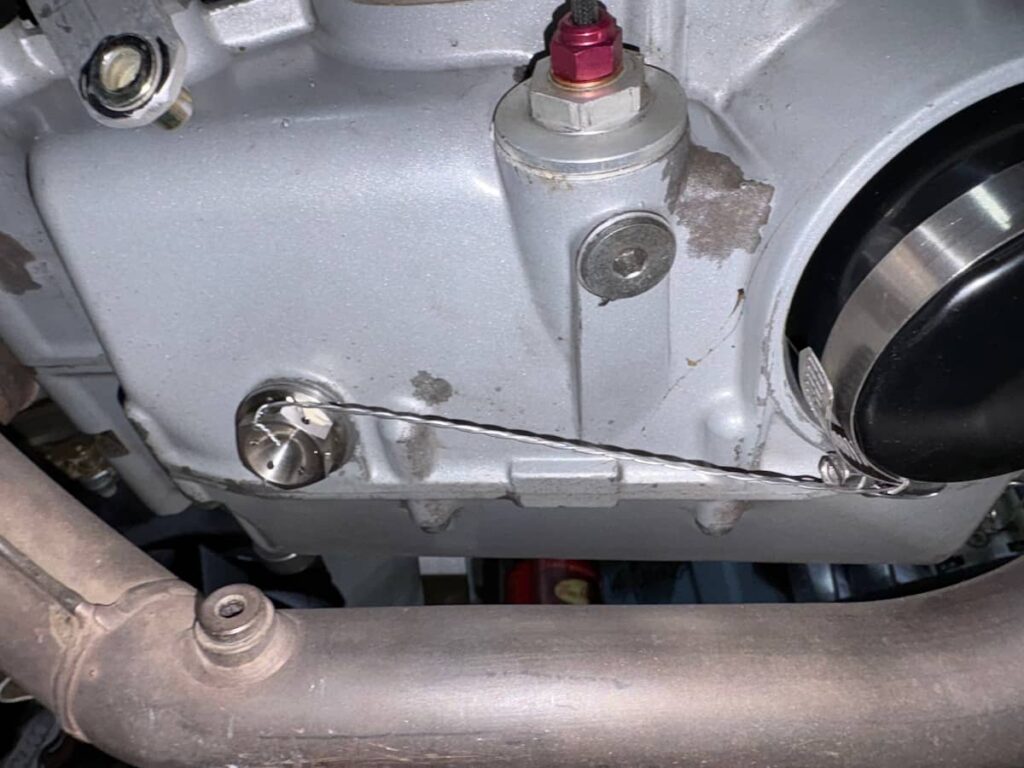
The oil sump plug and oil filter, depending on their location on the engine and orientation relative to each other, can pose a challenge. The principle for drilling and wiring the sump plug itself is the same, but the filter can be tricky.
Note that some organizations specify OEM oil filters only. The K&N oil filter with the nut on the end (which can be drilled for safety wire) apparently had a few failures, and some clubs have outlawed them. If so, the hose clamp technique is the best solution.
Once you’ve attached the hose clamp to the exposed body of the oil filter, you can thread wire through the worm gear on the clamp and wire it under tension as per any other bolt. Some riders wire the oil filter to another fixing point on the engine, whereas others wire the filter directly to the sump plug.
A couple photo-based examples
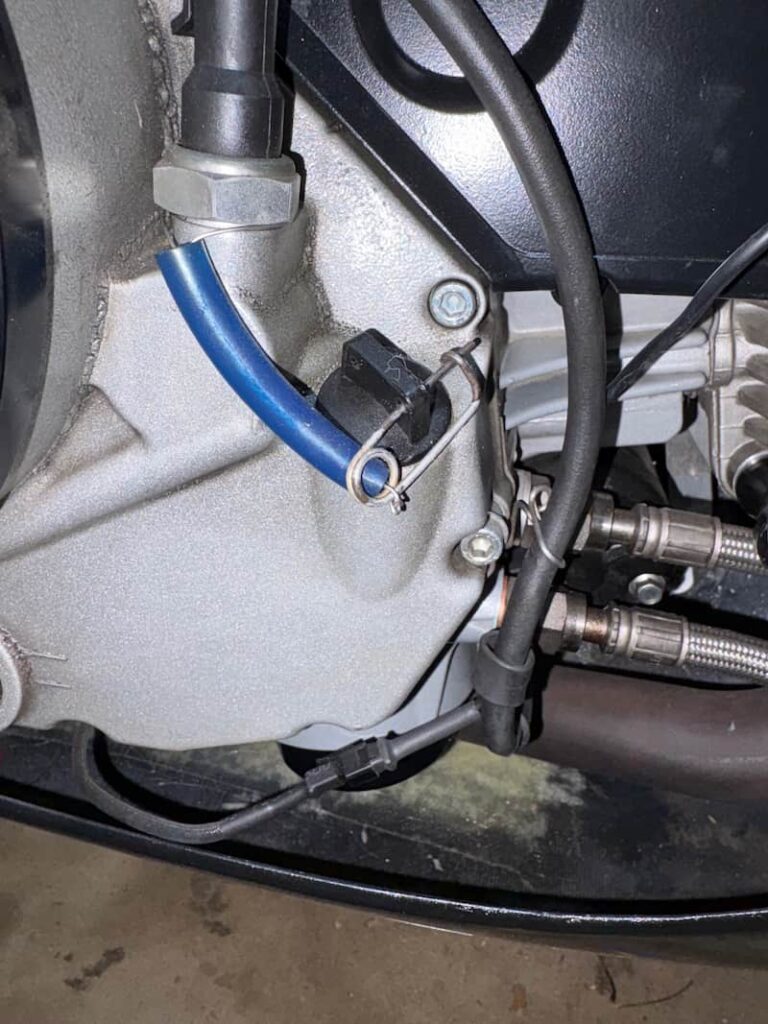
Back to the oil fill cap.
Note the tubing slid over the wire braids – this gives a tidy look and may be helpful depending on the situation. As well, a spring clip was utilized so the cap can be removed and installed without having to safety wire the assembly again. Check with your local sanctioning body or track-day provider to ensure this is permitted.
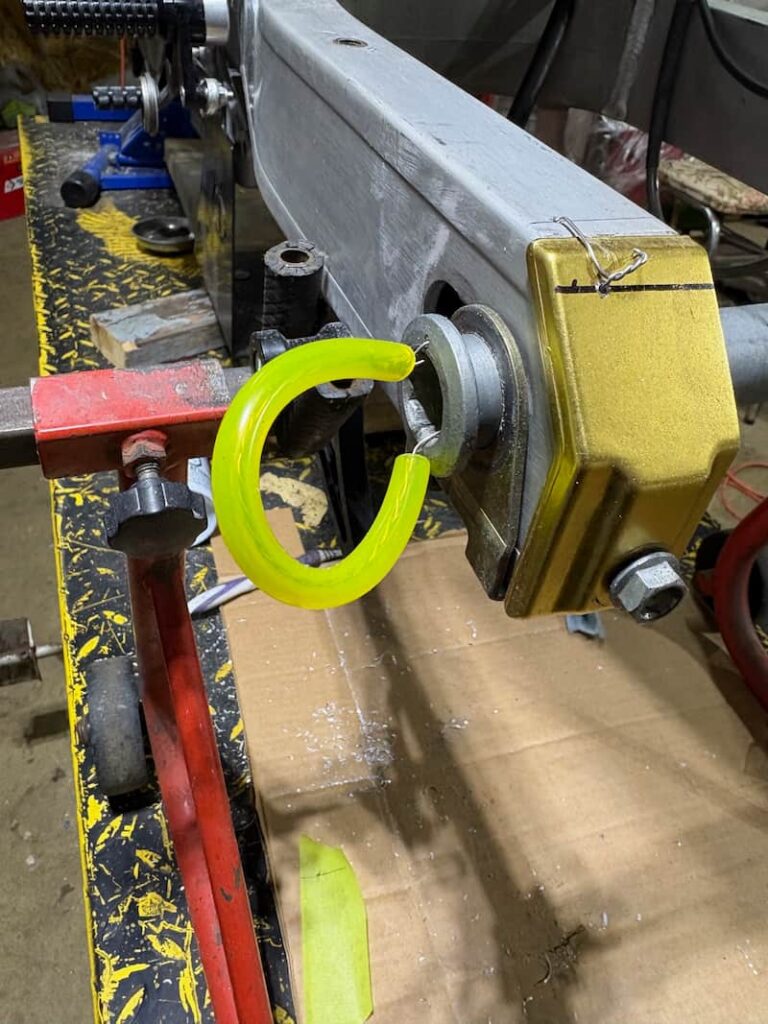
This wire loop was set up to help remove a rear axle nut on a track bike.
Closing
Hopefully this has been helpful. Each individual bike and engine may pose unique challenges to the track-day rider or racer who is wiring it up for track duty. In the end, doing this work yourself will make you a better mechanic overall, and it gives you a solid visual inspection of your bike before you head out to your next track day.
James grew up around an aircraft mechanic’s shop, where safety wiring wasn’t a “nice to have” - it was how you kept critical parts from coming loose when it mattered most. He carried that mindset into his first race prep in 1999, learning the hard way (and by hand) how to drill and wire fittings properly. After nearly 30 years at the track, he’s seen exactly how small hardware mistakes end weekends early - and why doing the work yourself makes you a better mechanic and a safer rider.