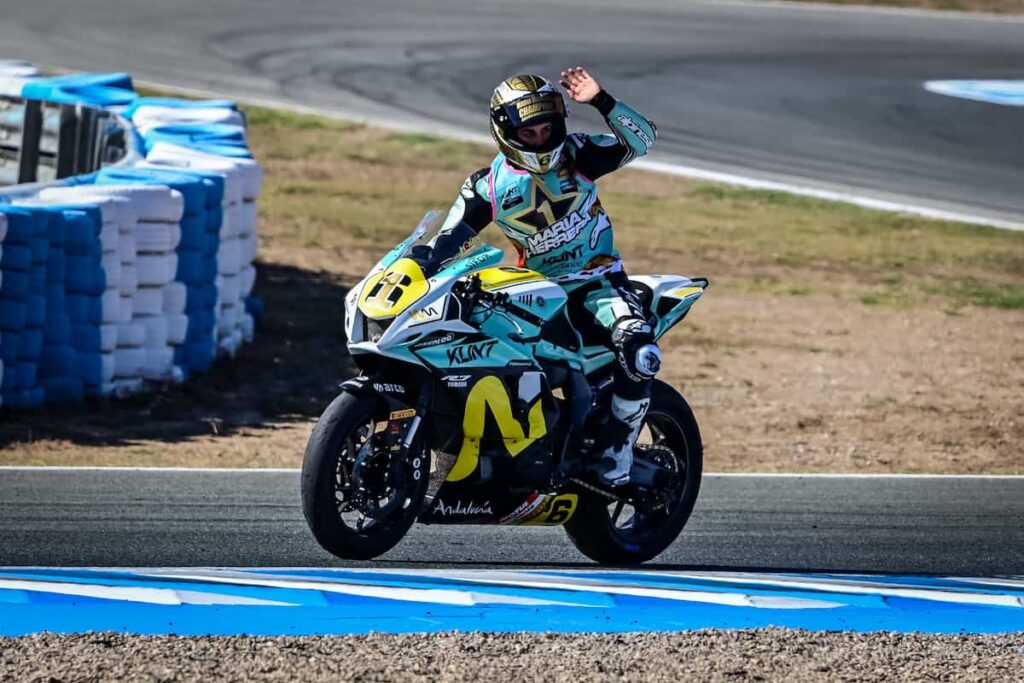
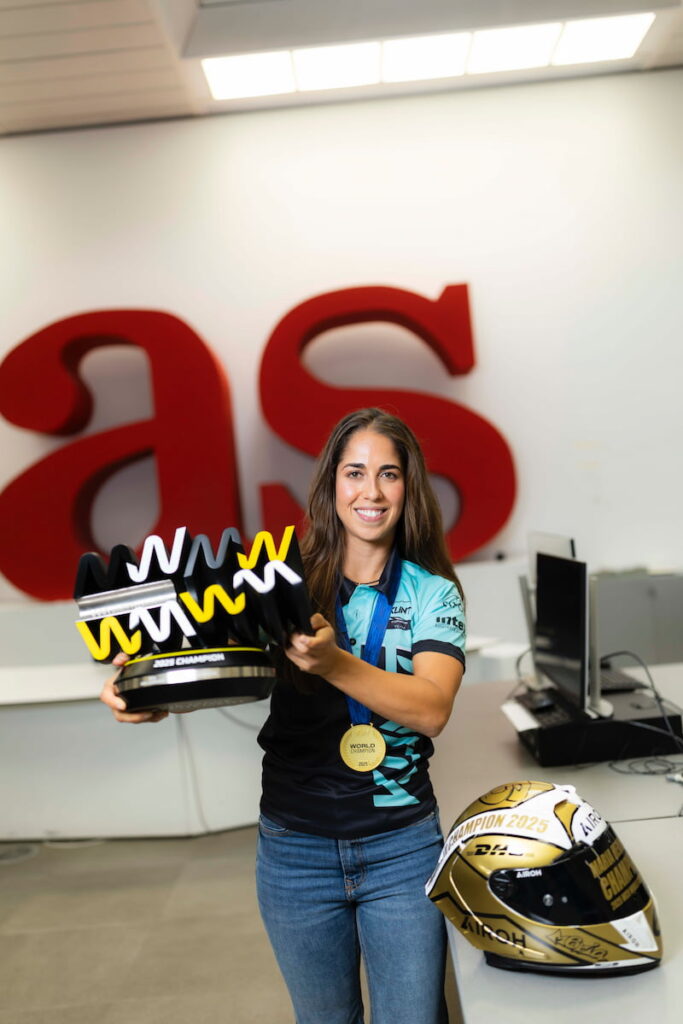
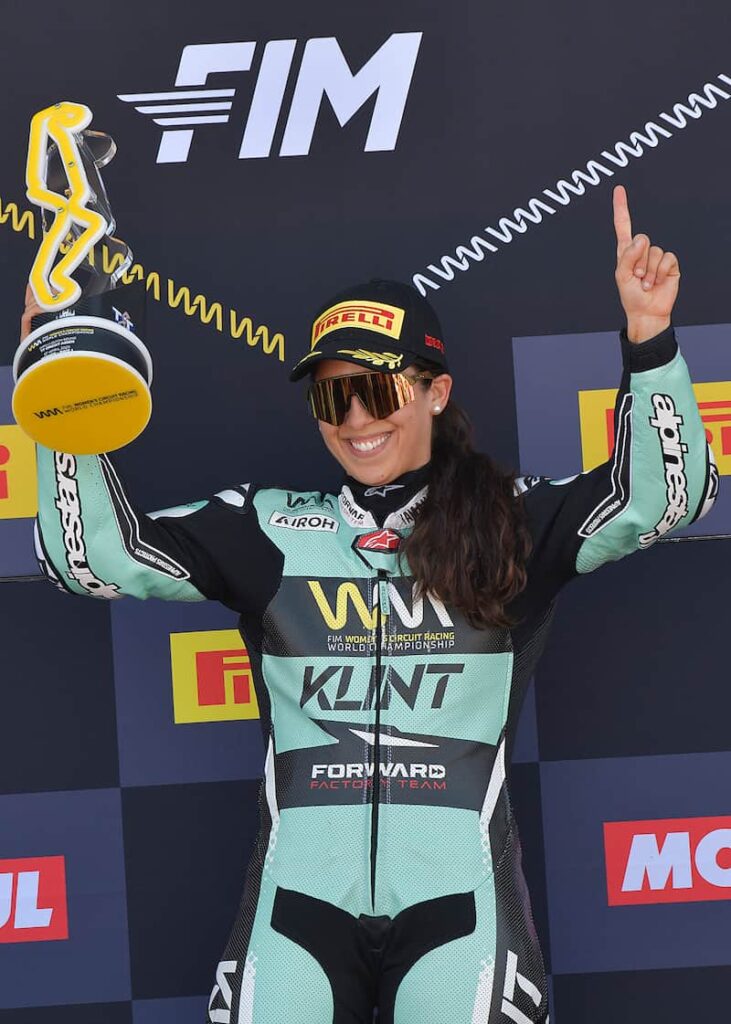
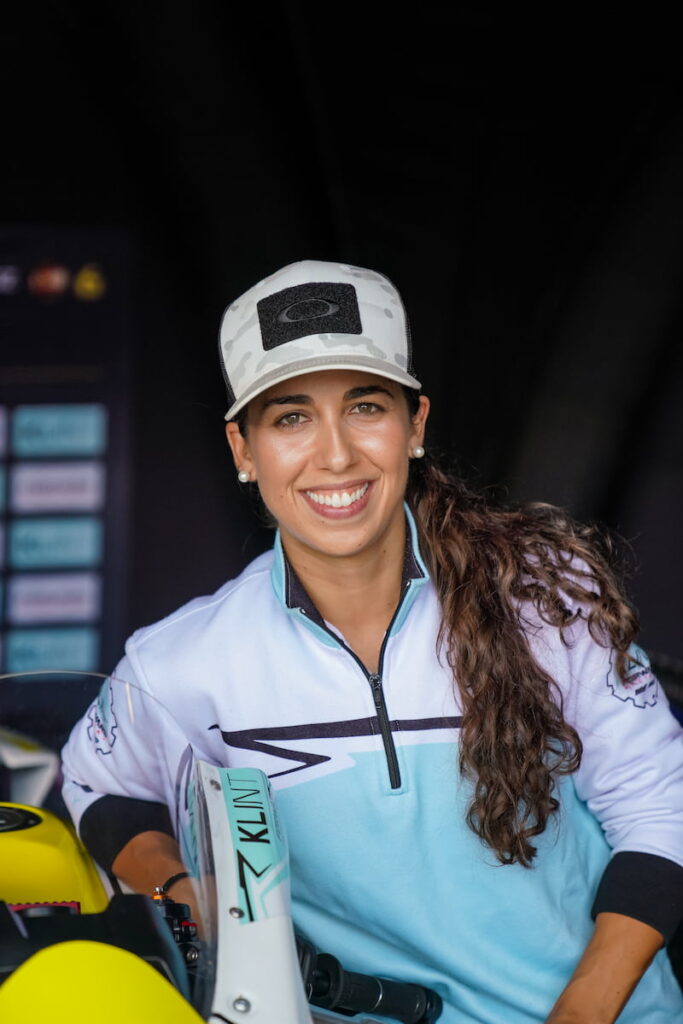
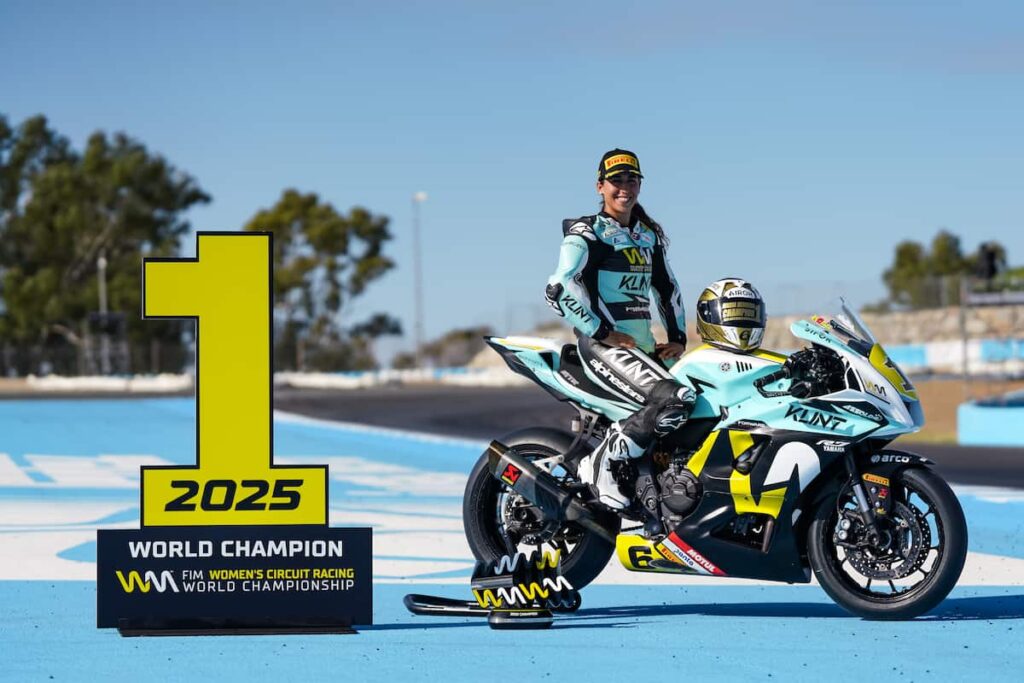
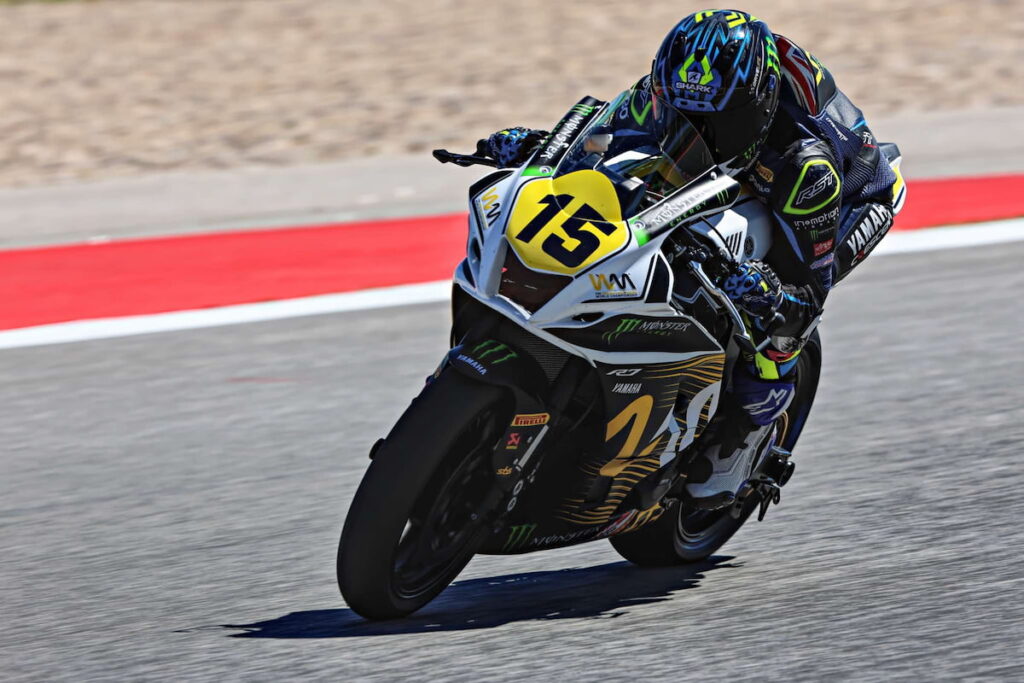
Maria Herrera is walking into 2026 as the defending champ, and that changes the temperature of a race weekend before the bike even rolls.
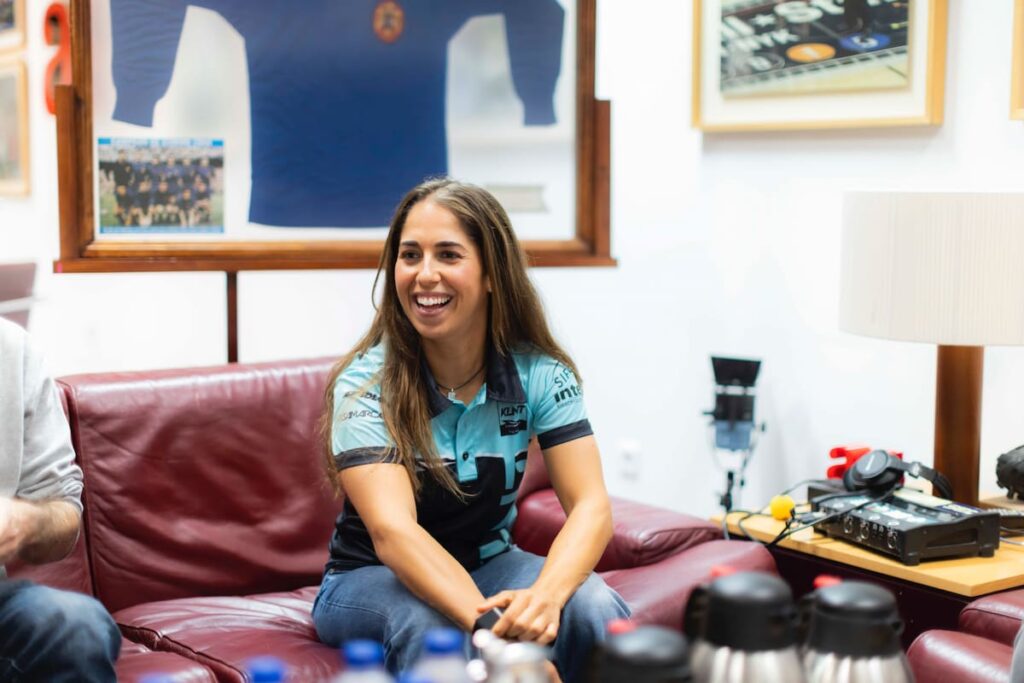
I brought up what the first small thing feels like now that she’s the one everyone is chasing. She didn’t talk about trophies or stats. She talked about eyes.
“I feel like everyone is watching you when you’re the champion, but I feel good,” she said. “I think many other girls can be the main rivals this year, so I’m focused on myself and on improving some of the mistakes from last year.”
Maria didn’t become a champion by accident. She’s been racing at a high level for years, learning how to manage weekends that go smoothly and weekends that fight back. The title just made the spotlight brighter. The work behind it is the same kind of quiet, repeatable effort.
Where pressure actually shows up
Pressure is a funny thing in racing. Fans think it lives on the grid, or in lap 1, or in the moment the visor drops. Maria pointed to a window you can almost set a watch to.
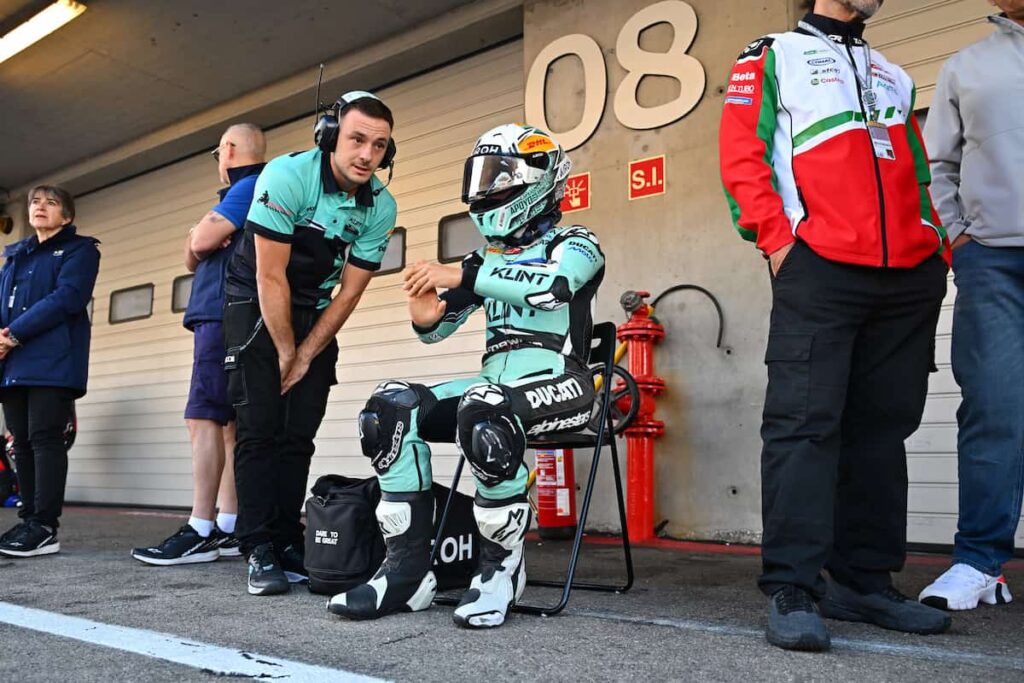
For her, it hits in the 30 minutes before the race starts.
“In the 30 minutes before the race starts, I focus on positive things,” she told me. “If you’re in a good mood all weekend, you don’t feel bad pressure – only the pressure that comes from wanting to win or do a good job. Training your calm beforehand is also very important.”
“I’ve tried different Yamahas – the R6, R7, and R1 – and I’ve always felt comfortable on this bike,” she said. “So it’s something special being an ambassador for the brand in this championship. If I’m honest, it’s simple: you know you’ve got a good bike underneath you.”
The boring habit that shows up on Sunday
Every champion has some unglamorous weekly work that keeps the whole thing together. Maria didn’t dress it up.
“Probably stretching and mobility work,” she said. “It’s not exciting, but doing it every week means I feel loose and ready on Sunday.”
No big speech. Just the stuff that doesn’t get posted, but shows up when it counts.
Three non-negotiables that keep her ready
Some riders need a lot of energy around them. Some need quiet. Maria’s “ready” is specific, and it’s not negotiable.
“Mental calm, physical readiness, and a clear plan with the team,” she said. “Those are non-negotiable for me on a race weekend.”
It reads simple, but it’s also a filter. If one of those is missing, the weekend turns into damage control.
Championships don’t happen alone. Maria kept coming back to “a clear plan with the team,” and you can feel how much she leans on that relationship – the data work, the calls made under pressure, and the trust it takes to pivot fast. If you’re watching her in 2026, you’re not just watching a rider. You’re watching a rider-team system that knows how to recover when the weekend gets weird.
I told my team we needed to change our approach: use fewer gears, carry more corner speed, and stop stopping the bike so much.
From the Paddock to Your Inbox
Subscribe to our newsletter for new stories, issue updates, and paddock news.
I also asked her about being tied to a brand in a championship like this – and what that actually feels like from the seat, not the press release.
“I’ve tried different Yamahas – the R6, R7, and R1 – and I’ve always felt comfortable on this bike,” she said. “So it’s something special being an ambassador for the brand in this championship. If I’m honest, it’s simple: you know you’ve got a good bike underneath you.”
It’s a simple point, but it lands. Comfort isn’t a vague feeling at this level – it’s confidence you can lean on when the weekend starts getting loud.
When Plan A died - and the weekend demanded something else
Every season has a moment where the weekend stops cooperating. The bike isn’t doing what it should. The plan you showed up with gets ripped in half.
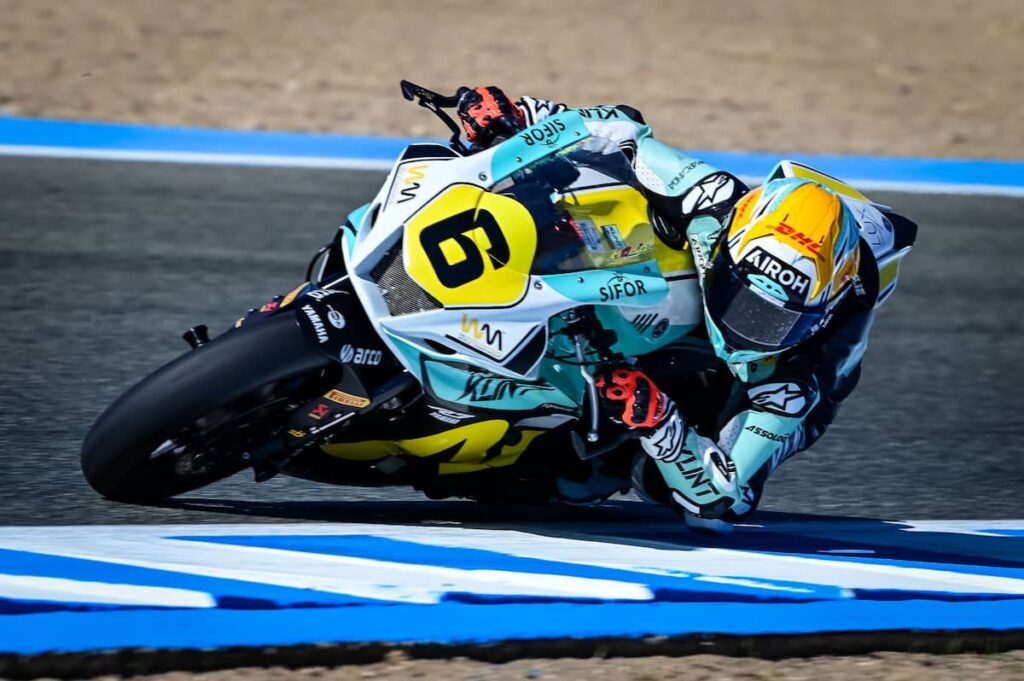
She didn’t have to think long about an example. She went straight to Jerez – the last race, the final title battle.
“In the first practice I felt good with the bike, but I couldn’t use the gears the way I wanted, so I knew I had to do something,” she said. “We spent a couple of hours analyzing the data and trying a different strategy.”
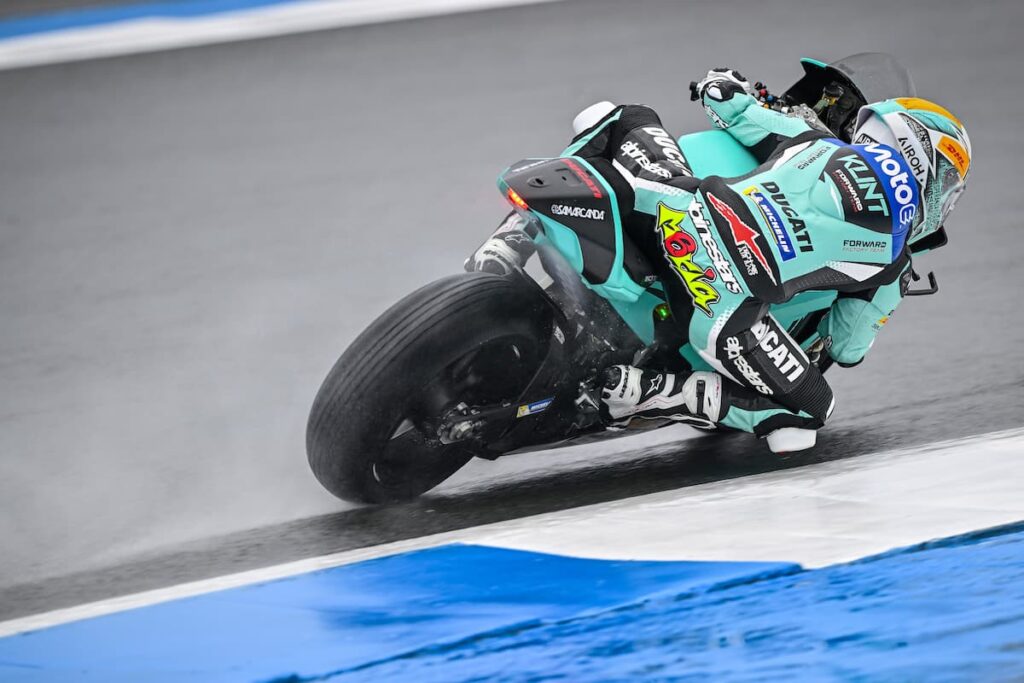
Then came the decision. A risk, but a controlled one. “I told my team we needed to change our approach: use fewer gears, carry more corner speed, and stop stopping the bike so much,” Maria said.
She knew it wasn’t perfect. She also knew it was something she could execute inside the limits of what the bike was giving her. “I felt it could work for Superpole, even if it wasn’t ideal for a full race battle,” she said.
And the pivot mattered. “In the end, I managed to start from first position. I set a lap record and was able to change my mindset – I focused only on what I could control.”
She didn’t pretend the problem disappeared. “The problem didn’t disappear,” she added. “But it was about surviving and making the most of what I had.”
The trap that looks fast on Friday
There’s a kind of speed that gets celebrated early in the weekend and then doesn’t cash the check on Sunday.
“Chasing lap time instead of building a race,” Maria said. “It looks fast on Friday, but it doesn’t win on Sunday. The replacement is patience and strategy.”
In pack racing, she applies pressure until it cracks
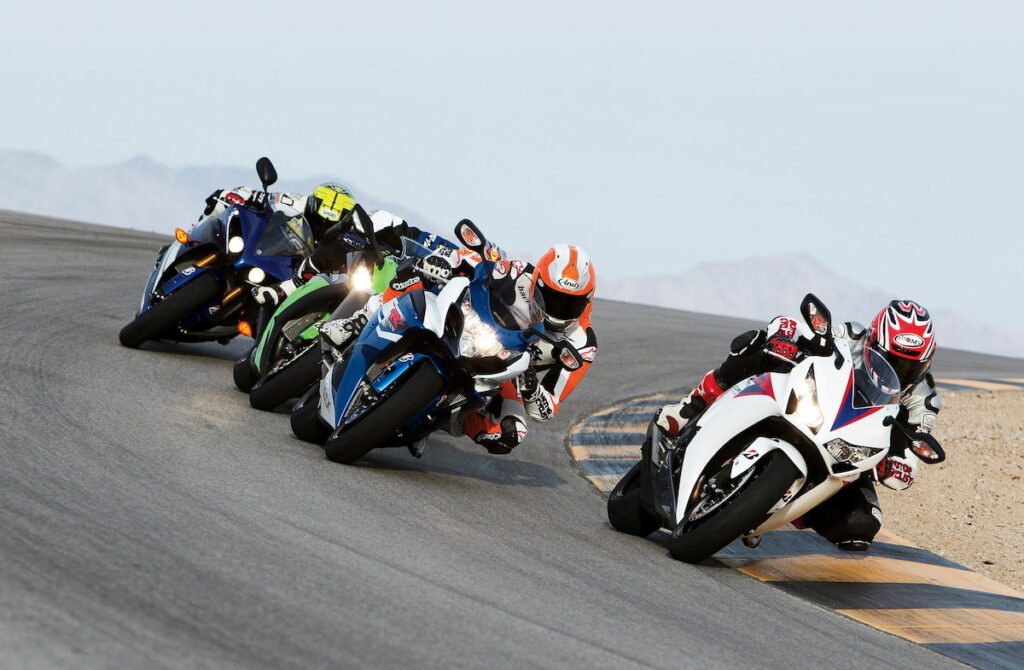
Pack racing forces a choice. Do you swing early, or do you build it and wait?
“I like to push hard and apply pressure until the others start taking risks or making mistakes,” she told me. “I enjoy the battle.”
The pit-lane thing that’s very Maria
Not everything in racing is serious. Some of it is just you being you, even with cameras around.
“Wheelie queen,” she said. “Always doing wheelies with the bike. It’s my thing.”
It’s a small detail, but it says a lot. Even with a title to defend, she’s still finding ways to keep the weekend light.
What resets her back to neutral
Racing drains more than your body. It drains attention. It drains mood. The riders who last know how to get back to center between sessions.
“Talking with people, laughing with my family for a while, or just being calm doing something else,” she said. “Sometimes I also like watching the practice sessions. That helps reset me.”
What TrackDNA is watching in 2026
If you want a real read on Maria’s 2026 season, you’ll see it in what fans can actually watch.
Start with qualifying-to-race conversion – where she lines up, and what she turns that into once the pack tightens and the slipstream kicks in. Then watch where she makes time on track, especially on long-straight circuits: does she still claw it back in the technical sections, and which corners become her passing and defense zones?
Finally, pay attention to the weekends that don’t cooperate. Not the private plan – the visible outcome. When practice goes sideways or a start isn’t clean, does she steady the ship and bank points? That kind of consistency is usually what separates a title defense from a one-year peak.
What really makes a champion a champion
A champion isn’t the rider who’s fastest on Friday. It’s the rider who stays calm when the weekend gets messy, adjusts without drama, and keeps building a race that holds up on Sunday.
Maria’s answers keep circling the same truth – titles are loud, but the work is quiet. The calm you build before race day. Habits you don’t skip. A plan you can simplify when Plan A dies. And the discipline to focus on what you can control, even when the whole paddock is watching.
If you strip it all down, Maria doesn’t talk like someone defending a title. She talks like someone defending her process. Calm, mobility, a team plan, and the patience to build a race when the slipstream turns everything into a knife fight. That’s why 2026 will be worth watching – not because she’s the champ, but because she rides like she’s still earning it. And if you see a wheelie on the way back to the box, that’s just Maria reminding everyone she’s still having fun.
TrackDNA safety note
Racing is risky, and what works for one rider may not work for another. This piece shares Maria Herrera’s perspective and experiences – not individualized coaching. Ride within your limits and follow your series, track, and officials’ rules.
Issue 01 is Out Now
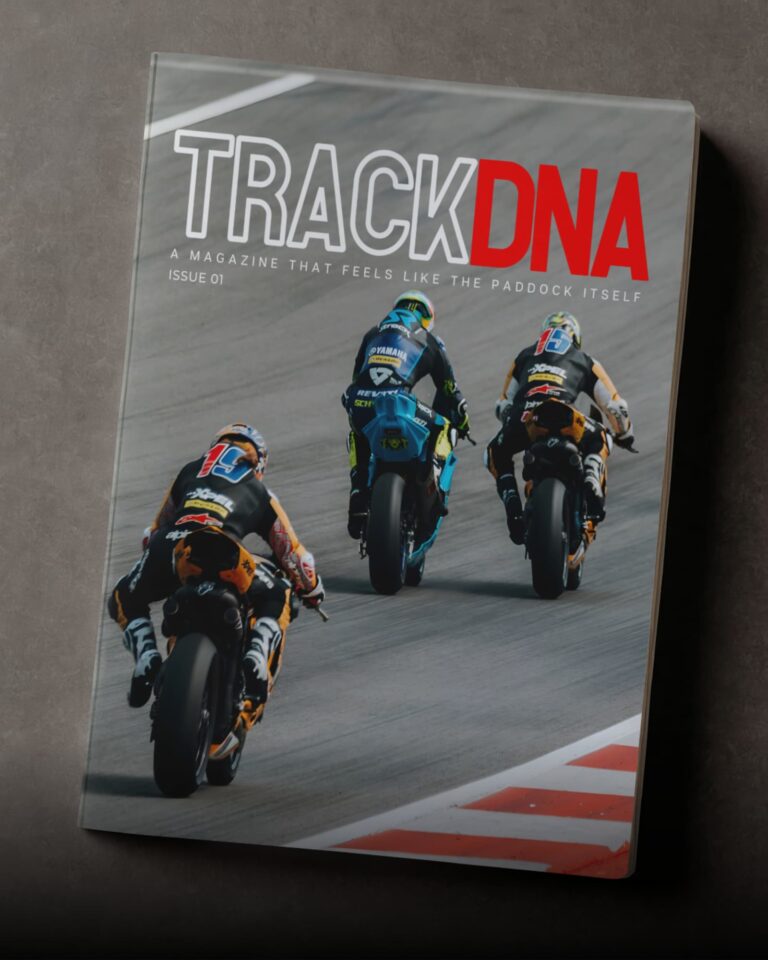
TrackDNA Issue 01 is a 124-page premium, community-driven magazine for motorcycle track riders & enthusiasts.
Sean is the founder and Editor-in-Chief of TrackDNA, an independent magazine for motorcycle track culture. A CMRA racer and former motorcycle mechanic, he built TrackDNA to preserve the parts of the paddock that usually disappear once the weekend is over - the work, pressure, craft, people, and small decisions behind the visible lap.
His writing is shaped by time on both sides of the bike: riding, wrenching, listening, and paying attention to what the sport asks from people before anyone sees the result.