The Setup Trap: Dave Moss on Tires, Inputs, and Front Feel

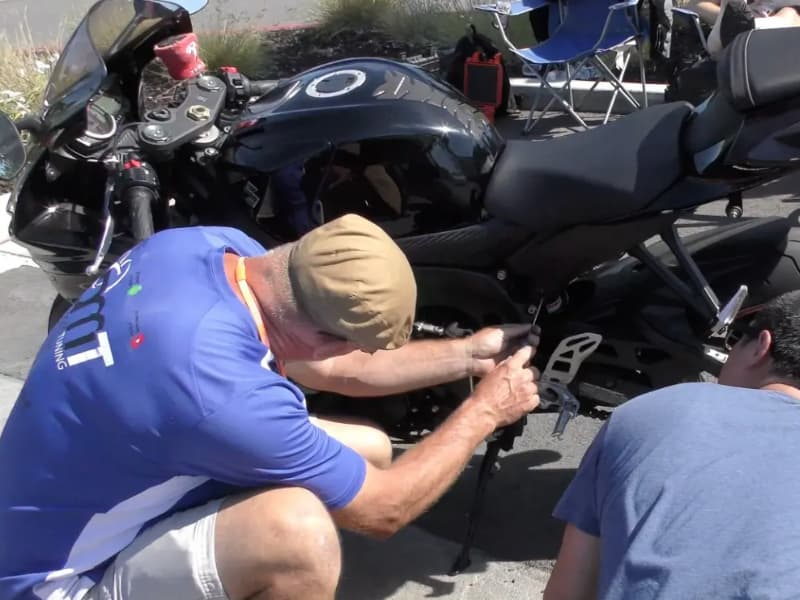
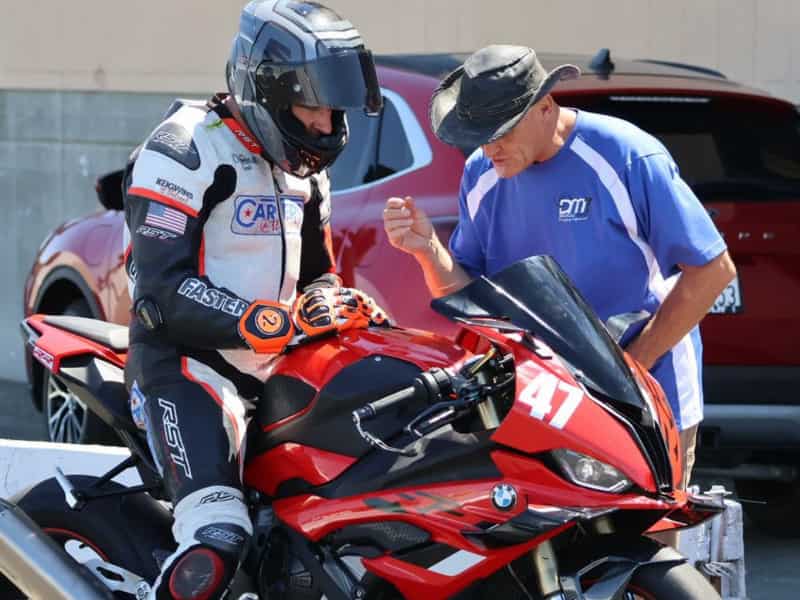
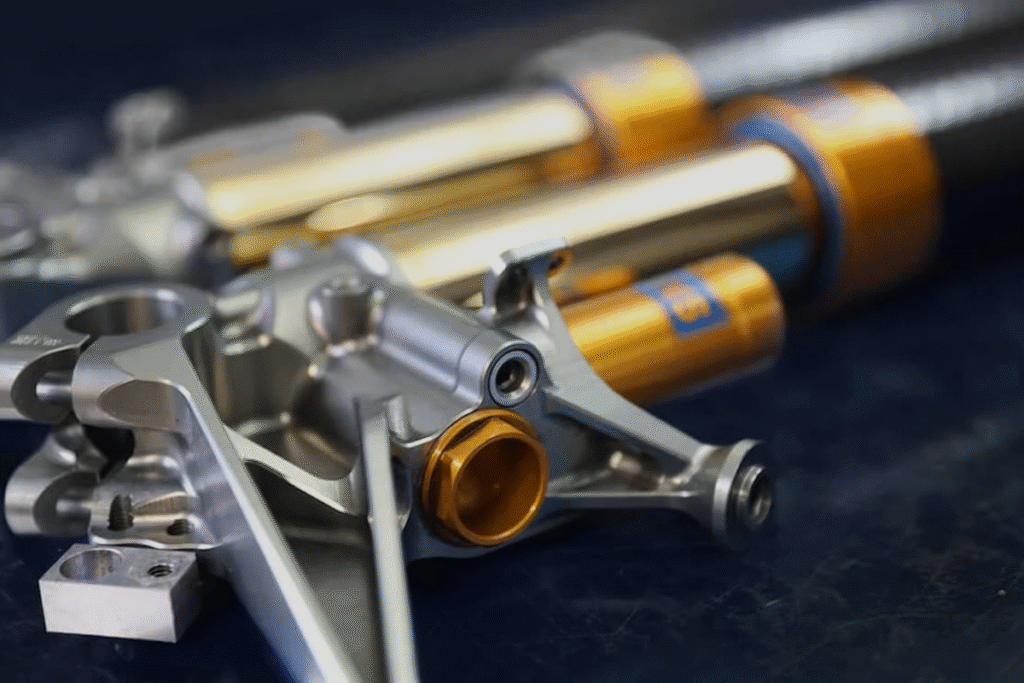
A man adjusting the motorcycle suspension

Dave tuning a BMW S1000RR in the hot pit at Sonoma Raceway for an AFM racer and Carter’s at the Track Instructor Scott Wilson. Dave’s attention to detail and experience separate him from most tuners. He’s not just looking at suspension – he’s thinking ergonomics, tire pressures, and the other little stuff that actually moves the needle.

Most track-day riders don’t have a bike that’s “set up wrong.” They just work on things in the wrong order.

That was the thread that kept coming up when I sat down with Dave Moss and asked him the questions riders argue about all weekend: tire pressures, suspension clickers, “front feel,” weird wear patterns, and why a bike suddenly “won’t finish the corner.”

Before any of the technical stuff, I asked Dave where his obsession with tires, ergonomics, and suspension even came from – and why he trusts testing more than theory, but still keeps theory close.

From rugby to racing - and forcing an internship into existence

Dave is originally from the UK. When he couldn’t play top-level rugby anymore, he needed something else to chase. Motorcycles became the outlet.

He ended up in the Pacific Northwest and started looking at club racing in 1994. His first move wasn’t building a track bike. It was hanging around the racetracks in Oregon and Washington, listening. Beginner, Novice, Expert – the conversations kept circling the same three topics: ergonomics, tires, and suspension. The riders who were winning consistently were always correcting those three pieces.

So he did what most people only talk about. He walked into a suspension company and said he’d sweep floors and make tea for free, as long as they taught him suspension. No salary, no title, just an agreement: he’d show up, and they’d let him learn.

That kicked off a long stretch of testing and self-teaching. Dave estimates about 95% of what he learned came from real-world testing first, then going back to textbooks when he needed theory to confirm – or challenge – what he was seeing. In his words, the real world and the textbook rarely line up point-for-point, but theory still gives your testing a foundation.

He started that phase on an FZR400. Build the suspension. Ride it. Figure out what was wrong. Change it. Repeat, until the bike started “talking back” in a way he could understand.

Within three races, he was on the podium, despite never having raced a bike before. Other riders started asking for help. In that first season alone, he was already working with around 30 riders on geometry, tires, and suspension. From there, he spent years studying tire wear patterns and what they actually mean, instead of what people assume they mean.

Oregon was home base for his racing from 1994 to 2000. In 2000, he moved to California, raced with AFM, and did enough there to earn a TZ250 ride in AMA for a couple of seasons – partly to sharpen his own skills, partly to build more knowledge he could pass on. 

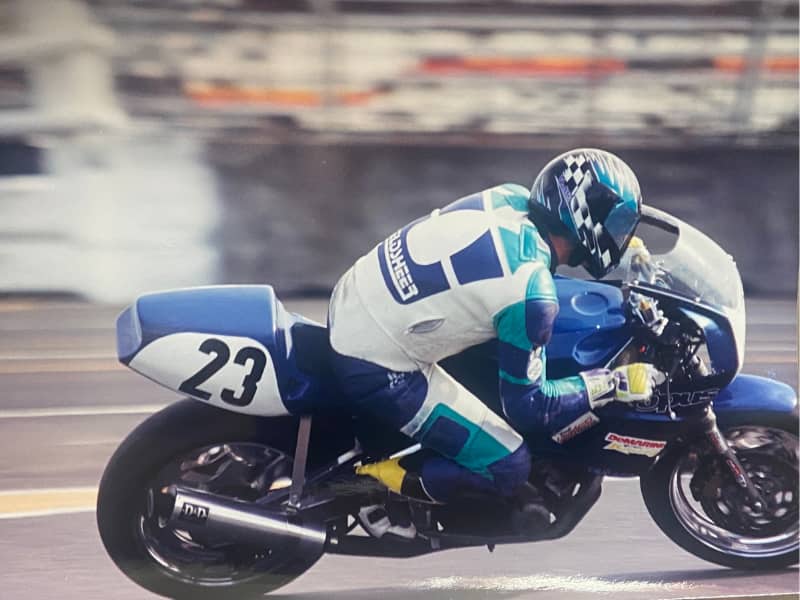
A motorcycle racer with number 23

Dave’s first race weekend with the FZR400 in 1995 – FZR400 (produced 1987-1994) is a high-rev chaos in a sharp little package. Proof you can’t buy corner speed – you earn it.

What he looks for in the first session

If Dave walks into a paddock and watches the first session, he’s not hunting for magic clicker numbers. He’s watching for habits that create fake problems.

The early tells are simple: a rider coasts for a long time before braking, or they stab the brake two or three times inside the same braking zone. On the way to the apex, they’re on and off the throttle instead of committing to a clear timing.

None of that is a “bike problem.” It’s a timing problem. And timing problems will make a perfectly decent bike feel like it’s out to get you.

“I’m looking for patterns,” he told me. “If you can’t repeat the same input over the same distance, no setup is going to save you.”

Get the Inside Line

Real stories, track insights, and paddock moments — straight from riders who live it. No noise, no fluff, just the DNA of the track delivered to your inbox.

The order of operations: earn the right to touch damping

Dave’s rule is blunt: you earn the right to mess with damping.

His order of operations is always the same: fit the rider to the bike (ergonomics), set sag, then make sure fork and shock travel are being used properly. Only then do clickers start to matter.

If the rider doesn’t fit the bike, their body will always be fighting it. If sag is wrong, the chassis attitude is wrong. And if you don’t understand how much travel you’re using and where, clickers turn into a distraction instead of a solution.

In other words: if step one and two are off, step three is just noise.

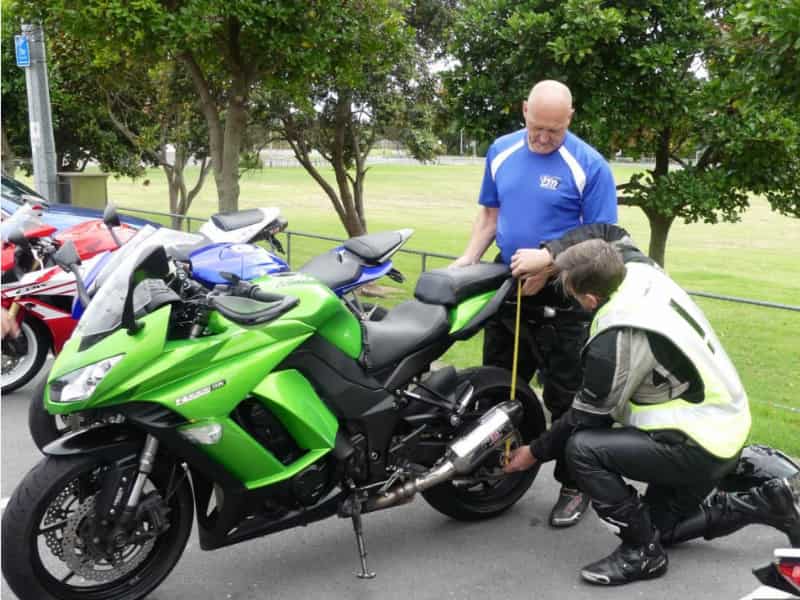
A man is measuring a rear sag

Dave teaching in Kapiti NZ during a hands on workshop class for 8 riders on how to measure and set sag | Correct sag sets your baseline ride height and geometry by putting the suspension in the right part of its travel, so the bike turns consistently, holds grip, and still has room to both compress and extend under track loads. For track days and racing, that baseline matters because small changes in ride height and balance can be the difference between a bike that feels planted on the brakes and one that chatters, pushes wide, or spins up on exit.

Tire pressure: how track-day habits ruin the data

The pressure mistake Dave sees over and over is simple: riders checking hot pressures before their riding is anywhere near consistent.

His line is specific: don’t check hot pressures until you’re within one to two seconds of your personal best.

If you’re riding five different laps inside the same session, the tire isn’t giving you clean information. You’re just measuring your own variability and blaming the bike for it. Until your pace settles, the pressure number doesn’t really tell you anything.

Most riders don’t have a setup problem. They have a timing problem — and no amount of clickers will fix that. -Dave Moss

When the “suspension problem” is actually the rider

Riders love saying “it’s the suspension” because it feels fixable with a screwdriver.

Dave’s most common culprit is less dramatic: inconsistency. Being erratic when you try to execute the same skill over the same distance. Same corner, same bike, different result every lap.

That’s not a fork or shock issue. That’s inputs.

For Dave, suspension is innocent until proven guilty – the rider’s inputs get questioned first. Most of the time, the rider has changed three things at once and then wants to blame the clicker.

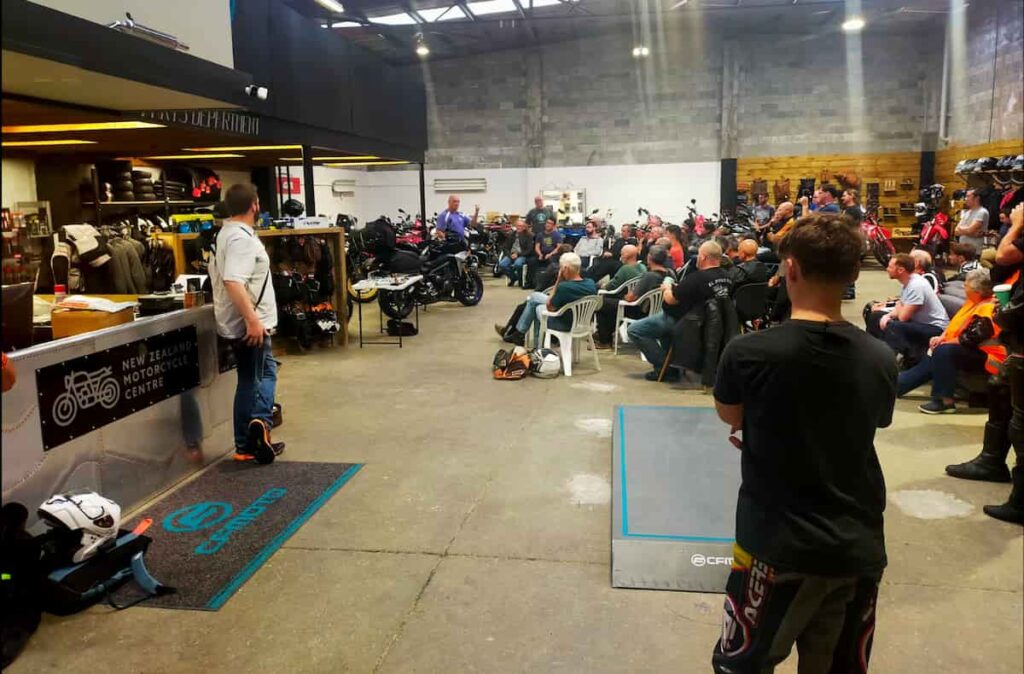
And Motorcycle suspension seminar

Upper Hutt presentation by Dave Moss in NZ for street riders on ergonomics and suspension 101.

What “front feel” really is

A lot of people talk about front feel like it’s a motivational poster. Dave doesn’t.

He defines front feel as understanding how the front tire reacts to the pavement and to your inputs at a given speed, influenced by carcass stiffness (soft versus hard) and hot pressure. It’s not mystical. It’s cause and effect.

If you want to build that feel quickly, he leans on testing protocols that make feedback obvious. One of his tools is running a higher front tire pressure than you might normally choose. Another is using very soft fork settings – minimum preload, light compression, light rebound – so the fork moves quickly on corner entry.

It’s not about riding a soft setup forever. It’s about turning the volume up on the feedback so you can actually learn what the front is doing.

Front feel isn’t magic. It’s understanding how the tire reacts to your inputs at a given speed, and being honest about what you’re doing on the bike.

When riders complain: a quick translation

Trackside, Dave hears the same phrases all the time, and they almost always show up in specific parts of the corner.

When a rider says “the front is pushing,” he usually sees it in the transition from brake to throttle. First thing he checks is rebound that’s too fast. Then he looks at sipe or core hole wear on the tire to see how the carcass is dealing with the load.

If someone says “the rear is stepping out,” it often appears under hard braking, as pressure builds at the lever. Shock rebound that’s too fast is a common cause.

If a bike is “chattering,” it usually shows up while the rider is trail braking or at neutral throttle. Low or high tire pressure can cause it, but so can a chassis imbalance from incorrect rebound damping.

When a rider says “it won’t finish the corner,” Dave looks between apex and exit. In that phase, he’s thinking about shock preload and compression being too hard or too soft for the job the tire is being asked to do.

The wording is emotional. The wear patterns and the corner phase are where the real clues live.

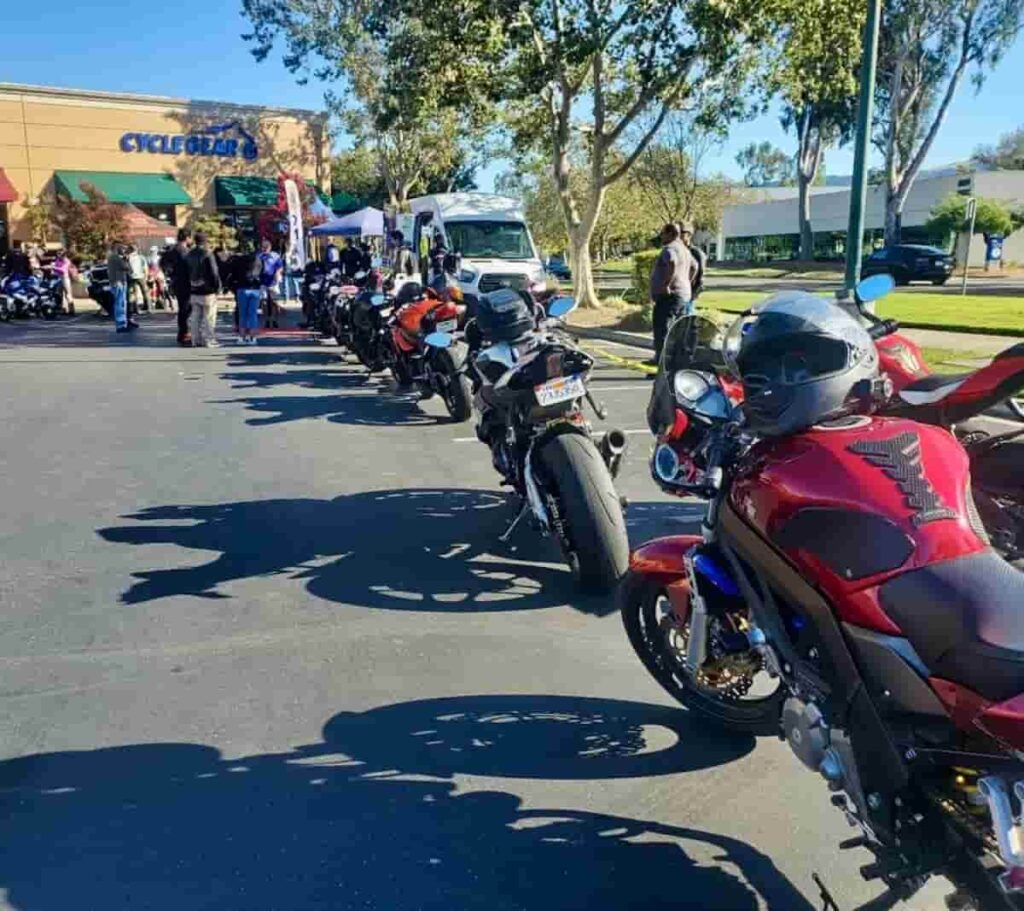
Elena motorcycles, waiting for suspension tuning

The line at Cycle Gear Pleasanton, CA for the monthly bike night.

Tire wear that gets misread

The wear patterns themselves aren’t new. The misreads are.

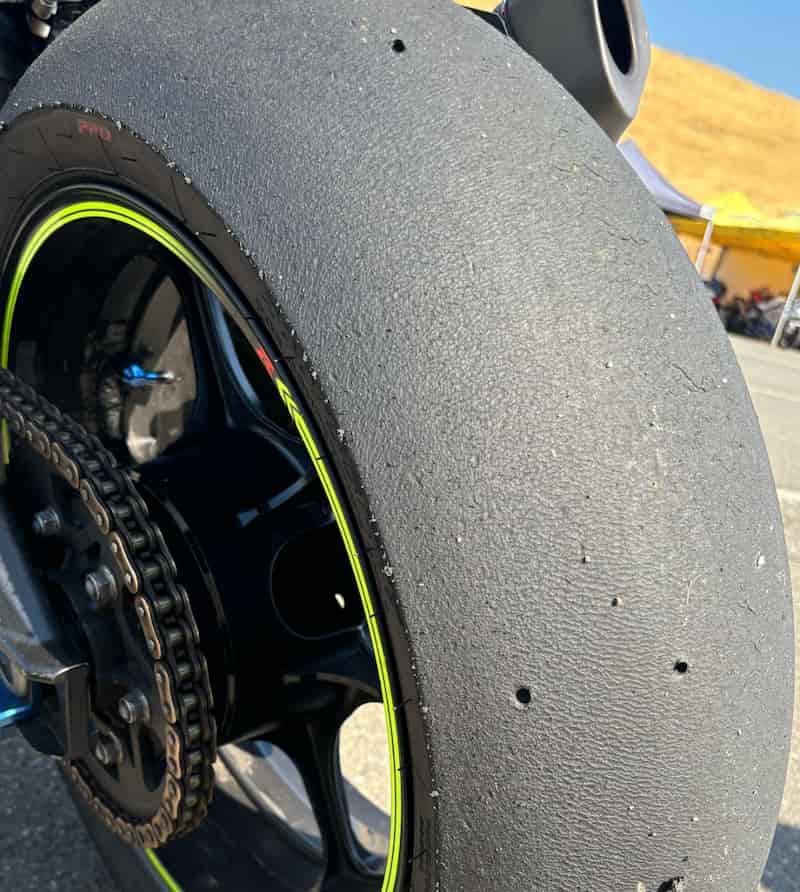
He sees riders looking at surface debris and calling it “tearing,” when it’s just a significant amount of loose rubber debris deposited at the edges of the tire. He sees incorrect pressure stressing compound joints so the tire starts to show lines and cracks where it’s bonded together. He sees sipe wear on the front and rear edges, and trenching on the rear where a clear ledge is cut into the tire.

Any one of those can be managed if you understand what caused it. The danger isn’t the mark on the tire. It’s the overconfidence that follows a bad interpretation.

motorcycle slick tire

Perfect slick wear as he puts it | Photo by Dave Moss | 

Electronics: the modern way to blame suspension

Electronics have added a new layer of confusion on top of old habits.

If traction control is set too high, it cuts power and drive. Instead of asking what the TC is doing, riders will change shock preload and compression and wonder why the bike still feels lazy off the corner.

If ABS is too aggressive, it can create a chatter-like feeling on the way into the corner. Riders respond by changing fork settings instead of looking at the electronics menu.

If engine braking is set too high, it can crush the forks on corner entry. The common response is to stiffen the fork, which only hides the real issue.

Wheelie control is another one. With high intervention, riders feel like they can pin the throttle on exit and let the system “save” it. The bike then responds in a way that doesn’t match their weight transfer, and they soften shock settings chasing grip that isn’t really a shock problem.

Then there’s tire circumference. If you don’t calibrate electronics to a new tire size, your systems won’t work the way the factory intended. Riders will change geometry and damping, even though the baseline isn’t truly “known” anymore.

The pattern is the same: changing electronics changes the feel of the bike. If you ignore that and go straight for the screwdriver, you’re chasing a moving target.

One stop and one start for intermediate riders

When I asked Dave what he’d tell an intermediate rider who’s serious about improving, he kept it simple: one thing to stop, one thing to start.

In the pits, his advice is to set your first hot pressure of the day correctly based on time of day and the warmers you’re using, matching the tire maker’s recommendations. Then leave it alone until your riding stabilizes.

On track, he wants riders to minimize the dead time between throttle and brake. The overlap zone doesn’t need to be heroic. It just needs to be clean enough that your brake on-and-off zone matches what the tire can handle.

A man is adjusting the Motorcycle shock

Dave at a suspension tuning event, teaching the bike owner what adjuster does what and what “range” means per adjuster. 

A 10-minute between-session routine that actually helps

Most of us roll in from a session, talk about “feel” for a few minutes, then stare at tire wear while we replay the lap in our head. Dave’s routine is a little more deliberate, and it only takes about ten minutes.

First, he looks at fork and shock travel. How much did you use? Where is the cable tie sitting on the fork leg? Is the shock shaft marking close to the end of travel or nowhere near it? Then he checks RPM on corner entry to review gearing. Does the bike land in a usable part of the powerband, or are you lugging it or over-revving?

He takes a quick picture of fork and shock travel to document it. He reviews sector times from the past session versus the current one. Then he asks a simple question: where does the bike feel like it’s helping you, and where do you have to physically manipulate it?

In those “manipulation” corners, he wants you to name when that effort shows up – under braking, mid-corner, or exit – and whether it’s consistent lap to lap or random. That’s the difference between feedback and drama.

The fix that had nothing to do with the bike

One rider came to him with a scary problem: violent headshake on the front straight. The assumption, of course, was that something was wrong with the setup.

Dave asked to see the rider’s upper-body position and throttle grip. The elbows were tucked in, hands wrapped in a way that locked the bars. The rider was basically acting like a steering damper with teeth.

He moved the elbows out so they rested outside the thighs, showed the “screwdriver” method for the throttle hand, and optimized throttle free play in the cable system (this wasn’t a ride-by-wire bike). The headshake went away.

Nothing on the bike changed. The rider’s relationship to the bike did.

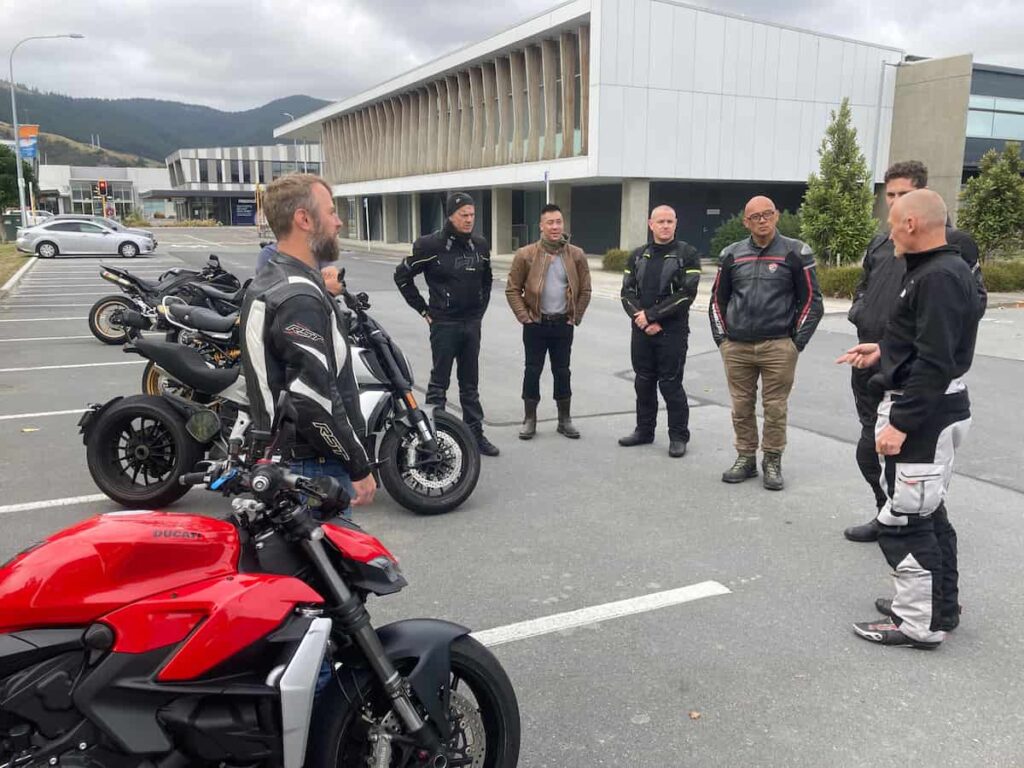
A group of Motorcycle riders standing in a circle

STR is the 3 hour “Suspension Tuning Ride” where we stop 4 times to adjust suspension (preload, rebound, compression, final changes and why?)

A simple setup framework for riders who don’t want to become engineers

Dave isn’t trying to turn everybody into a suspension tech. What he wants is a simple framework that lets you collect useful data and get back to riding.

Here’s his basic structure:

  • Keep a simple table for tire compound, ambient temperatures, and track.
  • Keep another table of hot pressures based on track temperatures.
  • Record static and rider sag separately for forks and shock, then add them for total sag.
  • Aim for sag in the 30–33% range of total travel.
  • Mark fork bottom-out on the right fork tube and use a cable tie to see how much travel you’re using.
  • Use a thin cable tie on the shock shaft (or a light smear of grease that leaves a dust ring) to assess shock travel.
  • Write down preload, compression, and rebound settings before you leave the track, so you always know your baseline.
  • Don’t check hot pressures before the third session, and only once you’re within one to two seconds of your personal best.

It’s not glamorous work. But it’s what turns “feel” into something you can repeat.

Hard truths riders don’t love hearing

There are a few simple jobs that separate riders who can actually use setup from riders who just talk about it.

Fork and shock oil need to be serviced on time. Chain tension needs to be checked daily. Chains need to be lubed daily. Reference points have to be written down. The track needs to be walked the night before, so you know those references still exist when you roll out.

Sectors are there for a reason. They let you review where you’re inconsistent and where you’ve genuinely improved, instead of guessing based on vibes. Cost per lap isn’t the real issue for most people; quality and consistent riding per session is.

And if you set a new personal best, the first question shouldn’t be “what setup did I change?” It should be: which reference points changed, and what did I actually do differently on the bike?

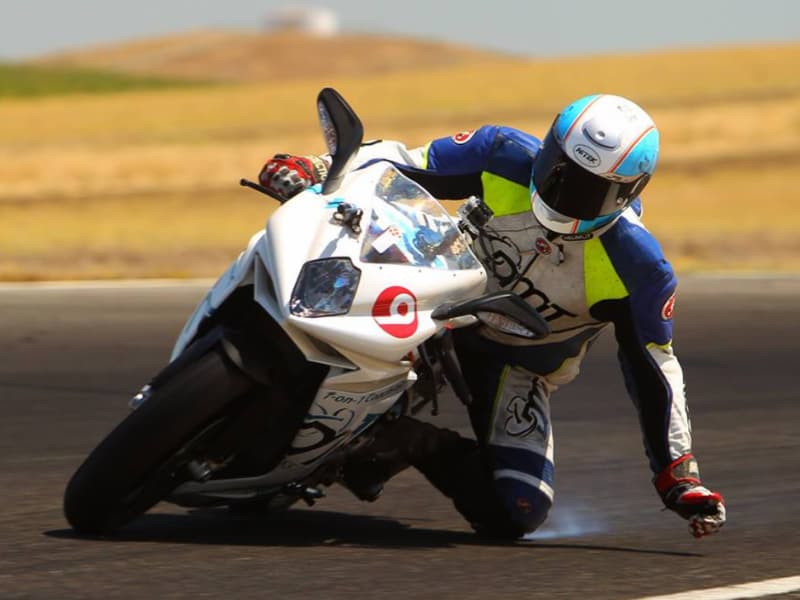
A motorcycle track racer at the Apex

Dave in his element | We don’t know the name of the photographer who captured this moment, but he nailed it – you can even see the smoke coming off Dave’s knee puck.

TrackDNA Takeaways

  • Your first job isn’t chasing clickers. It’s cleaning up control timing.
  • Ergonomics, sag, and travel used come before damping changes.
  • Hot pressure numbers only mean something once your pace is stable.
  • Complaints matter more when you can tie them to a clear phase of the corner.
  • Between-session improvement comes from documentation, not drama.

TrackDNA safety note

This is general rider-to-rider information and process, not individualized coaching. Riding and racing are inherently risky. Always ride within your limits, follow your track-day organization’s rules, and if something feels dangerous (headshake, brake issues, major instability), back it down and get a qualified trackside pro to look at the bike before you go hunting for lap time.

Get the Inside Line

Real stories, track insights, and paddock moments — straight from riders who live it. No noise, no fluff, just the DNA of the track delivered to your inbox.

Author

Scroll to Top