Photo by TrackDNA
It was MSR Houston, four days before Christmas. One of those Texas mornings where the fog hangs low and the air feels soft. Seventy-two degrees, cool enough to be comfortable, warm enough to feel like the day is on your side.
I’d just found out CMRA’s first round was going to be at MSRH, and I’d never been there. A friend invited me out for a small day—maybe six or seven of us total, not an official track day, just open lapping and learning the place. Most of the guys were somewhere between intermediate and advanced pace, already pushing for quicker laps, not just cruising.
I was on my R6, using the day as a recon mission: learn the track, let trail braking keep settling into second nature, and see where the pace naturally landed. By the time we came around to the back section before Turn 13—“The Launch”—I felt loose enough to stop “studying” and just ride.
The pass I knew I shouldn’t take
Up ahead was a fast rider, Art, a WIRA expert racer who was also seeing the track for the first time. We’d bunched into a small pack, that accordion effect you get when everyone’s testing markers at the same time.
For a moment, a window opened. Enough space, enough drive, and that familiar thought: If I go now, I can stay with these guys.
At the exact same time, another thought showed up—quiet but clear:
Don’t pass.
I heard it. I understood it. And then I went anyway, because a louder part of me didn’t want to drop off the back of the group. I knew I was carrying more speed than I really had business carrying into a section I still didn’t fully understand, but ego is good at talking fast.
The Launch, the blind apex, and the small decision that mattered
If you’ve ridden MSRH, you know The Launch. It’s a right-hander that feels a little blind because of the small rise before it. You don’t really see the apex until you’re almost on top of it. It rewards trust in your markers, and it punishes guesswork.
By the time I crested that little rise, the math wasn’t adding up. I realized I was in deeper than I meant to be. My answer, in that split second, was to lean the bike more.
I train 5–6 days a week. Strong core, strong legs. Normally I do everything I can to hang off the bike so it can stay a bit more upright, keep the contact patch as healthy as possible. That’s the plan, at least.
But that morning, I was already a little tired—physically and mentally. Instead of really getting my body off the bike like I normally do, I half-committed. Less hang-off, more lean. In that corner, with that speed, on that line, it was the wrong mix.
Then it went. First low side, earned the honest way.
Sliding and waiting to get hit
The strange part is where my attention went first.
I wasn’t focused on the slide itself or the burn of the asphalt. I knew there was a rider right behind me because I had just passed him. We were close. When I hit the ground, my first thought wasn’t, I crashed. It was, I’m about to get hit from behind.
For a moment I was almost certain his bike was going to run over me. Instead, experience showed up.
Later in the paddock, Art told me what he saw:
“You probably tried to go a little deeper, missed your brake marker, then trailed the brake harder than usual. When you went down, I was already looking through the corner, not at you. That’s what saved it.”
He didn’t target fix. His eyes were already where they needed to be, so he slipped past me clean. Same corner, same moment, two very different stories depending on where each of us was looking.
Get the Inside Line
Real stories, track insights, and paddock moments — straight from riders who live it. No noise, no fluff, just the DNA of the track delivered to your inbox.
Back in the paddock: body, bike, and a strange kind of relief
There was no crash truck. No drama. I got up, picked up the bike, did a quick self-check, and rode it slowly back to the paddock.
First order of business was simple: am I intact?
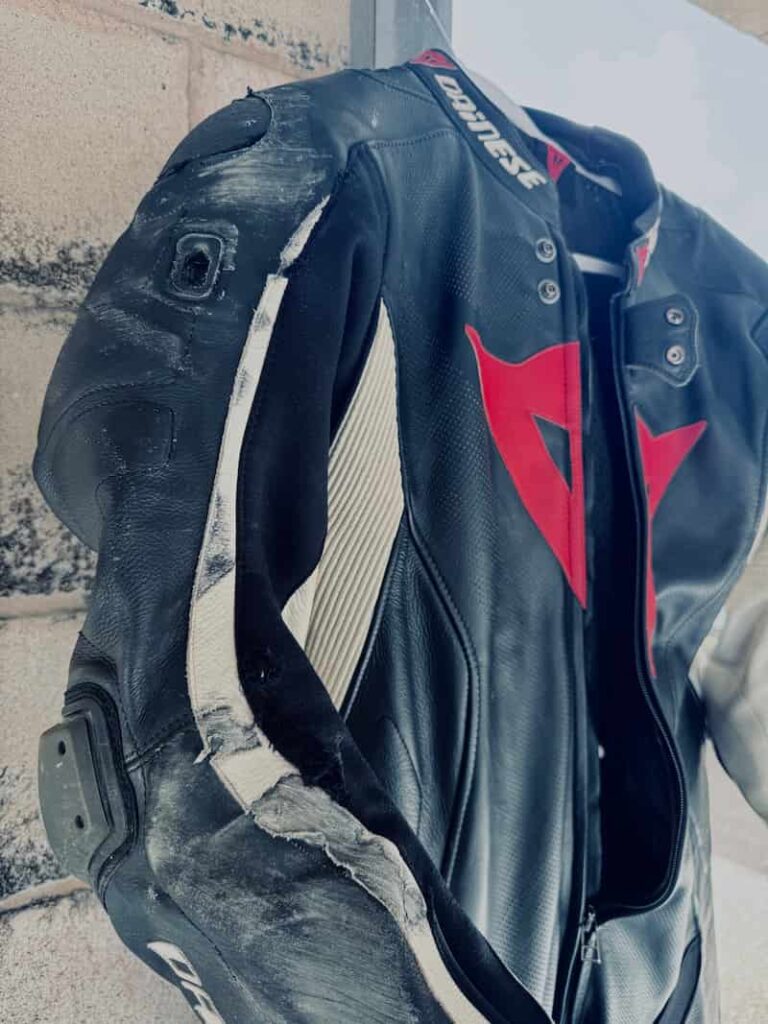
Gear did its job. The leathers took the heat and the grind so my skin didn’t have to. Gloves and the usual armor meant I walked away with a minor bleed on my right hand and some soreness—but no broken bones. I was standing there looking at a scuffed suit instead of missing skin, and that trade will always be worth it.
Scuffed Dainese leathers after the low side at MSR Houston. The suit took the grind; I went back to the paddock on my feet.
These gloves took the worst of it – I walked away with just a small cut on my right hand.
Then I went to look at the bike.
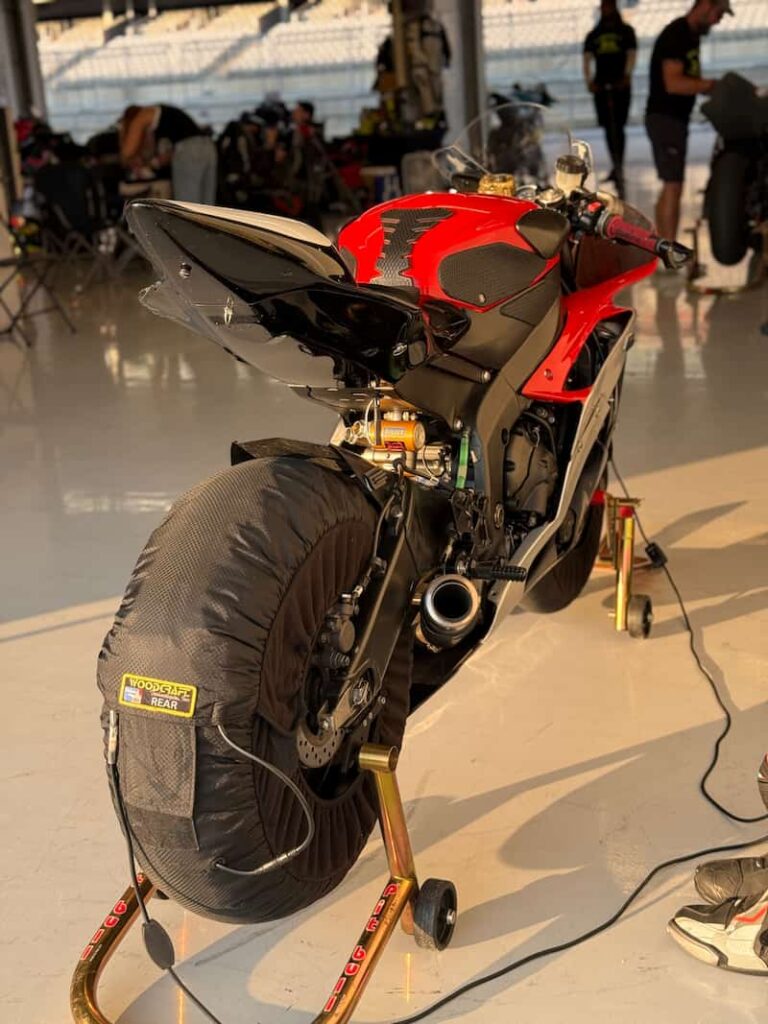
I’ve always kept that R6 pretty clean. Race-prepped, shiny, the kind of bike you almost baby a little too much because the fairings still look good in photos. In the back of my mind, there was always this dread: I really don’t want to be the one to finally lay this thing down.
My beloved 2009 EDU-built R6 – with all the bits and pieces I could ever want.
Seeing it after the crash was oddly freeing.
Crooked handlebar. Broken rearset. Scuffed GB Racing covers. Bodywork kissed by the asphalt in all the usual low-side places. It wasn’t destroyed, just honestly broken-in.
It’s hard to explain, but once I saw the damage, I felt lighter. Now I knew what a low side actually felt like on this bike, and I had a clear picture of which parts took the hit. Not in theory. Not on a video. On my bike, on my body, on my day.
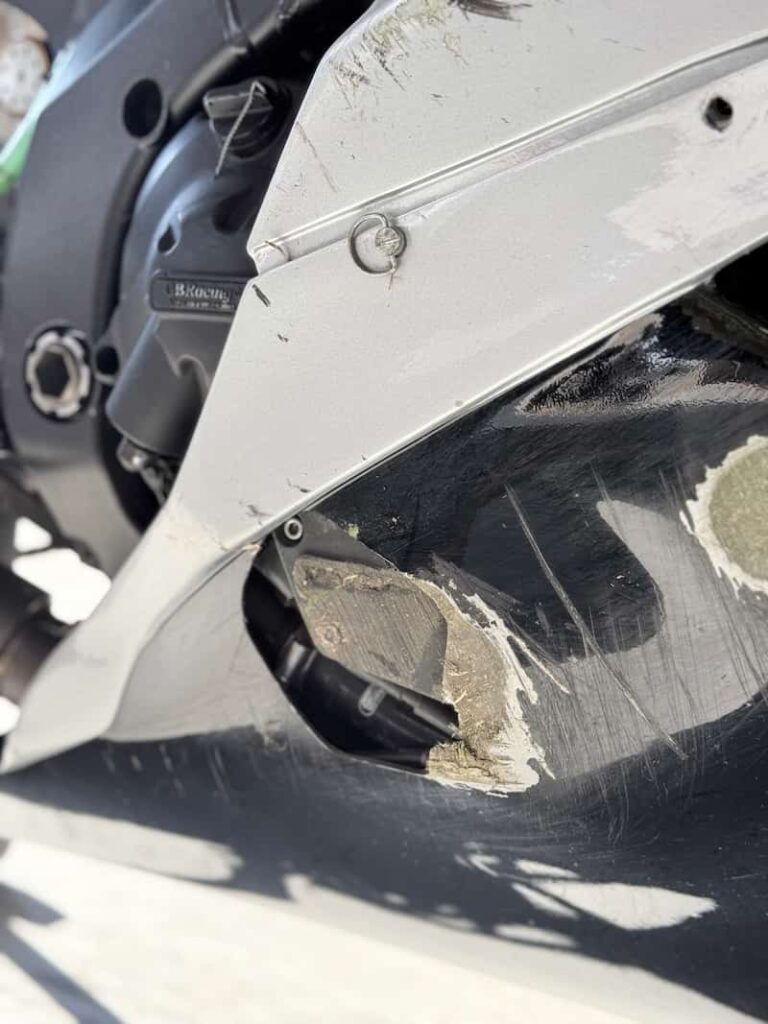
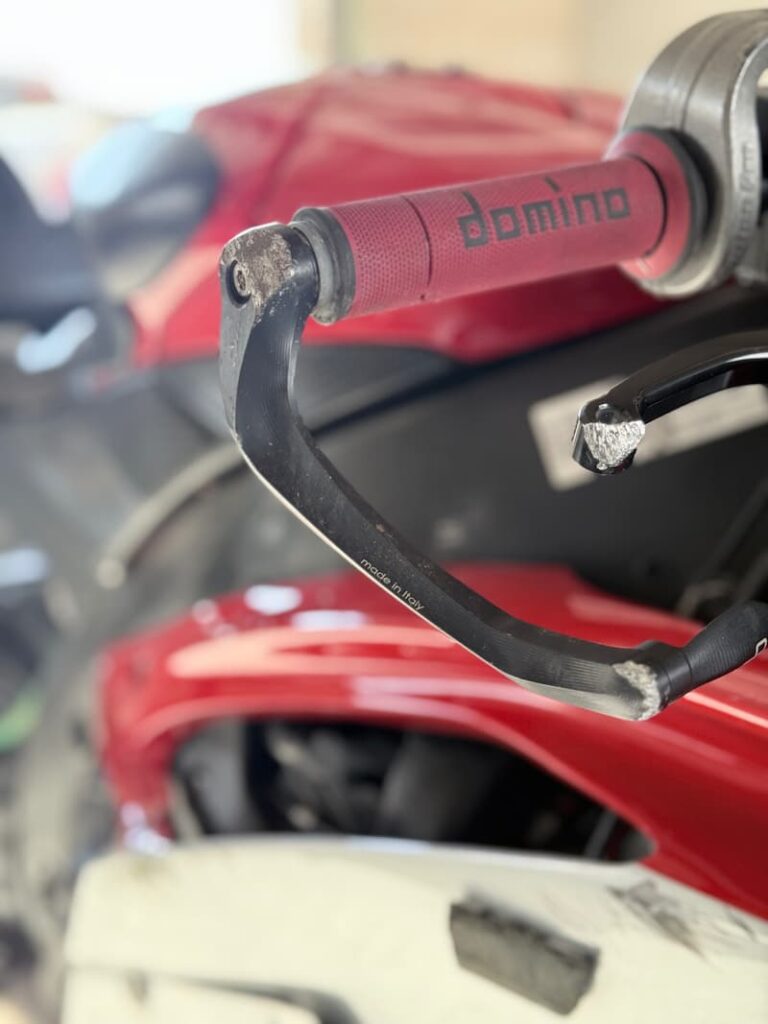
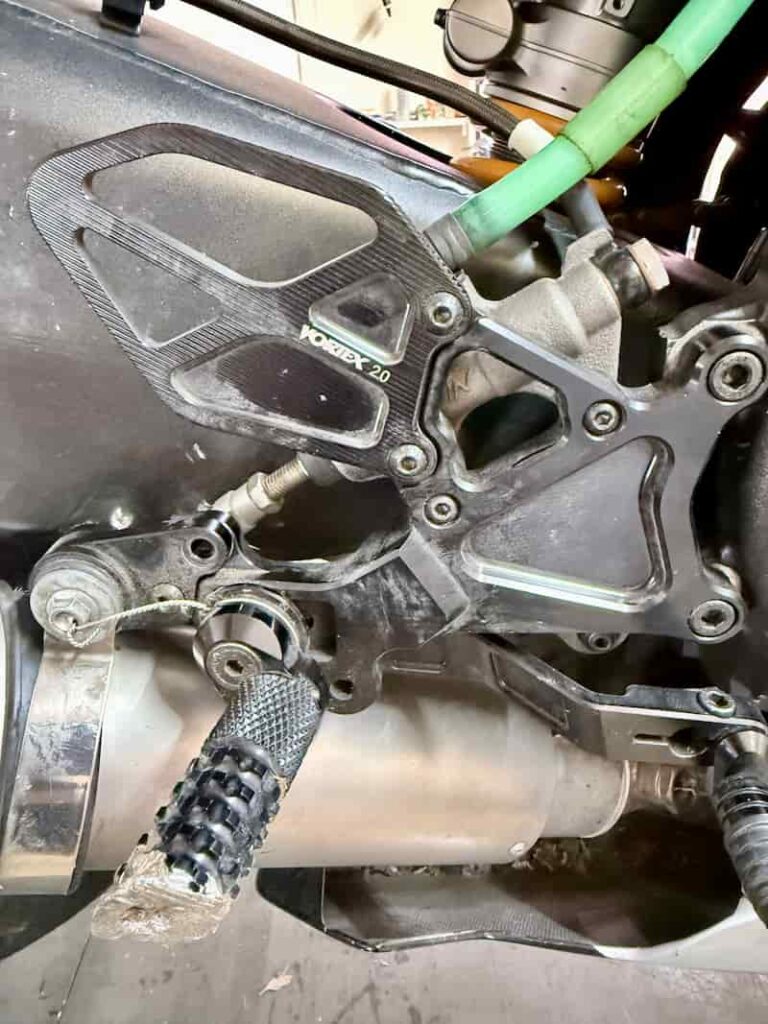
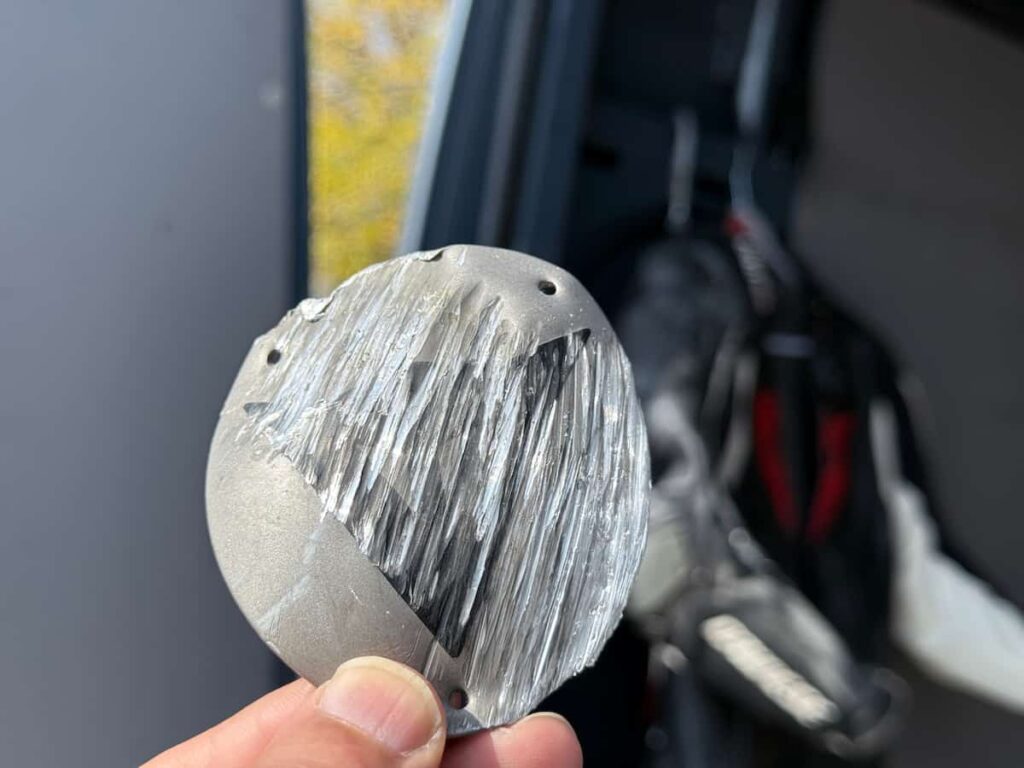
Looking closer, I could also see exactly which parts had quietly saved me from a much bigger bill. The GB Racing timing cover took the grind instead of the engine case. The LighTech brake lever guard earned its keep too—it kept my hand from getting pinned, and the lever itself only walked away with a light scratch. On the right side, the Vortex rearset and footpeg acted like a sacrificial layer; that peg took the beating so my high-end exhaust and the subframe didn’t have to. In the end, all I replaced was the right footpeg instead of dealing with a bent subframe and a trashed exhaust.
GB Racing timing cover after the low-side – the cover took the hit, not the case.
LighTech brake lever guard – doesn’t look like much, but it likely saved my gas tank and prevented more bodywork damage.
Right-side Vortex rearset and peg after the crash – cheap parts to replace compared to a subframe or exhaust. Total damage was $32 plus shipping. Bonus – the Vortex Racing team ships fast.
Tony Ugoh—who you’ll be seeing as a TrackDNA coach soon—has advised on his socials for a while that engine and case covers are one of the first “mods” track riders should invest in. This crash was my personal reminder of why he’s right. There are plenty of well-built brands out there; these just happen to be what I had on my R6 that day, and they did exactly what they were supposed to do.
TrackDNA safety note
Riding on track always carries risk, even when you’re trying to do everything right. This story is one rider’s experience, not a step-by-step guide. Work with qualified coaches, ride within your limits, and follow your track organization’s rules and control riders. No article can replace real-world coaching and your own judgment in the moment.
The question that shows up after the adrenaline fades
The second wave was mental.
Somewhere between getting off track, parking the bike, and sitting down, a quiet question showed up:
If this one had been worse, would I still want to do this—track days, racing, all of it?
I didn’t try to answer it right away. I let it sit.
I had the urge to go straight back out, just to prove to myself I wasn’t scared. Then I caught that impulse and recognized it for what it was: ego again. I’d never crashed before. Maybe the smarter move was to let this one sink in, to process it instead of trying to outrun it in the very next session.
The next day, the answer showed up on its own. The motivation was still there. Same pull toward the track. Same interest in the craft. No dramatic “maybe I should quit” storyline—just a clearer respect for the cost of not listening to that inner voice.
The inner voice, TrackDNA, and staying in love with the craft
That crash did something else, too. It made me look at how I was dividing my energy between racing and TrackDNA.
TrackDNA is the thing that needs to pay the bills. It’s the work. It carries the long-term responsibility: sponsors, contributors, partnerships, readers. Racing, for me, needs to stay honest. It needs to stay close to joy and craft, not become another job I grind myself into.
I was talking about this with a friend, telling her I wanted to keep riding and track time as something I genuinely enjoy, not just another line item in my own business plan. She said one sentence that stuck:
“Stay in love with the craft.”
That’s really what this whole story comes down to for me.
There’s the obvious lesson: I had a clear inner signal not to pass, I ignored it, and I paid for it. The more you listen to that voice, the sharper it gets. The more you override it for ego or group pace, the quieter it becomes.
Underneath that, there’s something simpler: crashes, business plans, sponsorships—none of it means much if you lose the part that made you show up in the first place. The work of riding. The work of learning. The feel of doing a corner right, not just fast.
So that’s where I’m at with this one.
Listen when the voice says, Not this lap.
Let the crash teach you what it needs to teach.
And whatever else you chase—lap times, grids, or the business of running a magazine—stay in love with the craft.

What This Crash Actually Taught Me
- Don’t add passes or experiments in corners you don’t fully understand yet.
- If your inner voice says “not this lap,” listen—especially in blind or new sections.
- Good gear isn’t optional. Proper leathers turn a bad slide into a repair bill instead of a skin graft.
- When you’re tired, do yourself a favor and sit one session out. As my good friend Ignacio Pedregon says, save a lap to save a session, save a session to save a day, save a day to save a season.
- After a crash, do the ego check: are you going back out to learn, or just to prove something?
Get the Inside Line
Real stories, track insights, and paddock moments — straight from riders who live it. No noise, no fluff, just the DNA of the track delivered to your inbox.
Author
-
Sean studied in Southeast Asia, did his stretch in corporate America as a Chief Revenue Officer, and then traded boardrooms for pit lanes. He’s a published author, and these days he’s on the grid with CMRA - on his way to MotoAmerica - and behind the scenes as the slightly obsessed human building TrackDNA, a magazine for riders who care as much about the culture and craft as they do about lap times.
Recent Posts