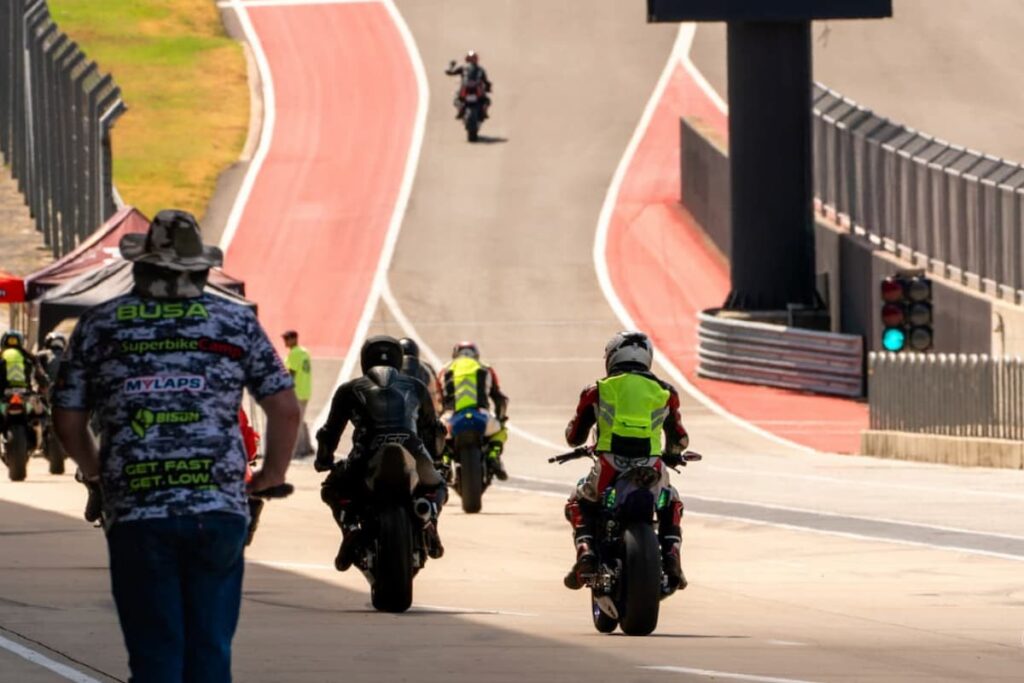
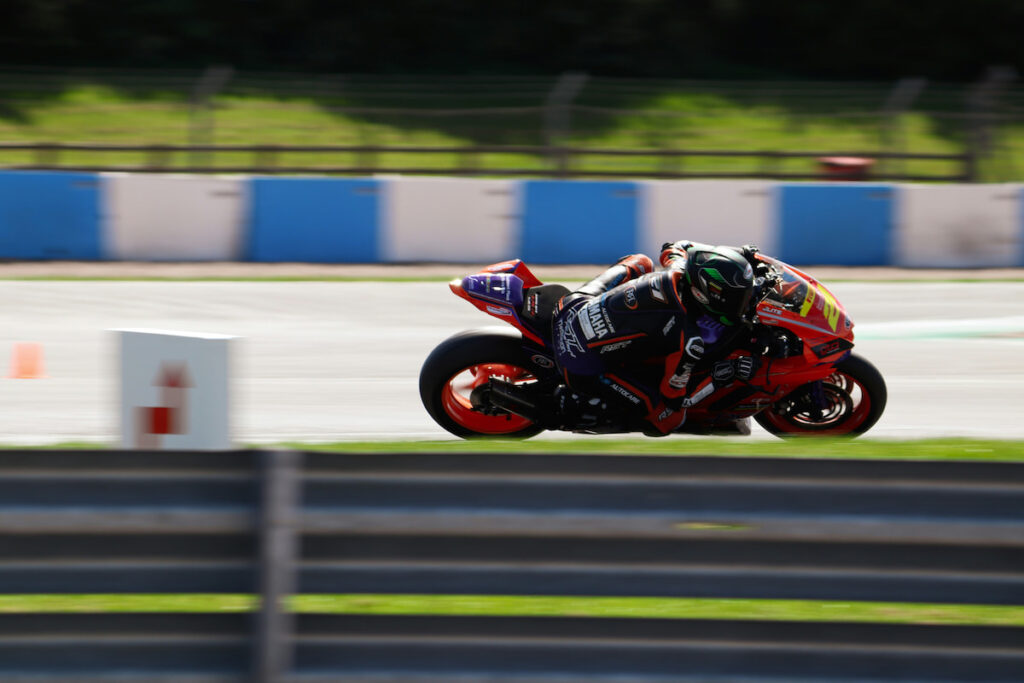
Photo by WP
Your second track day doesn’t feel like your first.
There’s still nervous energy buzzing under the suit, but now it’s mixed with something quieter – a small, earned confidence that comes from knowing what not to do. My first track day humbled me in all the classic ways. I ran wide into the grass. I fought the bike. I rode like a street rider trying to survive a racetrack.
My mentor even told me to ride as if the rear brake didn’t exist. It sounded ridiculous at the time, but that one idea ended up changing everything about how I approached corner entry and control.
So when I rolled in for Track Day 2, I wasn’t suddenly skilled. I was just no longer a tourist. I’d already been through the initiation every street rider goes through when they find out track riding is its own craft. This time, I showed up with a clearer mindset, better expectations, and a very different motorcycle underneath me.
TrackDNA Safety Note
Riding motorcycles on track is inherently risky and can result in serious injury or death. The ideas in this article are shared for general information only — they’re not formal coaching, professional instruction, or a guarantee of safety or performance.
Always ride within your limits, use proper safety gear, and practice only in a controlled, closed-course environment that follows all rules and regulations. Before trying any new technique, talk with a qualified coach or instructor and use your own judgment about what’s right for your skill level, your bike, and your body.
The best place to explore and apply these ideas is with a qualified coach or at a dedicated motorcycle or racing school. Treat what you read here as background context and conversation fuel for your own training — not as a step-by-step guide or a substitute for in-person instruction.
By choosing to ride, you accept the risks that come with it.
Upgrading Your Track Bike: How a Yamaha R6 Changed Everything
Between my first and second track day, I made a move that surprised even me: I bought a fully race-prepped Yamaha R6.
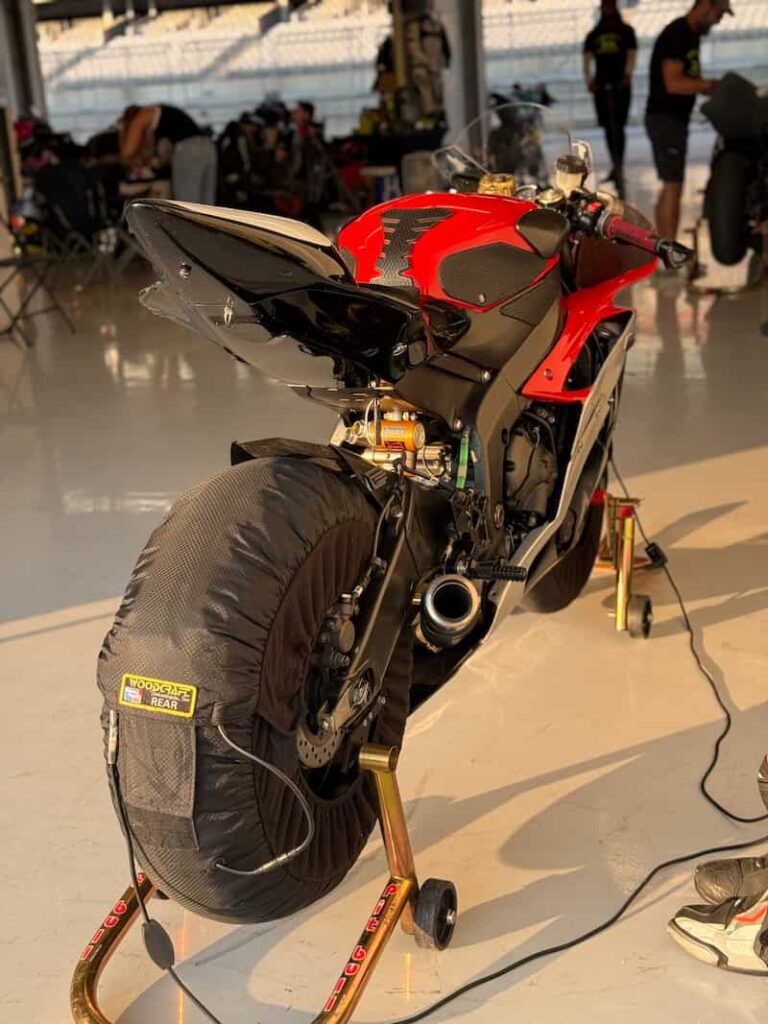
Photo by TrackDNA – 2009 Yamaha R6 built by EDR. At first all I had to do was set rider height and sag for my weight, but I later ended up rebuilding the transmission when 4th and 5th gear showed excessive wear – and found the missing gear tooth sitting in the transmission case.
Originally, I was shopping for something modest – a 300 or 400, something that made sense on paper for a returning beginner. Instead, a can’t-miss deal fell into my lap: a proper club-racing R6 built by EDR in Oregon, owned by a racer who clearly knew what he was doing. It was more motorcycle than I needed and more motorcycle than I knew how to use, but exactly the machine that was going to shape the rider I was about to become.
The last time I tried a sportbike, I was sixteen and gave up on it in a week. The problem back then wasn’t the bike. It was the skill I didn’t have yet, plus no structure around how to learn. This time, I wasn’t intimidated by the R6 in the same way. Not because I could ride it well, but because I was finally ready to treat it as something I had to learn, not conquer.
That shift alone changed the entire second day.
Second Track Day Learning Curve: What Really Changes on Day 2
A track-prepped R6 introduced me to a vocabulary that ordinary street riding never really teaches you. GP shift felt awkward and backwards for the first few laps. The quickshifter felt like cheating in the best possible way. The 12,000–15,000 rpm powerband didn’t just feel “fast” – it felt like finding a second story in a house you thought was one level.
That’s when it really hit me: all of my street habits lived in the wrong part of the rev range, the wrong timing, and the wrong level of urgency. Street pace faded into the background by Turn 2. Whatever “confidence” I thought I had on the road didn’t apply here.
What surprised me most was how the R6 humbled me without punishing me. When I got something wrong, the bike let me know, but it didn’t try to throw me in the weeds. Every mistake gave me feedback. Every halfway smooth lap felt like an immediate reward.
And just to make sure my ego stayed in check, I thought I looked decent on my warm-up lap until a kid on a Ninja 400 went by like I was parked. No coach could have delivered a better lecture.
Motorcycle Track Day Lessons: 5 Things I Learned Early
These weren’t forum tips or a checklist from a YouTube video. These were lessons my second track day forced me to learn the honest way.
1. I was too stiff
I was fighting the bike through every corner and then blaming the motorcycle for feeling sketchy. My body position and tension were the real problem. Once I relaxed my grip and softened my arms, the R6 finally started to move the way it wanted to, instead of the way I was trying to drag it around.
The track didn’t change and my speed didn’t suddenly double. I just stopped muscling the bike through every turn and let the chassis work.
2. Smooth beats strong
On the street, strong inputs can get you through traffic. On the track, that same urgency wrecked my line.
When I focused on smoother throttle, smoother brake pressure, and smoother transitions from one to the other, the bike became more predictable. The front felt calmer. The line stopped bouncing all over the place. I wasn’t braver; I was just more deliberate with my hands and feet.
3. The front brake became my teacher
Years of relying on the rear brake had buried some bad habits. Learning to trust the front brake started to rewire how I approached corner entry and weight transfer. For me, that’s what made the R6 feel planted instead of on edge.
The lever stopped being an emergency button I stabbed at the last second and started to feel more like a dial I could work with. I wasn’t getting aggressive with it, just learning what it felt like to build and release pressure in a way I could repeat.
4. Reference points changed everything
Once I committed to using visual markers, my riding turned from reactive to intentional. Turn-in points, apexes, and exit references gave my brain anchors around the track. Instead of “trying to go fast,” I was connecting dots, lap after lap.
Even when my pace wasn’t impressive, the laps felt cleaner. I could tell when I actually hit a reference point versus when I just guessed and hoped.
5. I didn’t actually want “fast” – I wanted progress
Somewhere in the middle of the day, I realized speed wasn’t the thing I was chasing. What I really wanted was to understand what I was doing.
I wanted laps that felt clean rather than wild. I wanted to know why a corner felt better one session than the last. That shift made the whole day feel different. Understanding felt better than going fast for the sake of it.

Paddock Tips for New Track Riders: How Experienced Riders Behave
There’s something unspoken about the riders who look professional when they roll out of the pits. They’re not always the fastest in the group, but there’s a calm to how they move.
They ride smooth and conserve energy. They’re not pacing around between sessions trying to prove anything. They’re hydrating, checking tire warmers, maybe reviewing one or two corners in their head, and then they sit down. When it’s time to go back out, they move with intention instead of tension.
Watching them taught me something no video had really driven home: skill isn’t just built in the corner. It’s built in the reset between corners and the reset between sessions.
Professional riding, even at our level, is calm riding.
Finding Flow on the Track: When Riding Finally Makes Sense
Late in the afternoon, something shifted. My inputs got lighter. My vision quieted down and stopped darting all over the place. I wasn’t trying to manage the whole track at once.
The R6 and I started to move in some kind of rhythm. It wasn’t fast and it definitely wouldn’t have impressed anyone watching from the fence, but it felt connected. The closest thing I can compare it to is that moment in meditation when your mind finally stops thrashing around and everything settles for a few breaths.
For the first time, I wasn’t trying to control the motorcycle. I was learning to ride with it. That quiet moment made the entire second track day worth it.
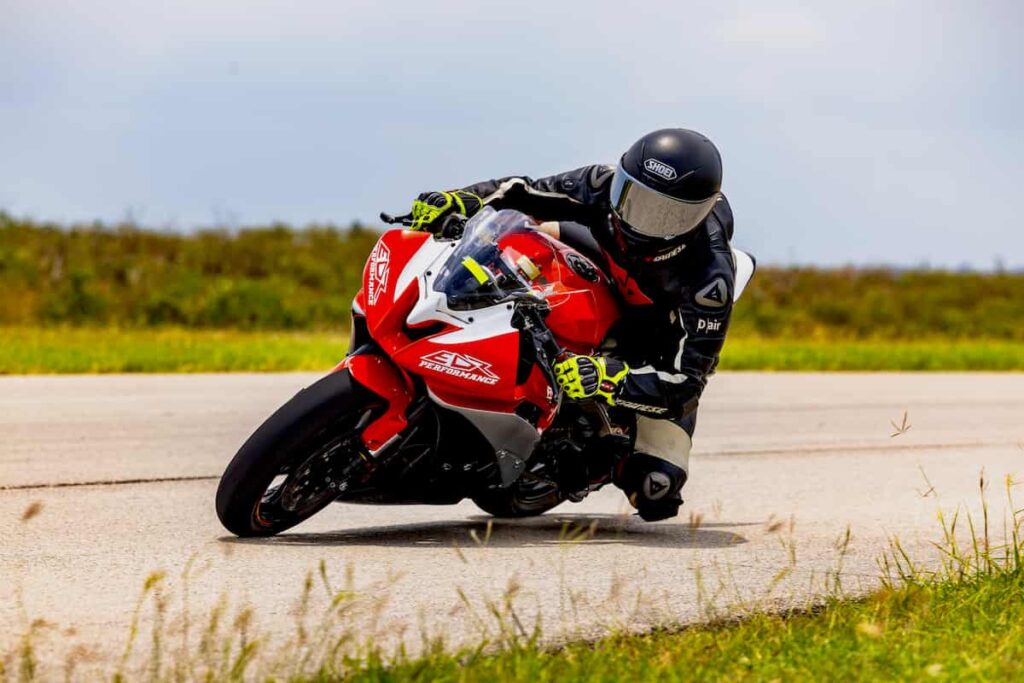
Photo by Jason Farias – On my second day I still carried street habits onto the track. My fingers were resting on the brake, my upper body was stiff, and that’s where track photos helped – I learned a lot just by studying them.
Beginner Track Day Advice I Wish I Had Sooner
If I could talk to myself before that very first track day, here’s what I’d say.
You don’t have to prove anything. Speed will come later. For now, keep it simple:
- Stop chasing speed for its own sake.
- Stop forcing body position just to look “right.”
- Pick one or two clear goals for each session.
- Be patient with your learning curve.
- Be curious about what the bike is telling you.
- Respect the motorcycle and the conditions.
- Let the track and the coaches teach you.
Progress comes from repetition, not aggression. Speed tends to show up later, quietly, after you’ve stacked enough honest laps.
What Every Rider Should Know Before Their Second Motorcycle Track Day
If there’s one thing I wish more riders knew going into their second day, it’s this: learn how to learn.
Stay open to advice. Reset old habits that don’t serve you, even if they worked on the street. Build new ones that match what the track is asking from you. The riders who improve the fastest aren’t the bravest. They’re the ones most willing to keep learning and keep listening.
Track riding is a craft, and craftsmanship takes time. Your second track day isn’t about lap times on the printout. It’s about catching a glimpse of the rider you’re capable of becoming if you stick with it.
If you’re heading into your own Day 2, I hope you find that moment where everything gets quiet and the track finally feels like it’s meeting you halfway.
TrackDNA safety note: Riding on track is inherently risky. This story reflects my personal experience, not individualized coaching or medical advice. Work with qualified instructors, follow your track-day organization’s rules, and always ride within your limits.
Author
-
Sean studied in Southeast Asia, did his stretch in corporate America as a Chief Revenue Officer, and then traded boardrooms for pit lanes. He’s a published author, and these days he’s on the grid with CMRA - on his way to MotoAmerica - and behind the scenes as the slightly obsessed human building TrackDNA, a magazine for riders who care as much about the culture and craft as they do about lap times.
Recent Posts