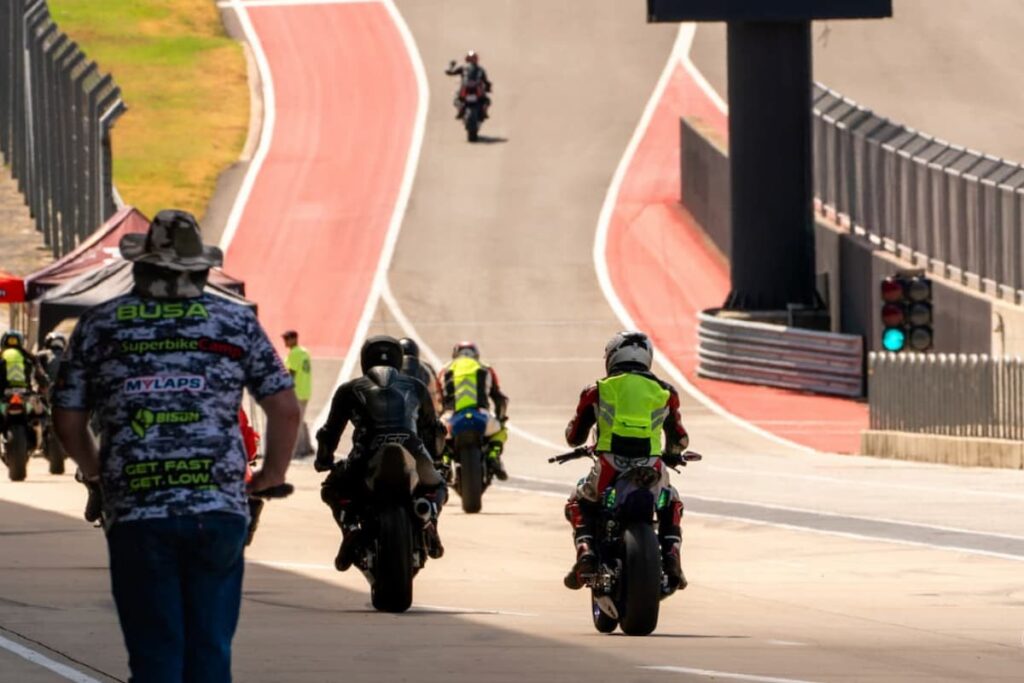
If you’ve spent even one morning in the paddock, you know how alive it feels. The smell of fuel, the shuffle of warm-up routines, somebody torque-checking bolts for the fourth time. Every rider shows up with something on their mind. Every bike rolled off a trailer for a reason. And every lap relies on one group of people most riders don’t think about nearly enough.
The track marshals.
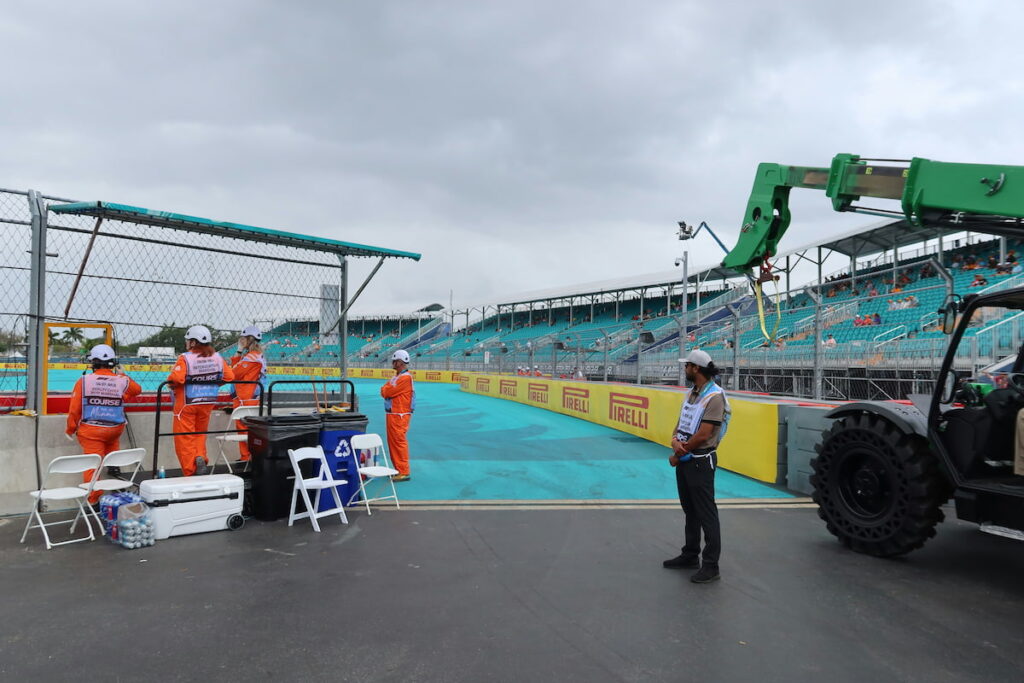
They’re the folks in orange at the edge of your vision, the steady hands in the wind, the first ones running toward the mess when something goes wrong. They’re the quiet protectors who make every track day and every race weekend possible, whether we notice them or not.
Most of us have no idea how much of our safety and track-day rhythm runs straight through them.
The Work Track Marshals Do That Most Riders Never See
From the seat, flags seem simple: yellow, red, debris, incident, slow down. You see the color, you react, you keep riding. From the corner post, it’s a completely different job.
While we’re focused on corner entry, apex, and maybe the rider in front of us, marshals are reading the whole picture. They’re watching lines and body language, scanning for oil, coolant, debris, or tire chunks, and tracking how the surface changes as the day heats up. They’re listening to race control, relaying information, and deciding when to call it in or when to throw a flag.
When something goes wrong, they’re the ones moving before most of us have even processed what happened. Getting to a downed rider. Assessing the scene. Helping get the bike out of harm’s way. Making sure medical gets where it needs to go. Then, as soon as it’s safe, they help reset the track so the day can keep moving.
They’re tracking twenty things while we’re tracking two. And the truth is, every clean lap we get is possible because a marshal was already one step ahead.
How My Perspective Changed
When I first started riding track, marshals were just part of the background. They blended in with the curbing, the cones, the corner worker stations. I knew they were there, but I wasn’t really seeing them.
That shifted when I slowed my own head down and started paying attention to the whole flow of a track day, not just my lap times. I started noticing how quickly flags came out when somebody ran wide or tucked the front. How a marshal would already be halfway to a bike before the rest of us were rolling through the next corner. How calm they stayed when the rest of us were buzzing with adrenaline.
Their timing, their reactions, their decisions, their calm – all of that shapes the pace of a day more than most riders realize. We spend a lot of time talking about lines, lean angle, braking markers, and technique. We don’t talk nearly enough about the people who protect the space we get to practice those things in.
The people who keep us informed when something changes. The ones who step closer to risk so the rest of us can ride inside a safer bubble.
Why TrackDNA Is Starting This Series on Marshals
TrackDNA isn’t just about bikes and lap times. It’s about the craft, the culture, and the people who make track life what it is. Marshals sit right at the center of that. They’re part safety net, part traffic control, part weather radar, part first response.
This article is a starting point, not the whole story.
We want track-day riders—from first-timers in Novice to folks chasing personal bests—to understand what’s happening behind the flags and behind the barriers. What does a “good” response look like from a marshal’s perspective? How do they see risk compared to how we see it? What does a long day in orange really feel like?
To answer that honestly, we need people who’ve lived this work at the highest level.
Our Next Step: Reaching Out to MotoGP Marshals
We’re reaching out to a few MotoGP marshals whose work we’ve been paying attention to for a while. These are people who stand trackside while the fastest riders in the world are coming past, lap after lap, in every kind of condition you can imagine.
With their help—whoever decides to join us—we’ll pull the curtain back a little further. Not just on what marshals do, but why they do it the way they do. How they think about risk. How they decide when to throw a flag. What they wish more riders understood when they roll out of hot pit.
No pressure. No big expectations. Just respect for the craft and an open invitation to anyone in that world who wants to help us tell it right.
A Rider’s Takeaway
Every time your session runs clean, every time a crash is handled quickly and safely, every time the surface gets checked and the track goes green again—that’s marshals.
They’re not looking for the spotlight. They’re not out there to be celebrities. Most of them are high-skill, high-focus, high-commitment people who love this world as much as we do and choose to serve it from the other side of the barrier.
They’re not just part of track life.
They’re a big part of why track life works at all.
TrackDNA Safety Note
Riding on track is inherently risky. Nothing in this article is individualized coaching or safety instruction. Always ride within your limits, follow your track-day organization’s rules, and listen to control riders, marshals, and staff. Conditions change, and every rider’s situation is different.
Author’s Note
I’m still early in my own track journey, learning one lap at a time. This piece comes from the rider’s side of the fence—the view from the seat, from the paddock, and from the small reminders you only catch when you start paying attention to more than your own pace.
What comes next will be from the marshals themselves, the people in orange who see the whole track in a way riders never really do.
Consider this a thank-you letter to them—for the long days, the sharp eyes, and the countless quiet decisions that keep the world we love turning.
Sean studied in Southeast Asia, did his stretch in corporate America as a Chief Revenue Officer, and then traded boardrooms for pit lanes. He’s a published author, and these days he’s on the grid with CMRA - on his way to MotoAmerica - and behind the scenes as the slightly obsessed human building TrackDNA, a magazine for riders who care as much about the culture and craft as they do about lap times.