Down at Harris Hill, the riders’ meeting is rolling and the track is quiet. Up on the rise at Turn 4, the wind is kicking through the bluebonnets, the paddock sits in the background, and somewhere in that stillness, Jason Farias is already doing the thing he does best:
Watching.
Not through the viewfinder yet. Just watching. Body language. Little tells. That mix of nerves and confidence that shows up before a single lap gets turned. For Jason, the photograph doesn’t start when he hits the shutter; it starts when a rider shows commitment.
Confidence Before the First Corner
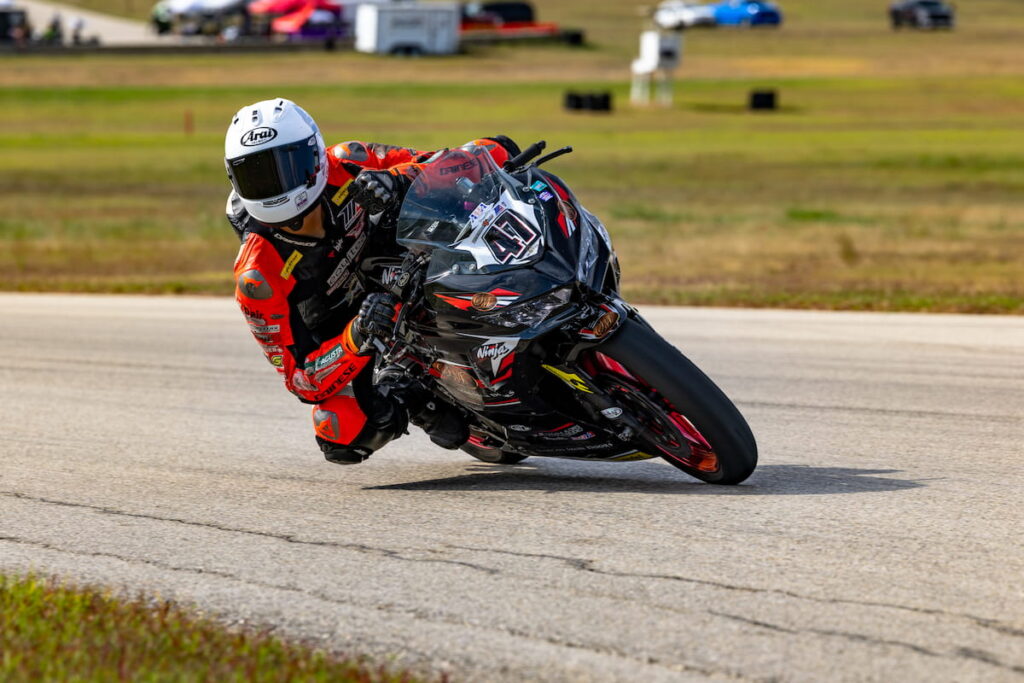
Ask him what he sees before he ever raises a camera, and he doesn’t hesitate: confidence, body language, and the complete lack of hesitation when a rider sets up for a corner.
He’ll clock the ones who roll out with quiet intent – no drama, no showboat, just clean setup and zero flinch on corner entry. Those are the riders he mentally tags to follow all day.
“When I see a rider like that,” he says, “I know I want to try and capture them throughout the day. With confidence like that, you know they’re going to be riding at their limits all day while having fun.”
He’s not hunting for lap records. He’s hunting for that edge where comfort and commitment meet – where a rider is right at their personal limit, not someone else’s.
That’s the rider who will tell a story in every frame.
Nice Photo vs. “That’s Me”
Track photographers get asked for “a nice photo” all the time.
You know the one: proof you were there. Knee maybe sort of down, bike leaned, screenshot bait for the group chat. Jason can do that all day if you want it. But that’s not where his brain lives.
“Some riders just want a photo to show they were on track once upon a time,” he says. “Then you have the riders who take their track day a little more seriously.”
With those riders, he’s not just capturing “nice.” He’s catching them flat-out hauling.
“With those types of riders, every shot will say something,” he says. “And that something is progression. It’s art in motion being captured.”
That’s why he keeps pressing the shutter when a certain rider comes by, lap after lap. Not to get another angle for the gallery, but to catch that tiny evolution: a little more lean, a little less tension, a line that’s finally starting to make sense.
Riders talk about flow a lot – those laps where the bike just disappears and everything clicks.
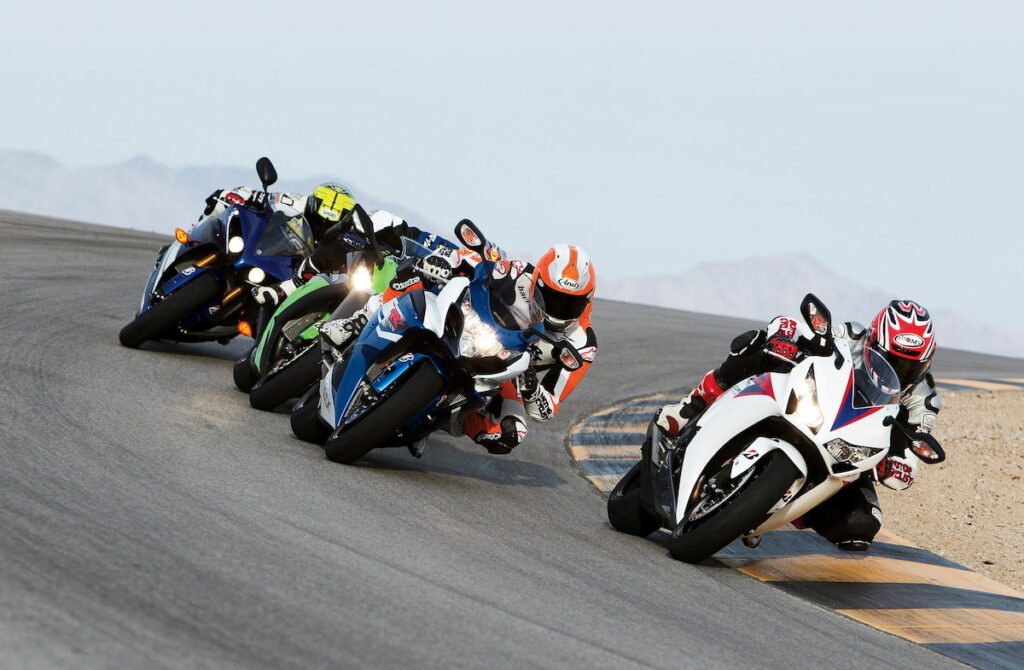
Jason has his own version of flow, and it doesn’t involve twenty bikes coming into one corner like a Moto3 start.
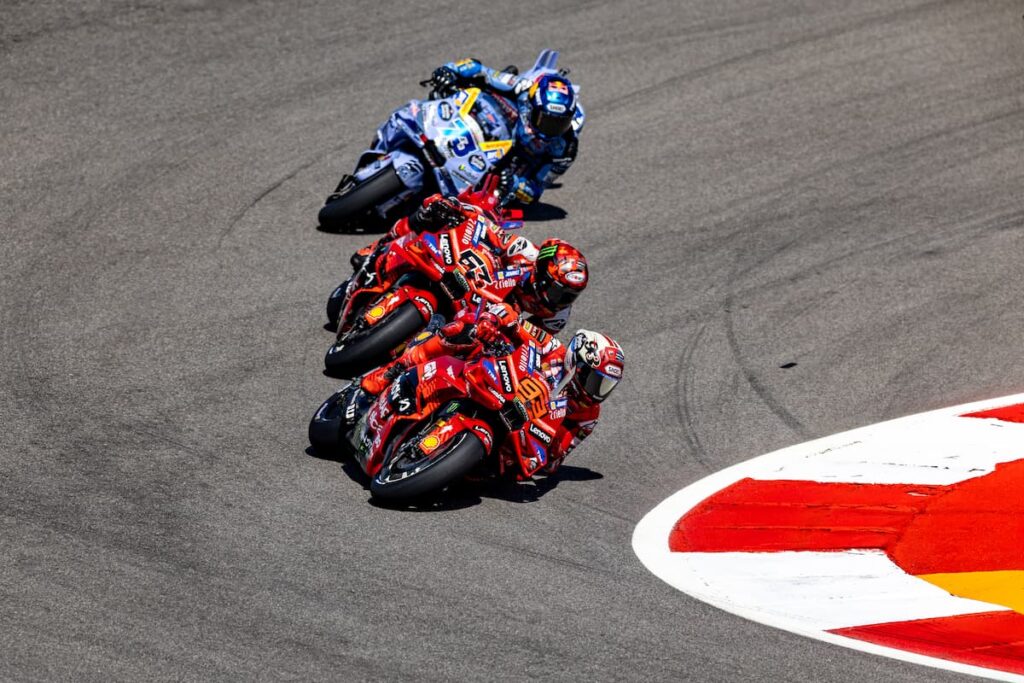
“I’ll say this,” he laughs, “it can be difficult when I have a crowd of riders all in one corner. There’s no flow with a wolf pack coming through all at once.”
His rhythm shows up when the track spacing finally settles and the groups thin out. One or two riders into a corner, not a herd.
“My flow begins when I can either hear or see them approaching,” he says. “Once they enter the corner is when I’m matching their speed and their momentum. It becomes fluid, like having some sort of rhythm when you’re in sync with the rider.”
You’re on the outside of the turn; he’s on the outside of the fence – but both of you are trying to do the same thing: meet the corner at the right moment, at the right speed, with just enough commitment not to flinch.
What the Paddock Tells Him (That the Track Confirms)
Jason doesn’t separate “paddock” and “track” the way riders sometimes do. For him, the story needs both.
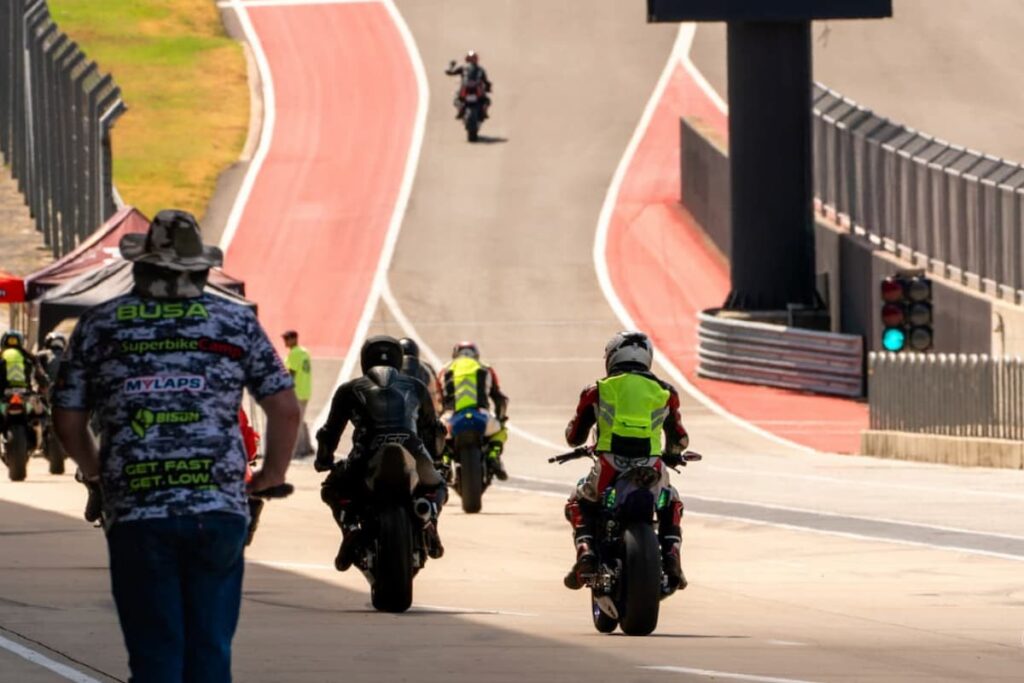
In the paddock, he’s watching the exhale before the first session. The way someone pulls on their gloves. Who’s pacing. Who’s laughing too loud. Who’s quietly listening.
You can learn a lot from that walk from pit to hot pit.
“You can tell a lot about a rider from the exhale in the paddock leading to the entry tension,” he says. “But it really boils down to how they look once they get off the track after their first few laps.”
He’s looking for the visor lift, the helmet coming off, the face underneath. The smile you can’t hide. Or the smile you can see just in the eyes.
Those moments are just as honest as anything that happens at full lean.
“The paddock reveals the nerves, the ritual, the relationships, and the honesty,” he says. “Once on the track those nerves disappear, the rituals bring about confidence, the relationships become tighter, and the track shows a rider’s true skill – the honesty of their riding ability.”
The paddock sets the story up. The track writes the middle. The walk back to the pit is the ending Jason likes to read.
Get the Inside Line
Real stories, track insights, and paddock moments — straight from riders who live it. No noise, no fluff, just the DNA of the track delivered to your inbox.
The Turning Point: From Cell Phone to “You’ve Got an Eye”
Every storyteller has that quiet fork-in-the-road moment.
Jason’s didn’t happen with a $5,000 body and some exotic glass. It started with a friend looking at cell phone shots and saying something that stuck:
You’ve got an eye for this.
At the time, that was all he had – a phone and an instinct. But that comment pushed him to take the craft seriously. He picked up a camera, started experimenting, and somewhere along the way that same friend made another comment about his photos that Jason keeps to himself – but it became his internal compass.
“What made me want to be different from others was my friend who led me down this path,” he says.
He doesn’t need to chase every trend or copy anyone else’s style. The goal isn’t to shoot like other track photographers.
The goal is to be the one who sees the thing everyone else missed.
Ask him what he looks for that other people miss, and he brings it back to one moment:
Commitment.
“With first-timers,” he says, “you often see them setting up for the corner by posing to look fast. Nothing wrong with that at all. They’re in an enclosed environment and going at a pace they know they can do it on.”
He’s not judging that. Everyone’s been there. The body-position cosplay is part of the early track day rite of passage.
But as riders gain experience, something changes. The posing fades and the intention takes over.
“For those with more experience it’s that commitment I see with them,” he says, “wanting to go a little faster and lean a little more.”
It might be a tiny head drop, a deeper breath on entry, a throttle hand that finally stops twitching. Micro-movements that never show up on a timing sheet, but live forever in a photo.
The Soundtrack That Slows Him Down
Track photography is fast, chaotic, and unpredictable. But there are parts of the craft that actually slow Jason down in a good way.
“When you have the groups go out in their opening laps,” he says, “just watch and listen. Don’t do anything except that.”
He’s listening to decel into corners. Downshifts. The crack of upshifts on exit. Pops in the pipe as riders stretch the gear.
“Doesn’t matter what kind of bike it is,” he says. “The sounds they make are soothing, and it’s a bonus if you also know the feeling of being on one.”
For him, those early laps and the breaks between sessions are a reset. The camera can rest for a second. The brain can just absorb.
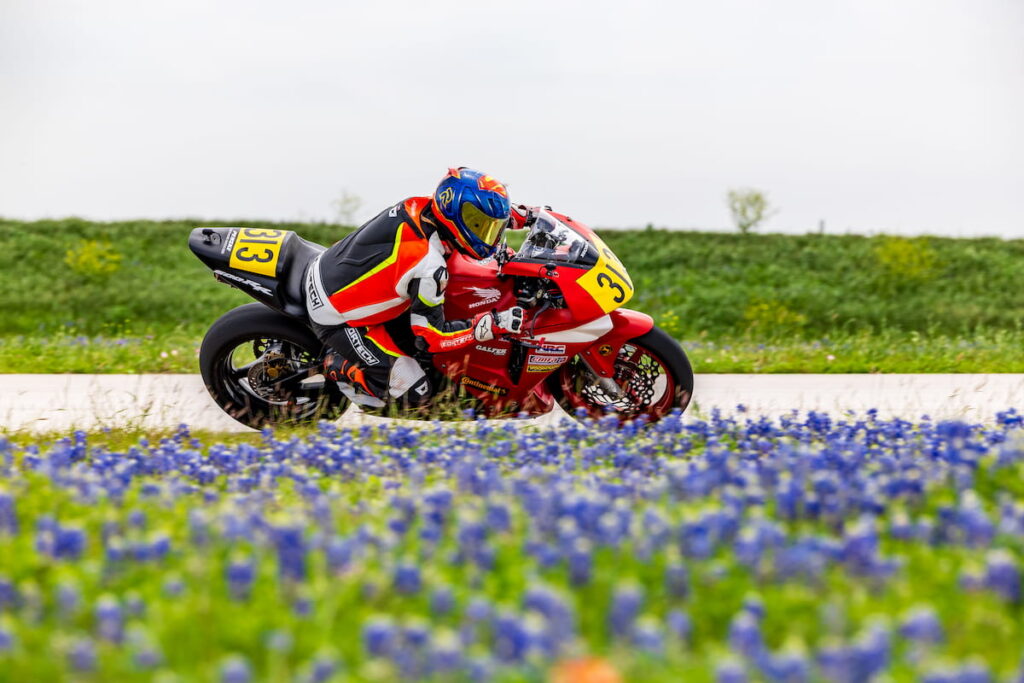
One of his favorite quiet moments lives at the top of the hill at Turn 4 at Harris Hill Raceway in March and April. Bluebonnets dancing, wind moving across the hillside, the paddock in the distance, riders in a meeting, the track mostly silent.
“It’s peaceful,” he says.
You can almost feel your heart rate come down just hearing him describe it.
The Soul of a Track Day (And the Photo He’d Show)
If someone asked him what the “soul” of a track day looks like, Jason admits he’d be tempted to show them a crowded shot full of riders.
But he knows that’s not really it.
Realistically, his answer is simple: mentors with their mentees, showing proper track lines.
“That’s what it’s all about really,” he says. “Helping one another improve their skill on the track. And if you also ride on the public roads, those skills you’ve learned or improved on at the track could also help you get out of sticky situations on the streets.”
It’s the rider pointing across the track during a debrief. The coach using their hands to trace an imaginary line. The mentee nodding, eyes locked in, still half out of breath from their session.
That’s the moment he wants to freeze.
Not just because it looks cool, but because it’s honest. Track riding as shared craft, not solo heroics.
“Damn… That’s Me.”
The best compliment a track photographer can get is simple:
“Damn… that’s me.”
When a rider says that while staring at one of Jason’s photos, he’s hoping they’re not just seeing the paint, the lean, or the knee puck.
“What I hope to see is the inspiration build up and grow,” he says. “Does not matter if they are a newbie or a seasoned rider. That photo alone can do wonders.”
A good image doesn’t just show who you are. It nudges you toward the rider you’re trying to become.
Maybe it shows you that you’re smoother than you feel on the bike. Maybe it reveals the little bad habit you didn’t know you had. Either way, it gives you something to work with.
That’s the sweet spot: somewhere between craft, chaos, and calm.
What Jason Wants to Bring to TrackDNA
So what does he want to bring to TrackDNA that he can’t just drop anywhere else?
For Jason, it’s a mix of four things: freedom, honesty, mood, and a different way of seeing riders.
It’s the freedom of riding itself – amplified at the track, where there’s room to push, reset, and try again.
It’s the honesty of skill level – especially for the “I’m fast on the streets” riders who roll into their first track day and find out pretty quickly where they actually sit.
It’s the mood of a day that usually starts high but can swing hard when things go wrong – and the way the paddock absorbs that together.
And it’s a way of seeing riders that’s rooted in their why. Why they’re out there. Why they keep coming back. Why this whole track life thing has its hooks in them.
“The different way of seeing riders,” he says, “is to bring their story as to why they love it to light while capturing and freezing those moments. Nothing planned. Just all real time.”
That’s exactly why we’re stoked to have him in the TrackDNA paddock: he’s not just documenting bikes going in circles.
He’s chasing the moment of commitment – and giving riders something real to hold onto when they climb out of their leathers and ask the question we’re all secretly asking:
Is that really me?
With Jason behind the lens, the answer might just be yes.
If you want Jason behind the lens at your next track day, give him a follow and reach out on social:@jason_farias28
Line up your session, then go ride like you mean it.
See you out there!
Get the Inside Line
Real stories, track insights, and paddock moments — straight from riders who live it. No noise, no fluff, just the DNA of the track delivered to your inbox.
Sean studied in Southeast Asia, did his stretch in corporate America as a Chief Revenue Officer, and then traded boardrooms for pit lanes. He’s a published author, and these days he’s on the grid with CMRA - on his way to MotoAmerica - and behind the scenes as the slightly obsessed human building TrackDNA, a magazine for riders who care as much about the culture and craft as they do about lap times.