Calm Entry: How Branden Chaisorn Builds Confidence in Motorcycle Corner Entry

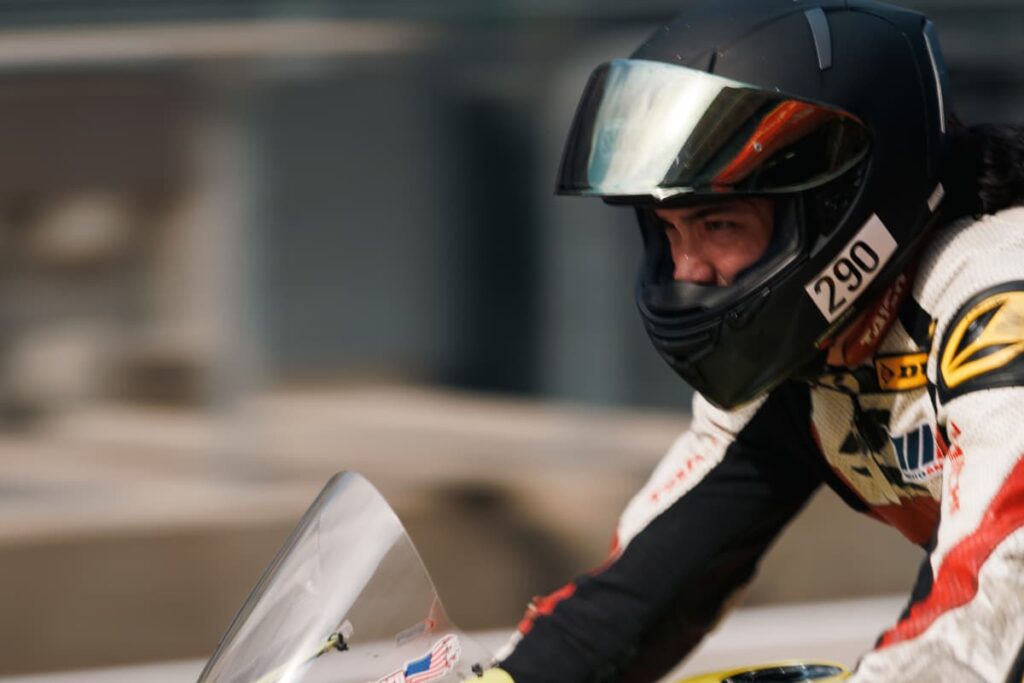
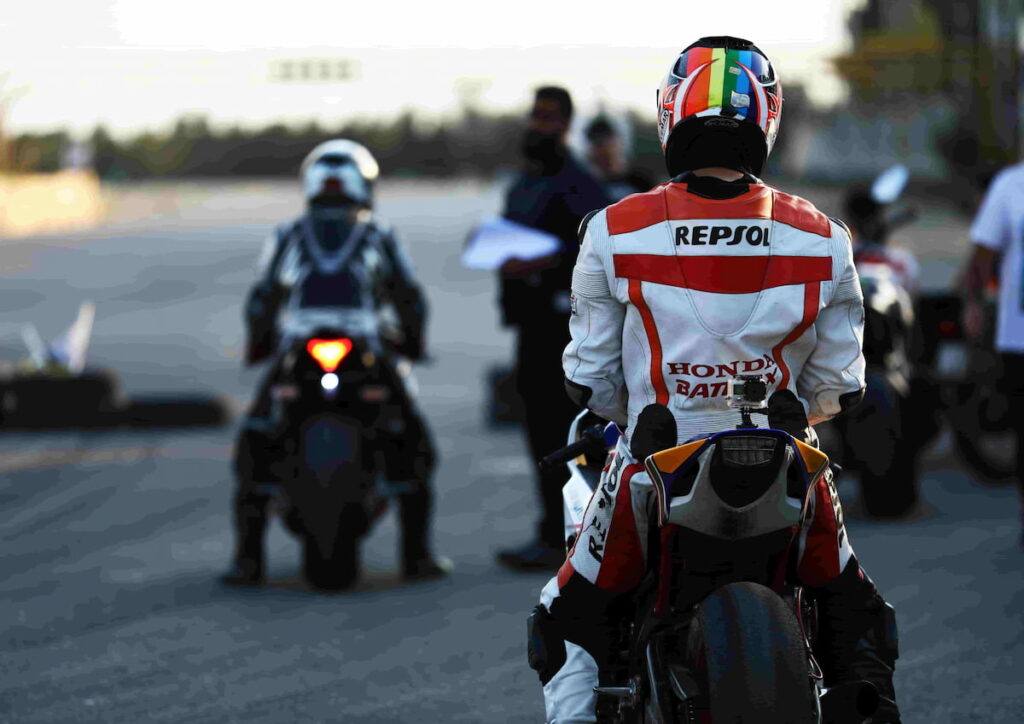
a motorcycle racer at the start

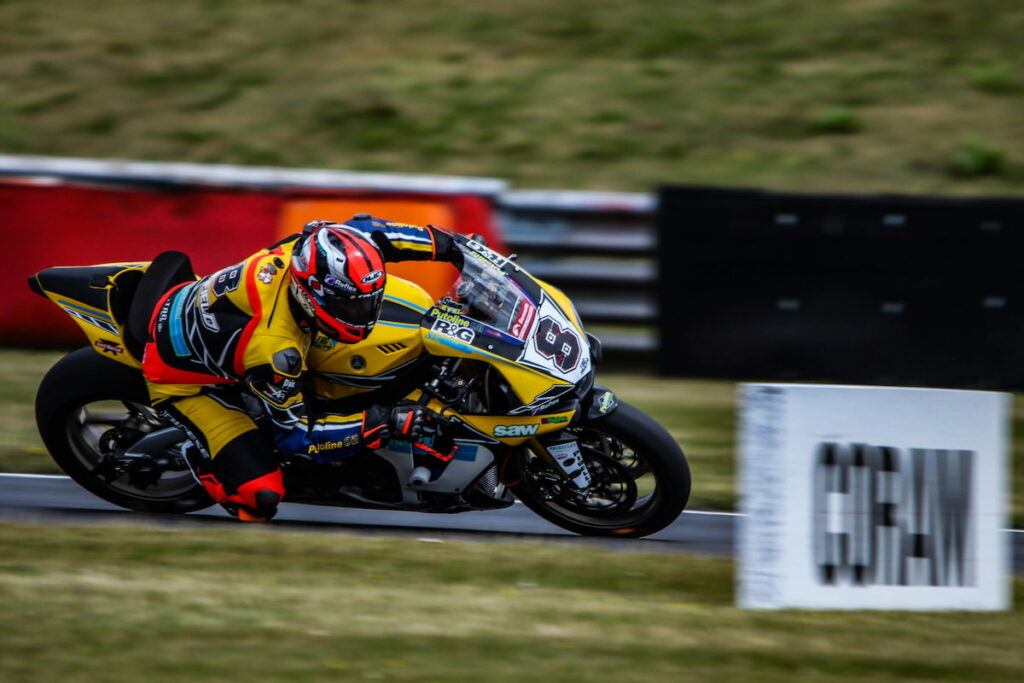
I had the chance to work with Branden Chaisorn, and I picked up a lot from him—especially in the one-on-one sessions. What really stood out was how observant and mindful he was at every corner. Here’s a glimpse of what you get in a one-on-one session with a sharp, truly attentive motorcycle track coach.

TrackDNA Safety Note

Riding motorcycles is inherently risky and can result in serious injury or death. The ideas in this article are shared for general information only. Nothing here is formal coaching, individualized instruction, or a guarantee of safety or performance.

Always ride within your limits, use proper safety gear, and practice only on a controlled, purpose-built track with trained staff and medical support. Before trying any new technique, consult a qualified coach and consider your own readiness, fitness, and motorcycle setup.

TrackDNA encourages riders to learn progressively, prioritize safety, and treat professional coaching and track schools as essential tools for improvement.

Corner entry is where a lot of riders feel exposed

You’ve just come off the straight, the world is busy with revs and wind noise, and in about two seconds you’re supposed to slow the bike, move your body, look through the corner, and somehow “just trust” the front.

Branden Chaisorn spends a lot of time watching that moment.

As a coach, he’s less interested in whether your elbow is dragging and more in whether you look prepared — calm, set up, and actually ready to turn. In this piece, we pulled his thoughts on corner entry into a simple, rider-first guide you can take straight to your next track day.

This isn’t about hero braking. It’s about building a repeatable entry you can trust.

What coaches really see at corner entry

When Branden watches a rider approach a corner for the first time, he’s not hunting for Instagram body position. He’s reading body language.

Are they confident and comfortable as they roll in?
Or do they look busy and behind, still searching for gears and controls?

He’s looking for two things:

  • Overall calm vs. tension. Are the shoulders loose or hunched? Is the rider smooth on the bars or tight and reactive?
  • Are they already set up? Is the downshifting and braking mostly done, gear chosen, body in roughly the right place, or are they still doing all that work as they’re about to tip in?

That picture tells him whether a rider is genuinely ready for the corner, or just arriving at it.

If you want to look calm to a coach? Start by being set up early.

Get the Inside Line

Real stories, track insights, and paddock moments — straight from riders who live it. No noise, no fluff, just the DNA of the track delivered to your inbox.

The simplest fix for feeling “rushed” into a corner

If you feel like every corner arrives too fast, Branden doesn’t start by telling you to “brake harder.” He starts by moving everything earlier.

Get your downshifting and braking done sooner, and do it while the bike is straight up and down.

Instead of charging deep and trying to do all your work at the very last marker, try this:

  1. Pick an early, conservative braking marker.
    Brake firmly while the bike is still upright.
  2. Downshift early and cleanly.
    No last-second stabs at the shifter as you’re tipping in.
  3. Once you’re slowed and in the right gear, ease off the brake so the bike settles and you arrive at turn-in calm, stable, and ready to lean.

From there, as your comfort grows, you can gradually move your braking point deeper — a bike length or two at a time — until you find a more “ideal” entry. But the foundation is always the same: do the heavy work early and upright.

If your brain feels less rushed, you’ll have more bandwidth for lines, vision, and throttle — the things that actually make you smoother and faster.

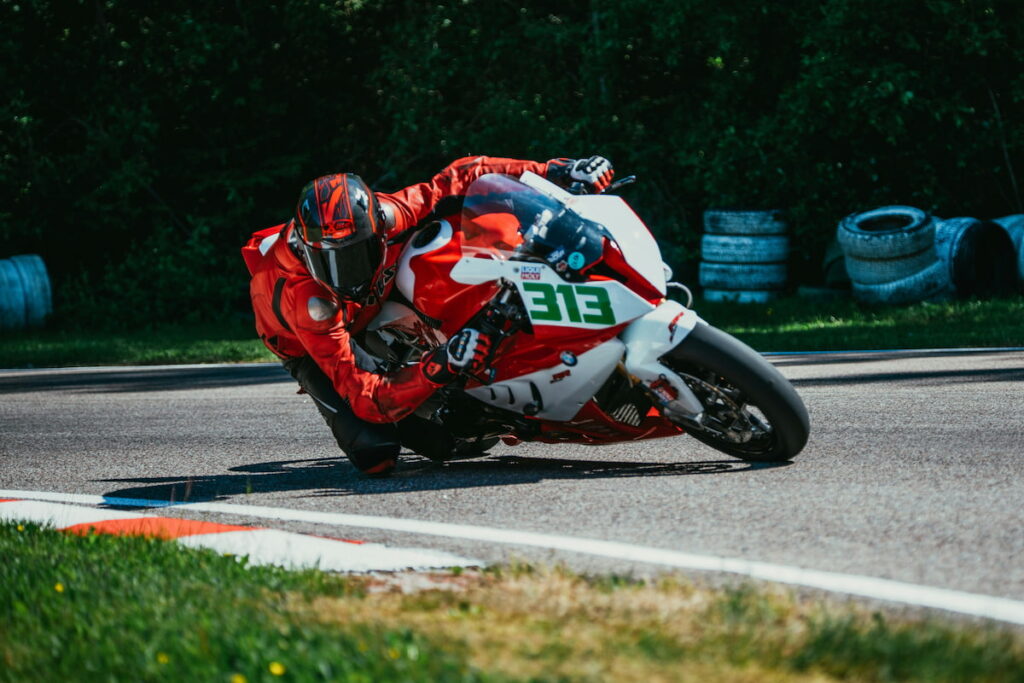
a group of motorcycles racers on the track

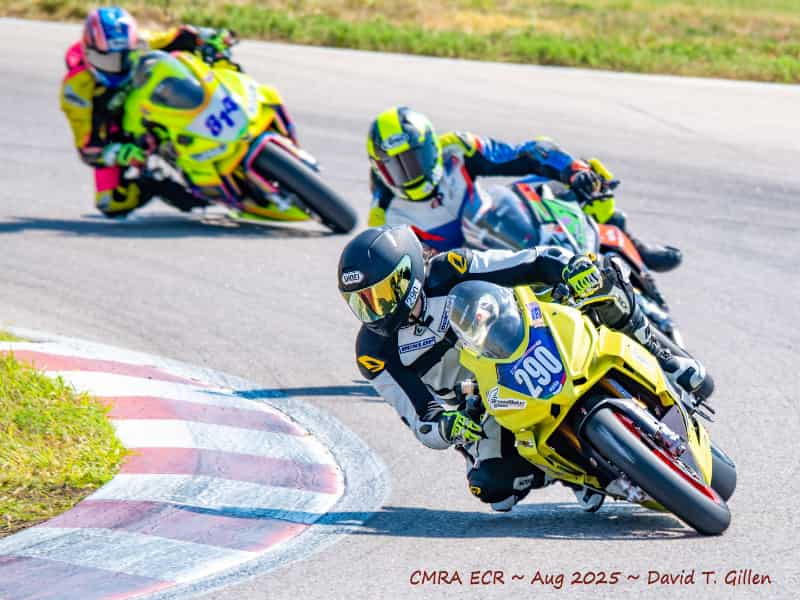
Photo by David T. Gillen – CMRA ECR with Branden leading 

Brake release: why “not dumping it” matters

Ask ten riders about when to release the brake, and you’ll get ten different hand gestures.

For Branden, there are two main pieces:

  1. It’s almost never a “dump the lever” moment.
    He doesn’t like any input on the bike to be totally binary. Instead of going from full brake to zero instantly, he prefers a smooth transition from braking to neutral, then gently onto the throttle.
  2. For newer riders, get braking done before the turn.
    With early students, he actually encourages them to finish all their braking before they turn in. That lets them focus on:
    • Holding a cleaner line
    • Knowing when to start accelerating out

Only once that is comfortable and repeatable does he move riders toward trail braking.

Trail braking as a “feel” skill

Trail braking deeper into the corner — carrying some brake pressure past turn-in — is where feel, trust, and risk all mix together.

  • Brake too much, too late, and you can overload the front and tuck.
  • Don’t brake enough, and you run wide or off the track.

The way Branden frames it: use faster, more experienced riders as markers for what’s possible, but always stay within your personal comfort limits.

And one line he’s very clear about:

In trail braking, it’s really important to slowly release the brake.
Just letting go abruptly is a quick way to upset the suspension and crash.

Think of it as “bleeding off” brake pressure as you turn, not flicking a switch.

What you should feel before the bike tips in

If you’re looking for a magical feeling right before turn-in, Branden actually steers you away from that.

He cares more about whether you’re prepared:

  • You’re in the correct gear.
  • Your braking is done (or reduced to light trail).
  • Your body is roughly where it needs to be.
  • Most importantly: your eyes are up, looking down the track.

He doesn’t want riders chasing a mystical “feeling” before they’ve nailed the basics.

Focus on:

  • Your braking and acceleration points.
  • Having your body set earlier.
  • Keeping your vision up and ahead.

The feel will come later, once your process is cleaner. When you finally do feel calm at pace, you’ll know exactly what he meant.

The fastest way to build confidence without “trying to go faster”

A lot of riders think confidence at corner entry comes from bravery.
Branden thinks it mostly comes from vision.

Most riders still aren’t looking far enough down the track.

When your eyes are locked too close to the bike, everything feels fast and chaotic. When your vision is up:

  • The corner shape makes more sense.
  • Your brain has more time to process what’s happening.
  • The whole experience feels like it slows down a little.

If you want a simple confidence drill, this is it: keep the same braking marker for a session, but commit to looking further ahead — past the apex, into the exit, toward the next reference. Let speed be the result, not the target.

The classic early mistake: braking way too early

Ask Branden what almost every first-time track rider does at corner entry and he doesn’t hesitate:

They brake extremely early.

To fix it, he often uses a simple on-track exercise:

  1. Pick one corner. Don’t try to fix everything at once.
  2. Have the rider follow him and watch where he brakes.
  3. Over several laps, he’ll move his own braking marker a little deeper each time, showing how much room is really available.

Because he understands their pace, he can demonstrate a safer limit than they’d find on their own. The rider gets to feel that they can comfortably go further before getting on the brakes — without suddenly jumping to a “hero” marker they’re not ready for.

The goal isn’t late braking for its own sake. It’s helping riders discover that the bike has more capability than their fear suggests.

When corner entry finally clicks: what changes first?

When a rider finally “gets it” at corner entry, you might think body position is the first big transformation.

For Branden, it isn’t.

“Timing,” he says.
Specifically:

  • Braking marker timing
  • Throttle-on timing at or after the apex

Once those are repeatable, you can tweak and move them as situations change.

Mental calm comes next, with experience. You’ve lived through enough entries that your nervous system stops treating every corner like an emergency.

As for body position? Branden is honest that it’s a touchy subject, but in his personal opinion, it doesn’t become truly critical until you’re moving at a decent pace. Good habits matter, but you don’t need MotoGP bodywork to fix basic entry problems.

Dial timing first. The rest stacks on top.

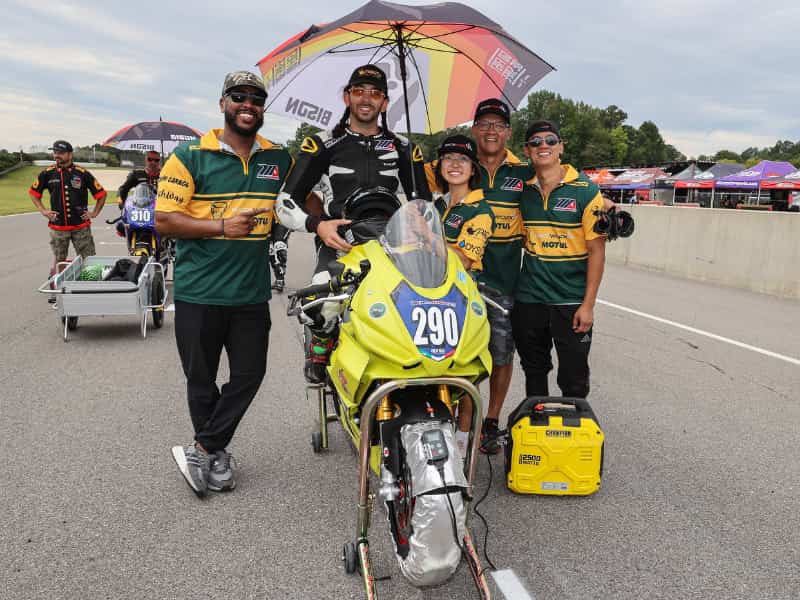
A group of people next to a motorcycle racers on the grid.

Photo by Brian J Nelson Branden Chaisorn #290  

One sentence on trusting yourself more at turn-in

If you force Branden to boil it all down into one sentence for riders trying to trust themselves more at corner entry, he lands here:

“Repetition and putting in the work are the only things that are going to really build your confidence.”

Racing and track riding, like anything else worth doing, ask for a lot of time, effort, and energy. But if you show up with intention — trying to improve one thing each time you go out — you will get better. You will get faster. And that “rushed, panicked” feeling at corner entry will slowly turn into something quieter and more useful.

Not magic. Just work, done on purpose.

Quick note from TrackDNA

Nothing here replaces the rules or structure of your track organization or your coach on the day. Use these ideas as a lens, not a reason to override your control riders, school curriculum, or safety guidelines. Ride within your limits, build step by step, and let the confidence grow from there.

Branden’s Corner Entry Checklist

A rider-first, coach-approved snapshot you can tape to your toolbox or save to your phone before the next track day.

Before the corner

  • Pick a clear, conservative braking marker you can repeat.
  • Get the majority of your heavy braking done while the bike is upright.
  • Downshift early and cleanly into the right gear — no last-second stabs at the lever.
  • Start getting your body roughly into place before the marker, not right at turn-in.
  • Check yourself: are you still busy at the marker, or already mostly prepared?

Brake release and turn-in

  • Don’t dump the lever — ease off the brake smoothly, let the fork extend in a controlled way.
  • If you’re trail braking, bleed pressure off gradually as you add lean, never all at once.
  • Keep your vision up and ahead: past the apex and into the exit.
  • Aim to arrive at turn-in calm and stable, not scrambling.

As you build pace

  • Work on one corner at a time when adjusting brake markers.
  • If possible, follow a faster, trusted rider or coach and watch their brake points.
  • Adjust timing in small steps: a few bike lengths at a time, not whole brake boards.
  • Let timing and vision lead the way; refine body position more as speed increases.
  • Treat every session as reps: pick one thing to improve each time you go out.

Use this as a framework, not a set of rules carved in stone. The goal, just like Branden says, is repetition, honest work, and building a corner entry that feels less like a panic zone and more like the start of a good lap.

Get the Inside Line

Real stories, track insights, and paddock moments — straight from riders who live it. No noise, no fluff, just the DNA of the track delivered to your inbox.

Author

Scroll to Top