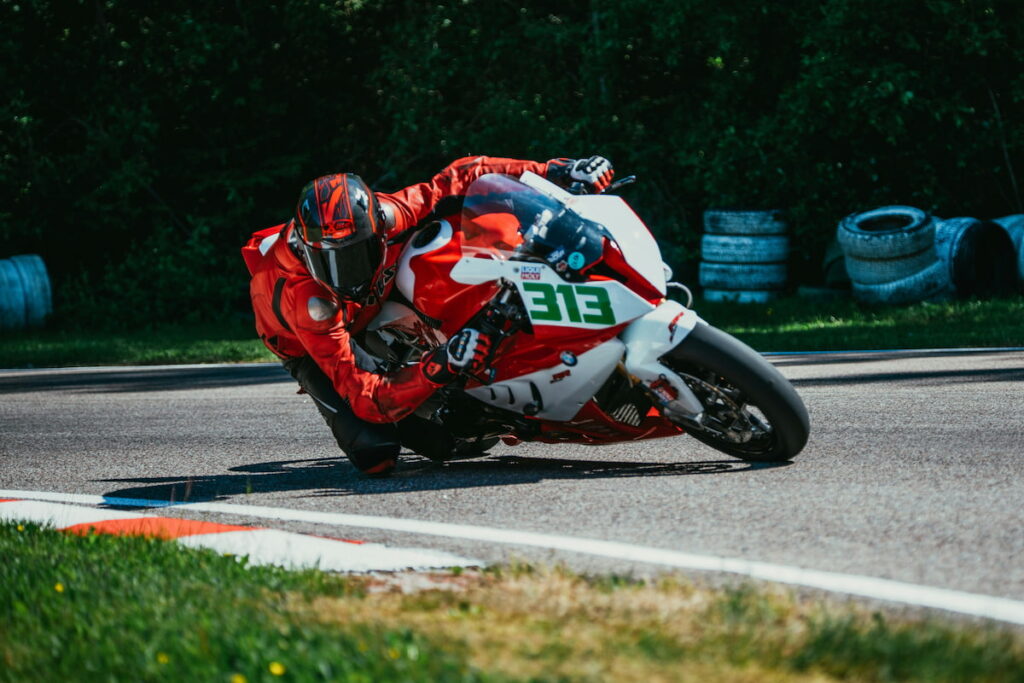
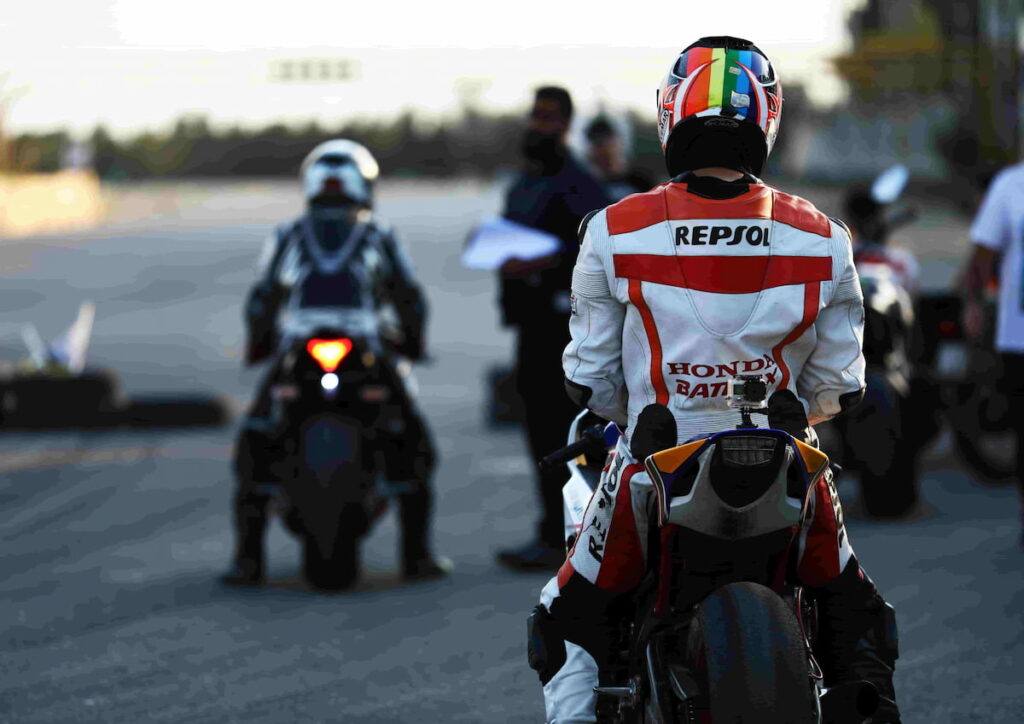
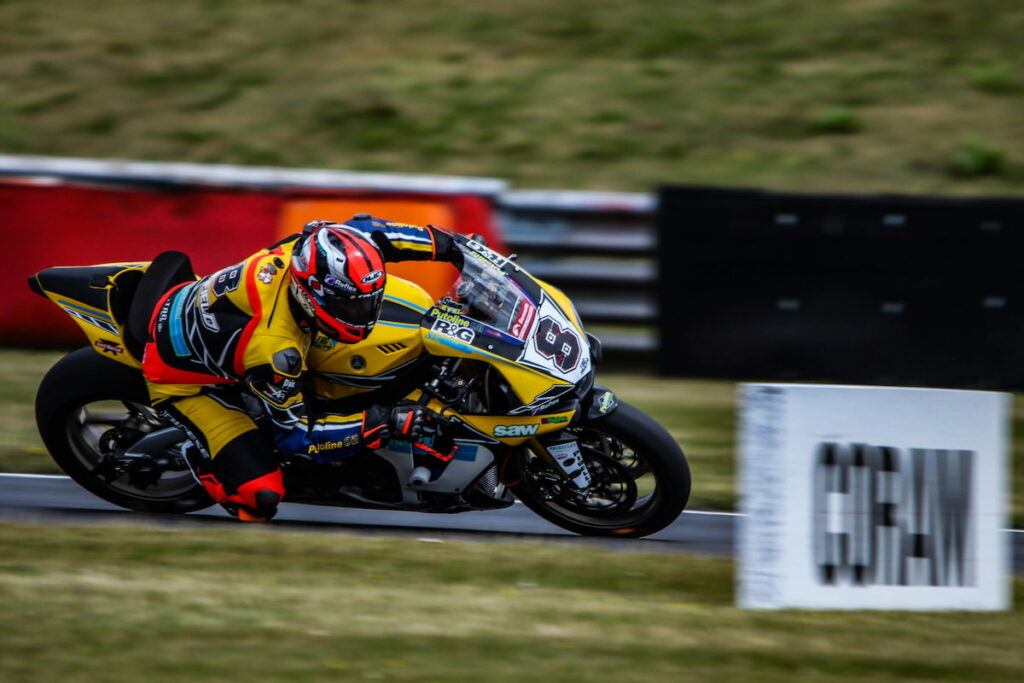
Photo by Oskar Kadaksoo
I showed up to my first track day convinced I was hanging off the bike like Jorge Martin.
Then the photos came back.
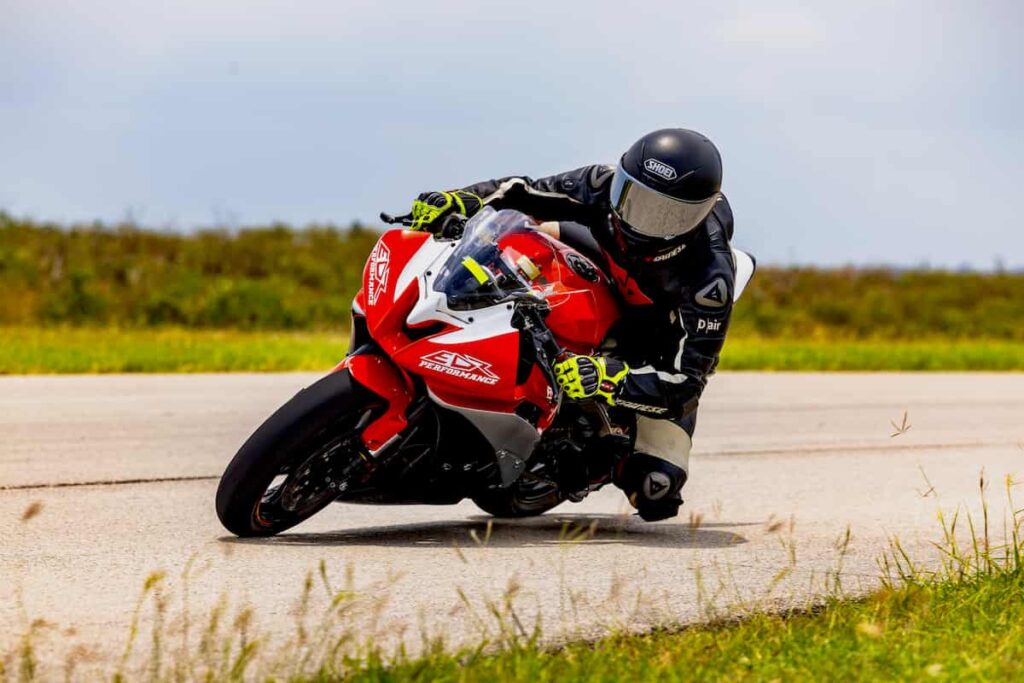
A week later the track photographer posted the shots and I just stared at them. I wasn’t “off” the bike. I was still basically centered, shoulders up by my ears, elbows locked, and my head sitting straight on top of my spine like I was wearing a neck brace. My boots were scraping and I thought that meant I was doing something right. In reality, I was stiff everywhere, working way too hard, and riding like I didn’t trust the bike.
That’s a pretty normal place to start. I had years of street miles and a lot of dirt-bike habits in my body, but almost no real understanding of how to support myself on a sport bike at speed. On track, you find out fast. Sometimes it’s a coach giving you a look. Sometimes it’s a photo that tells the truth without being polite.
TrackDNA Safety Note
Riding motorcycles on track is inherently risky and can result in serious injury or death. The ideas in this article are shared for general information only — they’re not formal coaching, professional instruction, or a guarantee of safety or performance.
Always ride within your limits, use proper safety gear, and practice only in a controlled, closed-course environment that follows all rules and regulations. Before trying any new technique, talk with a qualified coach or instructor and use your own judgment about what’s right for your skill level, your bike, and your body.
The best place to explore and apply these ideas is with a qualified coach or at a dedicated motorcycle or racing school. Treat what you read here as background context and conversation fuel for your own training — not as a step-by-step guide or a substitute for in-person instruction.
By choosing to ride, you accept the risks that come with it.

The “Why Is the Bike Fighting Me?” Phase
Day one felt like I was wrestling the bike through every corner. Not because the bike was unstable – because I was.
I had a death grip on the bars. I was scared to move around on the seat. My shoulders and neck were tight the whole session. And every time I turned in, the bike felt stiff and reluctant, like it didn’t want to settle. The more it felt weird, the harder I held on. The harder I held on, the worse it felt.
My coach watched a couple laps and then said something simple that stuck.
“Hold the bars like you’re twisting a screwdriver. Not gripping for your life.”
That line made me realize what I was doing: I was using my arms to control my whole body. I was hanging on the bars for support, and the bike was getting all that tension through the front end.
The Photo That Made It Obvious
When I saw those pictures, I finally understood why I felt smoked after every session.
The bike wasn’t the problem. My body was.
In the photos my upper body looked like one stiff piece – shoulders locked, arms straight, no room for the bike to move underneath me. I also noticed something else that mattered just as much: my eyes were doing what my body was doing. When I got tense, my vision got narrow. I’d look at the apex like it was the only thing in the world instead of looking through the corner.
After that, photos and video became part of my routine. Not every session, not obsessively – but often enough to keep me honest. If you’re new, they’ll show you things you can’t feel yet.
Photo by Jason Farias – Notice the old street habit – two fingers resting on the brake lever, shoulders stiff, death grip and my hips planted right in the center of the bike.
When Things Started to Click
It wasn’t until my second and third track day that I started trusting myself to move around on the bike.
On day one I was busy just trying to learn the basics: braking markers, lines, what the track was doing corner to corner, how much grip I had. Body position felt like something I’d “get to later.” But the more laps I did, the more I realized body position wasn’t a separate topic. It was part of everything – how calm the bike felt on corner entry, how easy it was to steer, how much energy I burned just getting through a session.
The turning point wasn’t one dramatic moment. It was small improvements that piled up: relaxing my hands a little, taking weight off the bars, shifting earlier, breathing when I wanted to hold my breath. Then one day I scraped a knee for the first time. It surprised me more than it thrilled me. It was that quick mix of “Was that real?” and “Okay, don’t do anything stupid next lap.”
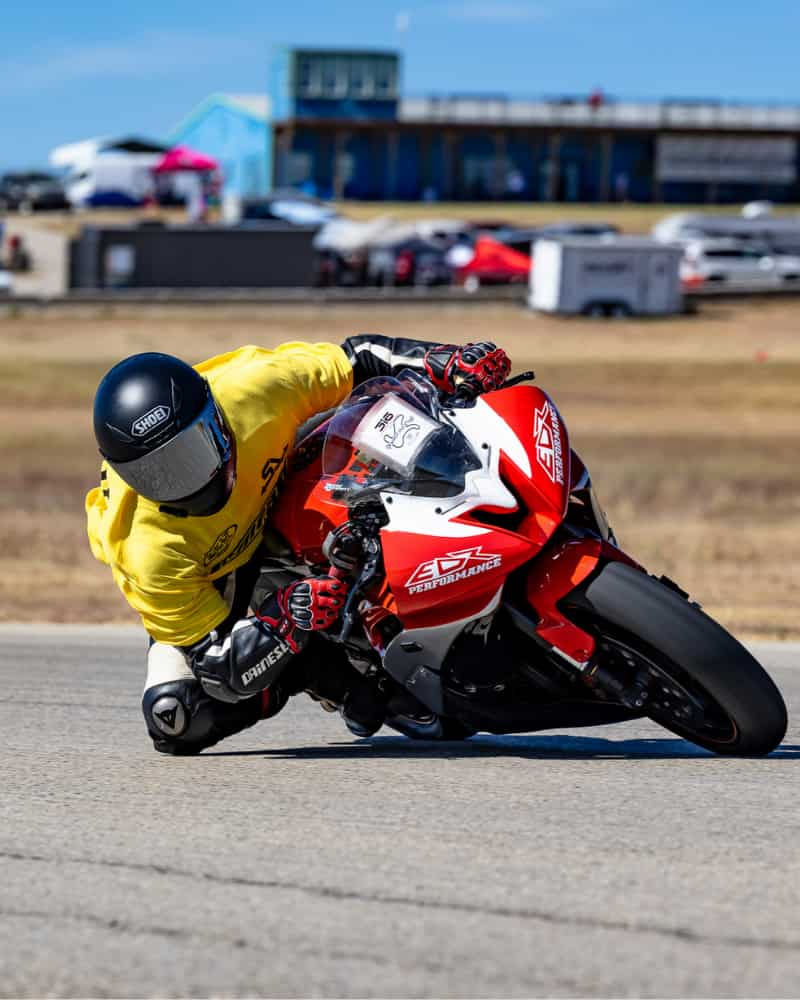
Photo by Jason Farias – Notice the difference – shoulders and grip are more relaxed, my core is supporting more of my weight, and my hip is off-center. Still working on head/vision, a looser left shoulder, and better right-foot position on the peg.
The Three Mistakes That Held Me Back (and Hold Most Riders Back)
1. Staying stiff through my shoulders and neck
This was my default setting – tense, braced, and trying to “hold” the bike in position.
What helped most was breathing on purpose. Not a motivational thing. Literally reminding myself on corner entry to unclench my jaw, soften my shoulders, and let my elbows have some bend. I also watched my coach ride and noticed how relaxed his upper body was. The bike could move underneath him without him reacting to every little motion.
When my upper body loosened up, the bike stopped feeling like it was pushing back.
2. Waiting too long to move my hips
I used to wait until I was already turning to shift my body. That was always messy. I’d move late, put weight into the grips, and then wonder why the front end felt nervous and hard to read.
Over time I learned to get my hips set earlier, before the corner. The other piece was strength. I didn’t want that to be true, but it was. When my legs and core got better, moving side to side stopped feeling like a big event. It became one smooth shift instead of a last-second scramble.
And yeah – at some point another rider told me, “Dude, your pose looks like a MotoGP rider.” I laughed because I remembered those first photos. I tried not to let it go to my head.
3. Supporting my upper body with my arms instead of my core
This one humbled me fast.
At the end of day one my shoulders were wrecked. Not “I had a tough workout” wrecked. I mean I could barely get out of my leathers. I asked a stranger for a shoulder massage in the paddock, which is not how I imagined my first track day ending.
That pain made the problem obvious: I was using my arms to hold myself up. Once I started supporting my upper body with my core and legs instead, everything got smoother. I could steer with less effort, and the bike felt more settled because the bars weren’t carrying my weight.
The First Habit That Actually Matters
A lot of beginners get hung up on how far they should hang off. I did too.
But the first habit that changed my riding wasn’t “more lean.” It was learning to keep weight off the bars and let my hips and core support my body. When your arms are tight, your steering inputs get tight. When your body is stiff, the bike feels stiff. And if you’re trying to copy a pose before you’ve built the support and timing underneath it, it looks forced because it is.
Body position comes from seat time and trust. You don’t rush it. You build it.
What Happens When It All Comes Together
As the habits started to stick, the bike felt calmer on corner entry. Steering took less effort. My lines got smoother. I wasn’t burning all my energy fighting the bars. I felt more connected to what the chassis was doing instead of bracing against it.
My boots still scraped sometimes. They still do. The difference is now I understand what’s causing it, and I can address it instead of guessing.
Final Thoughts: Build Habits, Not Poses
If you’re early in your track riding and body position feels confusing, you’re not behind. You’re just in the part where the bike is teaching you what tension feels like.
Start with the simple stuff that actually holds up under pressure: keep your hands light, support yourself with your core and legs, get your hips set earlier, and let your eyes look through the corner. Then repeat it until it feels normal.
One day you’ll scrape a knee and it won’t feel like a stunt. It’ll feel like the result of a bunch of small, honest improvements.
Author
-
Sean studied in Southeast Asia, did his stretch in corporate America as a Chief Revenue Officer, and then traded boardrooms for pit lanes. He’s a published author, and these days he’s on the grid with CMRA - on his way to MotoAmerica - and behind the scenes as the slightly obsessed human building TrackDNA, a magazine for riders who care as much about the culture and craft as they do about lap times.
Recent Posts