Between the Passes: What a Young MotoAmerica Racer Sees That the Rest of Us Don’t

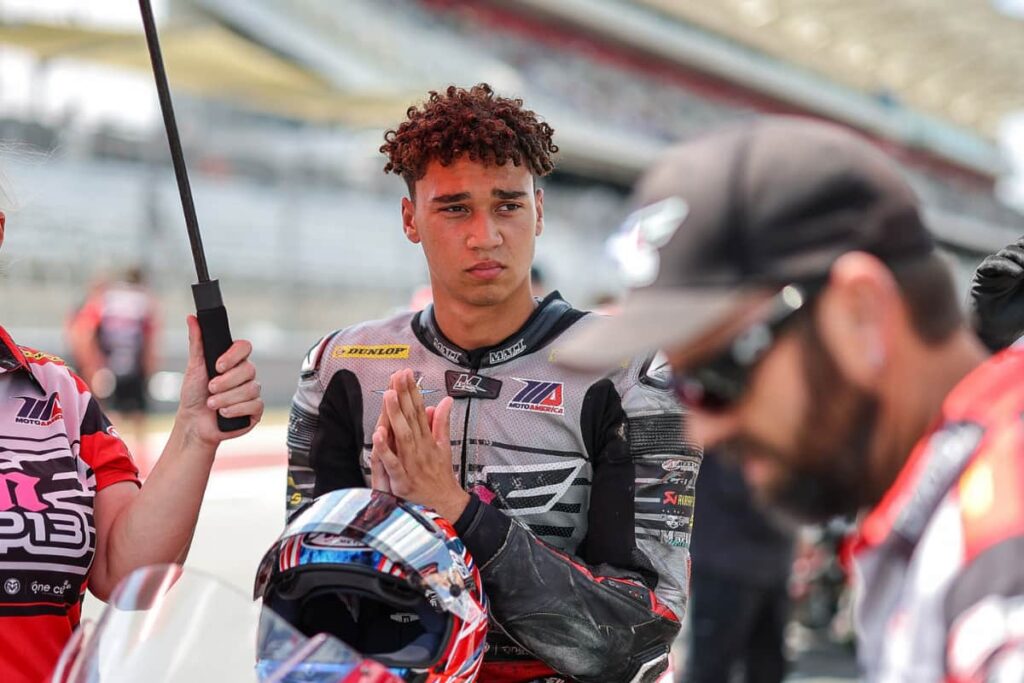
Aiden Sneed 3

Written with the help and hard-earned insight of Aiden Sneed, whose experience on the bike helped shape this piece.

TrackDNA Safety Note

Riding motorcycles is inherently risky and can result in serious injury or death. The ideas in this article are shared for general information only. Nothing here is formal coaching, individualized instruction, or a guarantee of safety or performance.

Always ride within your limits, use proper safety gear, and practice only on a controlled, purpose-built track with trained staff and medical support. Before trying any new technique, consult a qualified coach and consider your own readiness, fitness, and motorcycle setup.

TrackDNA encourages riders to learn progressively, prioritize safety, and treat professional coaching and track schools as essential tools for improvement.

The Moment He Passed Me

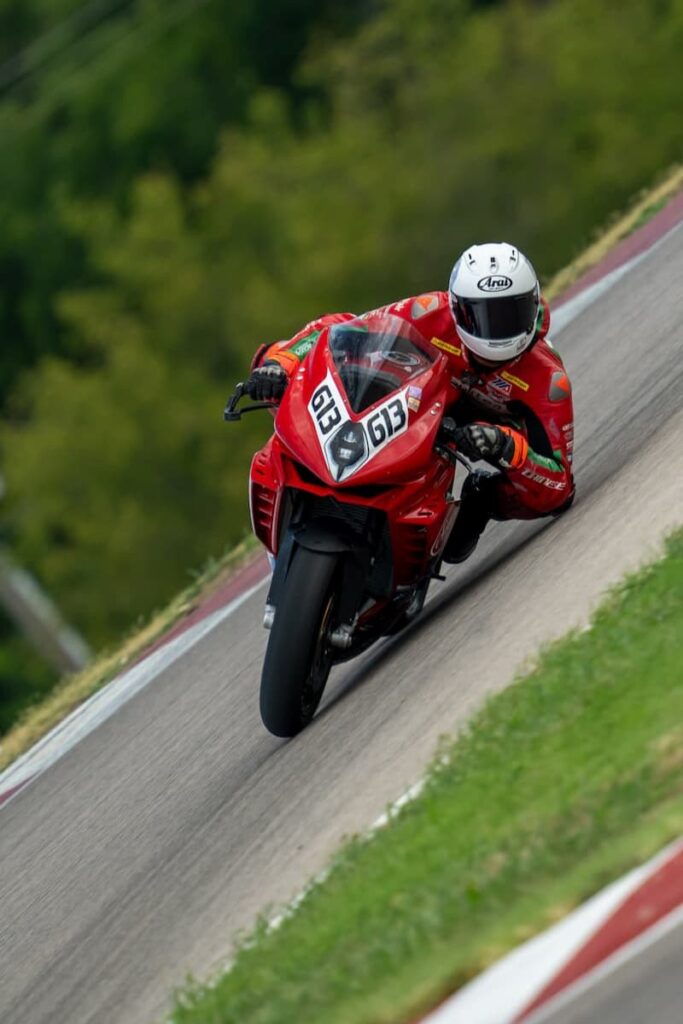
I remember it because it was so ordinary on the surface. Same session, same corner, that heavy heat coming off the pavement where everything looks a little blurry in your peripheral. I was on what felt like a solid lap for where I am right now—smooth enough, focused enough, not chasing anything heroic.

Then Aiden went by.

No dive bomb. No last-second jab at the brakes. He just appeared on the line that made sense, gave me room, and was gone—quiet and clean. It didn’t feel unsafe or unpredictable. It felt like he’d made the decision earlier than I even realized there was a decision to make.

That was the whole reason I wanted to write this. I asked Aiden if he’d be willing to co-write it with me, because I wanted the “other side of the pass,” not my best guess.

What I Felt — Confusion, Awe, and That Familiar “How…?”

When a faster rider comes through, the part that messes with your head usually isn’t the pace. It’s how calm it looks. The bike stays settled. The timing is sharp. The rider doesn’t look like they’re negotiating with the motorcycle.

I was riding my lap. Aiden was reading the entire session.

That’s when it hit me: he wasn’t just doing the same thing faster. He was processing more—earlier—and with less noise in his head.

Copy of Mobile Hero Image 3

Photo by Shift Media

What He Saw — Aiden’s POV of the Same Moment

I asked him what he’s actually looking at when he comes up on a rider mid-corner. His answer wasn’t glamorous. It was practical.

Aiden:
“When I’m passing riders, I watch their body position and how tense they are. Tense riders make sudden moves, so I pass carefully. I also study their lines so I can predict what they’ll do.”

That was a gut check for me. In my head, that corner felt busy—something I had to manage. For him, it was information. He wasn’t guessing. He was collecting clues: tension, line choice, predictability.

The Micro-Decisions Behind a Clean Pass

From the outside, a quick pass can look like “talent.” From the seat, it’s usually a short chain of decisions that happen early enough to look effortless.

Where am I faster?
Where will they drift?
What’s the safe margin if they change their mind?

Aiden put it like this:

Aiden:

“For a clean pass, I look for space and timing. At track days I give riders room, and in MotoAmerica I think about the outcome — sometimes a pass can pull you away from the group.”

That’s the part most of us don’t consider. At a track day, the priority is predictability and margin. In a race, the context changes—because strategy shows up—but the pass is still built on the same fundamentals: reading the rider, choosing the moment, leaving room.

Get the Inside Line

Real stories, track insights, and paddock moments — straight from riders who live it. No noise, no fluff, just the DNA of the track delivered to your inbox.

What newer riders often misread about fast riders

There’s a common story we tell ourselves when we get passed hard: “That guy is reckless.” Sometimes that’s true. Most of the time, it isn’t.

Fast riders who last tend to be the opposite of emotional. They don’t need chaos to feel fast. They don’t need to force a gap just to prove they can.

They’re usually just earlier. Earlier with their eyes. Earlier with their decisions. Earlier with their commitment.

Aiden:

“Slower riders don’t realize how much faster riders think ahead. We’re already predicting their next move before it happens.”

On the receiving end, a pass can feel sudden. From the passer’s seat, it’s often been “in motion” for a few seconds already.


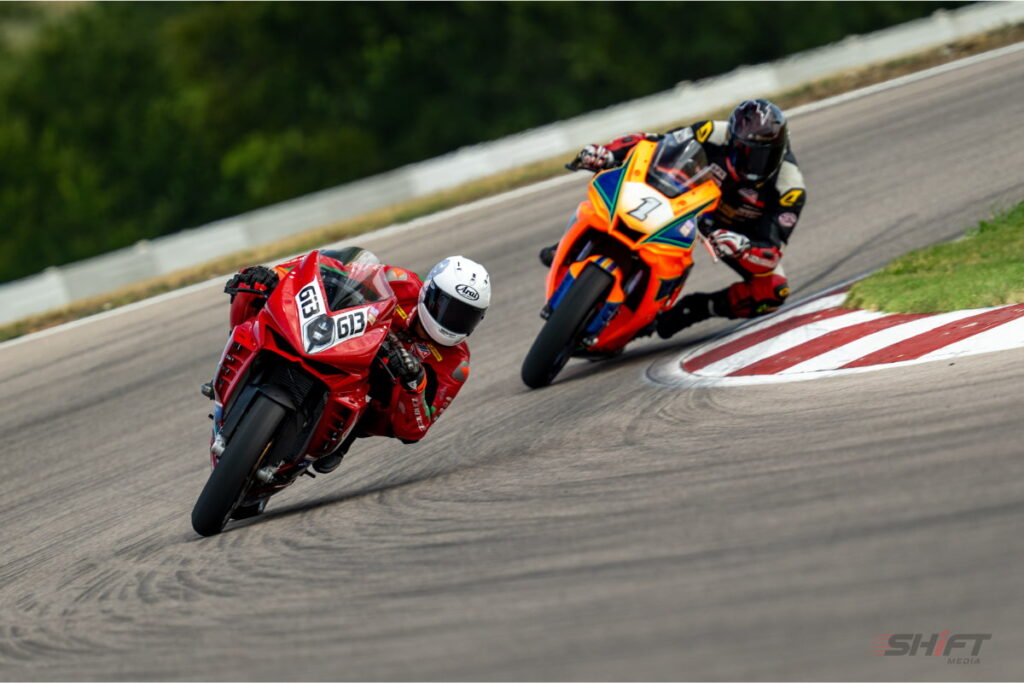
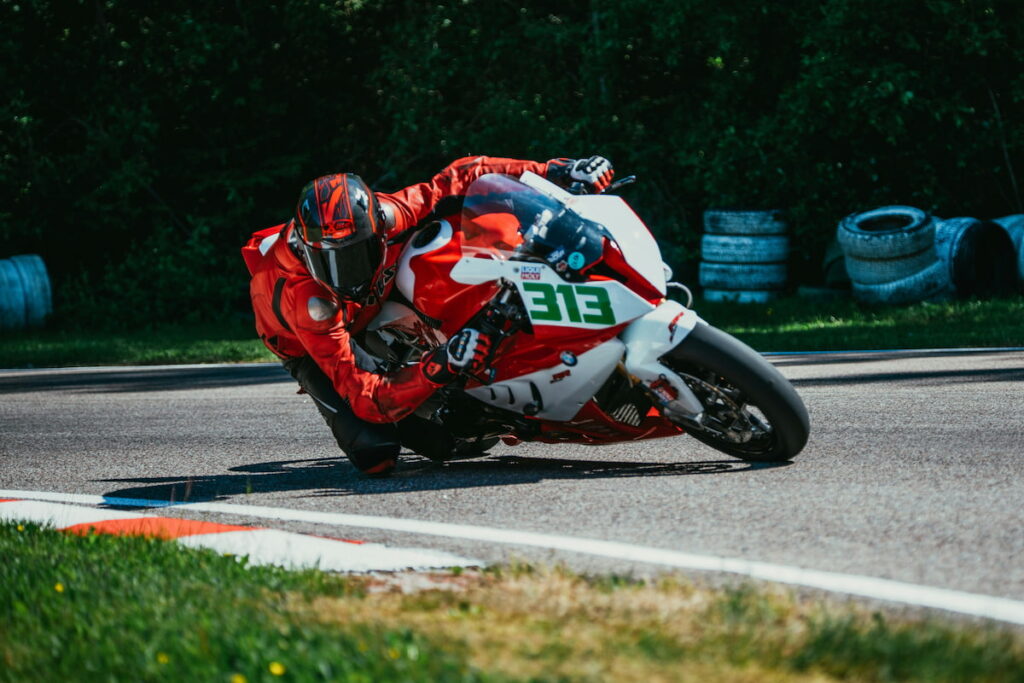
two motorcycle racers on track at the apex

Photo by Shift Media

What He’s Still Working On

One of the reasons I like talking to pros who are willing to be honest is they don’t pretend it’s solved. Aiden didn’t either.

Aiden:

“Something I’m working on is getting up to speed quicker in the first couple laps. It takes me a bit to settle in, but I’m improving.”

That matters for regular riders too, because it’s permission to be a human. Even at that level, the first laps aren’t always perfect. There’s still a process of getting your timing online.

What He Notices in a Developing Rider

This one hit me because it’s so simple, and once you see it, you can’t unsee it.

Aiden:

“When I follow developing riders, I notice their line choices and if they’re on the gas or brakes. A lot of newer riders coast, but for speed you need to be on one or the other.”

Here’s how I translate that without turning it into a slogan: coasting often feels “safe” because you’re not committing to anything. But the bike can feel vague there—weight transfer isn’t clearly managed, and your entry-to-exit timing gets blurry.

This doesn’t mean you have to be aggressively accelerating or braking everywhere. Sometimes “on the gas” is just a small, steady maintenance throttle—enough to keep the chassis settled. The point is being deliberate, not drifting through the middle of the corner waiting for confidence to show up.

If you want to work on this, do it progressively and, ideally, with a coach watching. Pick one corner, one session, one goal.

8. Closing — Speed Isn’t Noise. It’s Clarity.

When Aiden went by me, I didn’t walk away thinking, “He’s brave.” I walked away thinking, “He’s clear.” Clear about what I was going to do, clear about what he was going to do, clear about how much room it takes for both of us to stay safe.

That’s the difference I felt in less than a second.

If you’re a developing rider, the takeaway isn’t “ride like a MotoAmerica guy.” It’s simpler: get more predictable, make earlier decisions, and reduce the moments where you’re doing nothing and hoping the bike sorts it out. That’s where confidence starts showing up without you forcing it.

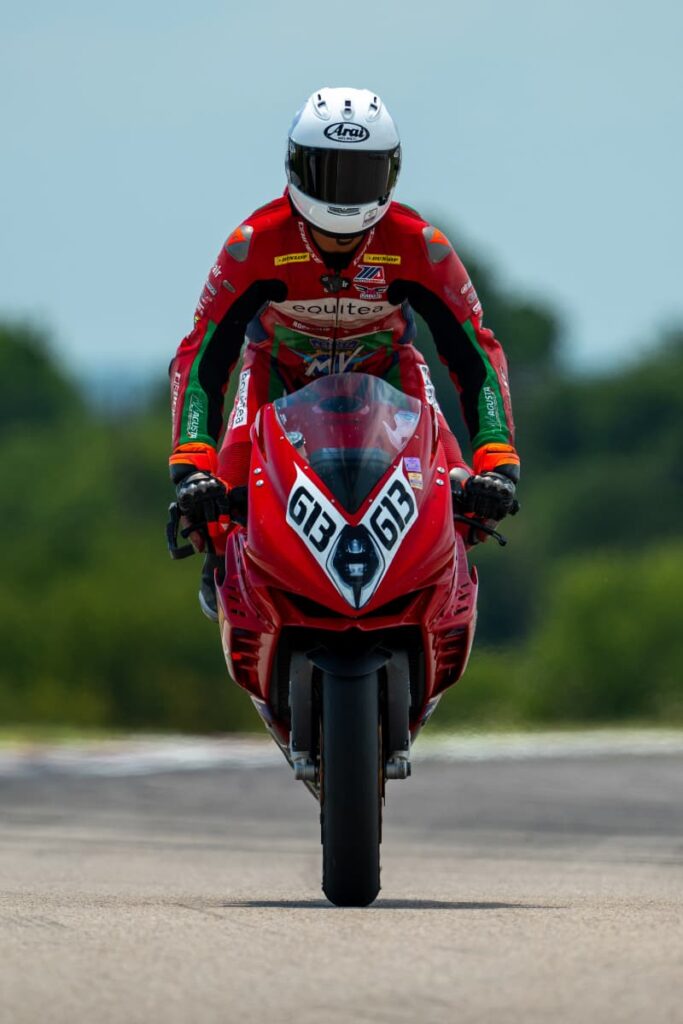
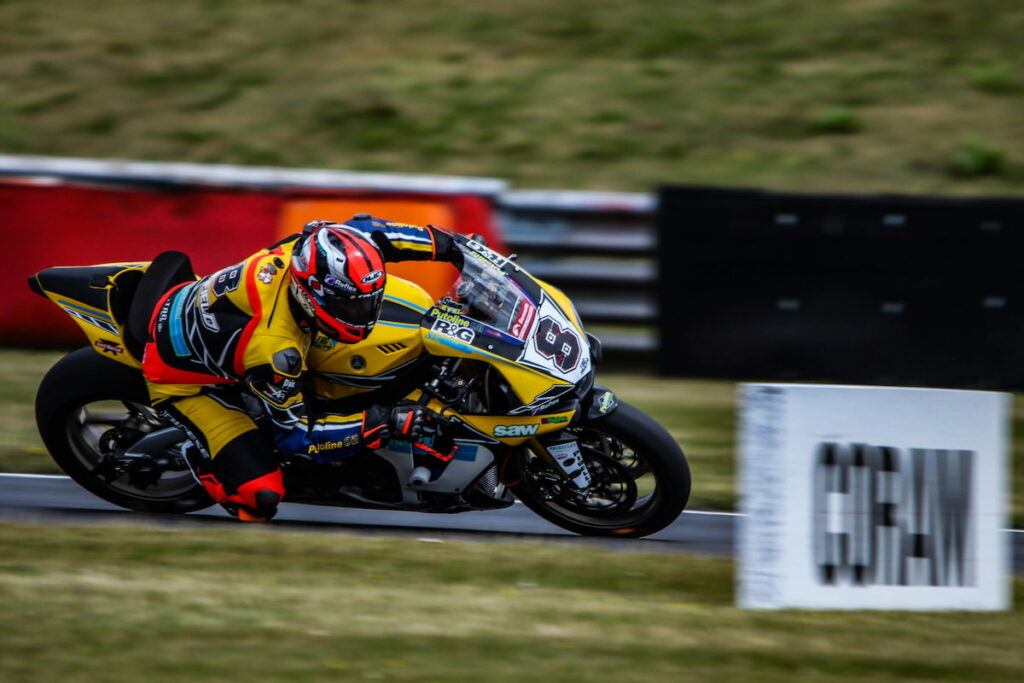
MotoAmerica Racer

Photo by Shift Media

Follow Aiden’s Journey

When I asked Aiden if he’d share his perspective for this, he said yes immediately. No gatekeeping. No “talk to my people.” Just a quick, normal yes—like it’s obvious we should all help each other learn.

I’m grateful for that. And if you want to see where his season goes next, follow along on his socials.

Get the Inside Line

Real stories, track insights, and paddock moments — straight from riders who live it. No noise, no fluff, just the DNA of the track delivered to your inbox.

Author

Scroll to Top