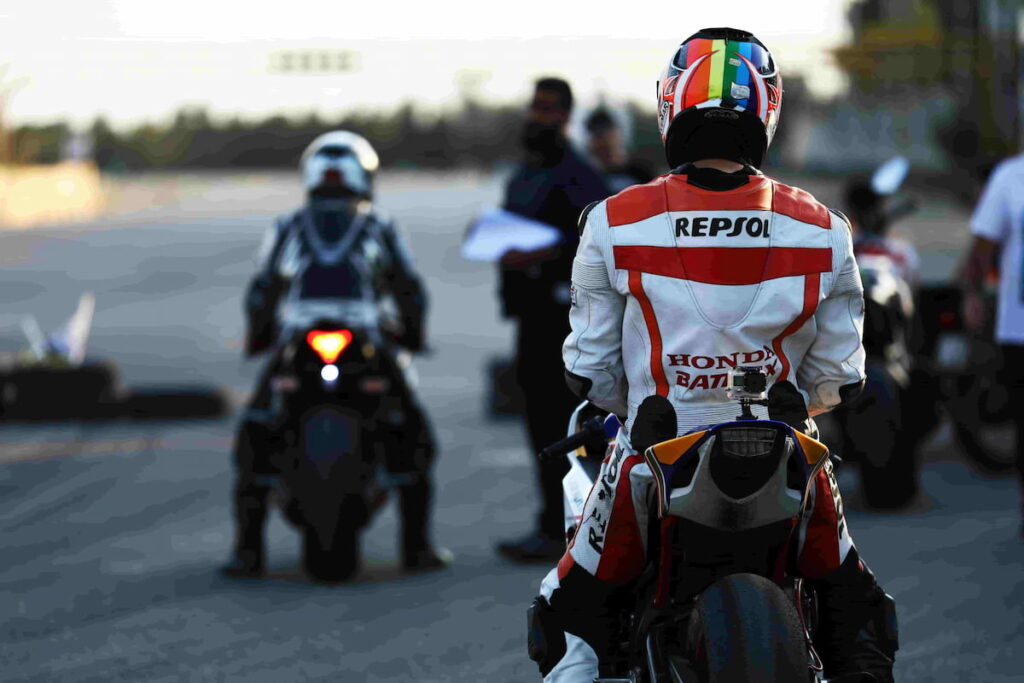
Photo by Max Leveridge
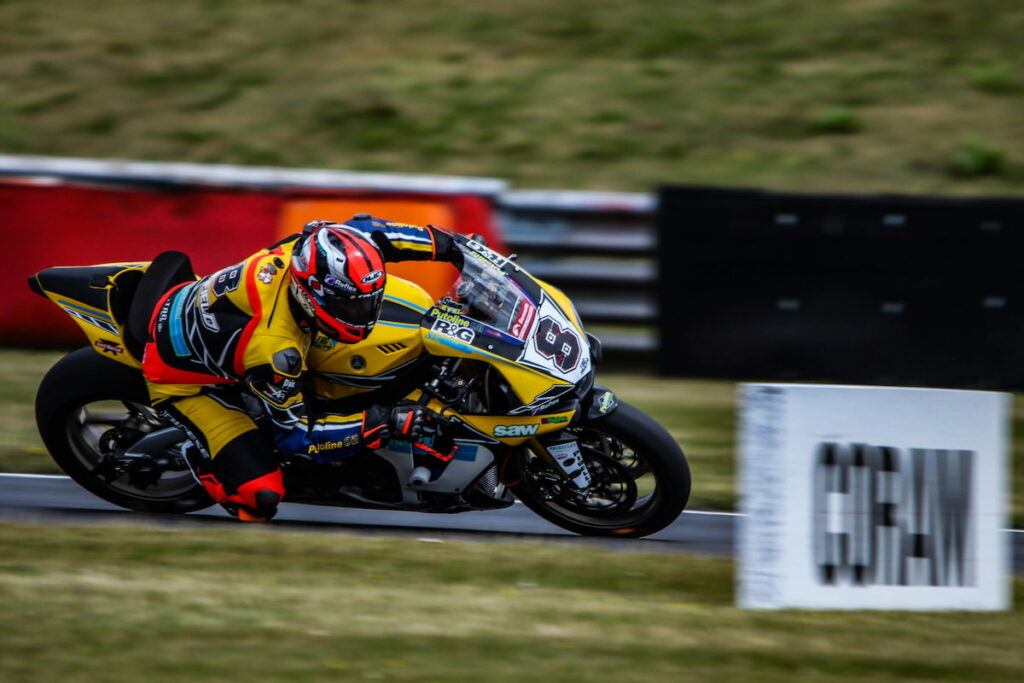
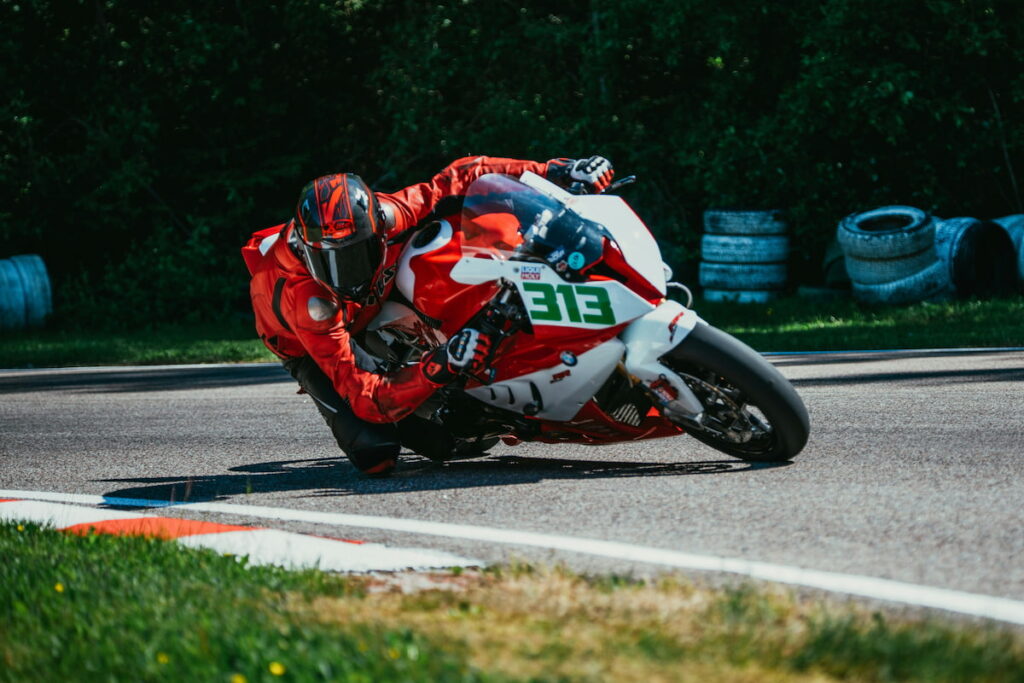
Lean angle is one of the most misunderstood parts of track riding. You’ll see riders treat it like a badge, or fear it like a cliff edge, or chase it like it’s the whole point. And honestly, most of us have been one of those people at some stage.
The part that clears it up is simple: lean angle isn’t the goal. It’s the result. It shows up when your braking, vision, steering, body position, and throttle timing are working together.
When those inputs are connected, lean angle feels calm and repeatable. When they aren’t, the same amount of lean can feel sketchy for no obvious reason.
This guide breaks lean angle down into practical language that everyday track riders—and aspiring racers—can actually use.
A note from the fundamentals
Keith Code makes a point in A Twist of the Wrist that’s easy to miss because it’s so basic: if you’re riding at all, you’re already doing a lot right. His bigger point is to add more correct actions and drop the incorrect ones—not to chase extreme numbers on a dash or a screenshot.
So instead of “How do I get more lean angle?” the better question is: What inputs make lean angle feel predictable?
TrackDNA Safety Note
Riding motorcycles on track is inherently risky and can result in serious injury or death. The ideas in this article are shared for general information only — they’re not formal coaching, professional instruction, or a guarantee of safety or performance.
Always ride within your limits, use proper safety gear, and practice only in a controlled, closed-course environment that follows all rules and regulations. Before trying any new technique, talk with a qualified coach or instructor and use your own judgment about what’s right for your skill level, your bike, and your body.
The best place to explore and apply these ideas is with a qualified coach or at a dedicated motorcycle or racing school. Treat what you read here as background context and conversation fuel for your own training — not as a step-by-step guide or a substitute for in-person instruction.
By choosing to ride, you accept the risks that come with it.

Why This Framework Exists
TrackDNA is built on honesty and clarity, so here it is straight: we didn’t invent these techniques. We’re translating proven ideas into rider-first language without the jargon and without the ego.
This framework is built by cross-referencing the strongest public explanations in the sport, including:
- California Superbike School (CSS)
- Yamaha Champions Riding School (YCRS)
- Public MotoGP coverage, interviews, and onboard insight
- Tire and chassis fundamentals (load transfer, contact patch behavior)
- Consumer-level track data tools
- Lived experience across track days and club racing
We’re not claiming access to private school curriculum or race-team data. We’re keeping it public, practical, and usable.
THE CORNERING SYSTEM (8 PARTS)
Think of lean angle like the readout at the end of the calculation. If you want lean angle to feel easy, you don’t start by asking for more lean—you start by building a cornering process you can repeat.
1. Load the Tire Before You Lean the Bike
Lean angle starts before the bike leans. The front tire needs a predictable load to make grip feel like something you can trust, not something you’re hoping for.
That usually comes from smooth, progressive braking, a calm upper body, a settled chassis, and consistent weight transfer. When the front is loaded in a controlled way, feedback gets clearer and your hands tend to relax.
2. Vision Phase 1 — Eyes to the Apex
Your eyes need to move before everything else. Early vision defines your line, helps you choose a turn-in point, and takes tension out of your upper body because your brain has a target.
If your eyes are late, your steering and braking decisions usually get late too.
3. Clean Brake Release (Leading Into Trail Braking)
A clean brake release doesn’t mean you must be completely off the brakes before turn-in. It also doesn’t mean separating braking from steering like they’re two different worlds.
The cleaner version is this: as you approach turn-in, you begin releasing brake pressure smoothly—and that release continues as you start the corner. That sets up the next phase without shocking the chassis.
Quick note on downshifting
Downshifting happens inside the braking zone. The key is to complete shifts smoothly before your decisive steering input so the chassis stays calm and predictable. The full timing, technique, and engine-braking strategy deserves its own piece, and we’ll break it out separately.
4. Trail Braking in Plain English
Trail braking isn’t mysterious. It’s simply keeping a small amount of brake pressure as you begin leaning the bike, then tapering that pressure off as lean angle increases.
Riders use it because light brake pressure can help keep the front loaded, help the bike turn cleanly, and reduce that “floaty” feeling that shows up when everything unloads at once. The goal isn’t “more brake”—it’s a controlled transition from slowing to turning.
5. One Decisive Steering Input
Instead of adding lean angle through a string of small corrections, aim for one clean, committed steering initiation. When your trail braking is controlled and your vision is set, that single input tends to produce a more predictable arc.
Multiple little inputs often make the bike feel busy mid-corner and can pull tension back into your hands.
6. Body Position That Reduces Lean Demand
Body position doesn’t create grip by itself. What it can do is reduce how much lean angle the bike needs for a given corner speed, and it can help the chassis feel calmer underneath you.
Keep the lower body locked in, let the upper body lead into the turn, and use your core to carry your weight so your hands can stay relaxed. The goal is simple: make the bike’s job easier.
7. Vision Phase 2 — Eyes Through the Corner to the Exit
A lot of riders get stuck on the apex. They look at it… and keep looking at it.
The fix is to leave the apex with your eyes earlier and look through the corner toward the exit. That tends to unlock smoother lines, more stability at lean, and a cleaner transition into throttle.
8. Smooth Roll-On Brings the Bike Up Naturally
Throttle can stabilize the chassis. A smooth roll-on shifts load rearward and helps the bike stand up as the corner opens.
A harsh roll-on can stand the bike up abruptly and push you wide, especially if you’re still asking the front to do a lot of turning. Smoothness is the theme here—smooth inputs usually create stable lean.
Putting It All Together — The Corner Entry Flow
Here’s the rhythm as a practice checklist:
- Spot your braking marker
- Brake smoothly and progressively
- Load the front tire predictably
- Move your eyes to the apex (Vision Phase 1)
- Begin a smooth brake release as you approach turn-in
- Initiate turn-in while lightly trailing the brake
- Taper brake pressure as lean angle increases
- Commit to one decisive steering input
- Stay stable through the core; keep hands relaxed
- Move your eyes through the corner to the exit (Vision Phase 2)
- Finish the release near the apex
- Roll on smoothly to stabilize and let the bike stand up
Connected. Calm. Repeatable.
Why This Matters
Lean angle isn’t the skill—it’s the evidence. When your timing is clean, your eyes move early, your brake release is calm, your trail braking is controlled, your steering is decisive, your body supports the bike, and your roll-on is patient, lean angle stops feeling dramatic.
It starts to feel normal. And that’s the foundation of confident, repeatable cornering.
Transparency Block — Where Riders Can Learn More
Everything in this article is based on publicly accessible explanations, interviews, and technical resources:
Riding Schools (Public Materials)
- California Superbike School (CSS) — Keith Code’s books and public commentary
- Yamaha Champions Riding School (YCRS) — free videos, interviews, instructor explanations
MotoGP Public Insights
- Broadcast telemetry overlays
- Rider and team interviews
- Onboard footage
- Commentator analysis
Tire & Chassis Resources (Public)
- Pirelli
- Michelin
- Dunlop
- Engineering references on load transfer, traction, and contact patch behavior
Coach-Shared Public Knowledge
- YouTube channels
- Podcasts
- Blog articles
- Open Q&A sessions
TrackDNA references only what is publicly and openly shared.
Author
-
Sean studied in Southeast Asia, did his stretch in corporate America as a Chief Revenue Officer, and then traded boardrooms for pit lanes. He’s a published author, and these days he’s on the grid with CMRA - on his way to MotoAmerica - and behind the scenes as the slightly obsessed human building TrackDNA, a magazine for riders who care as much about the culture and craft as they do about lap times.
Recent Posts